
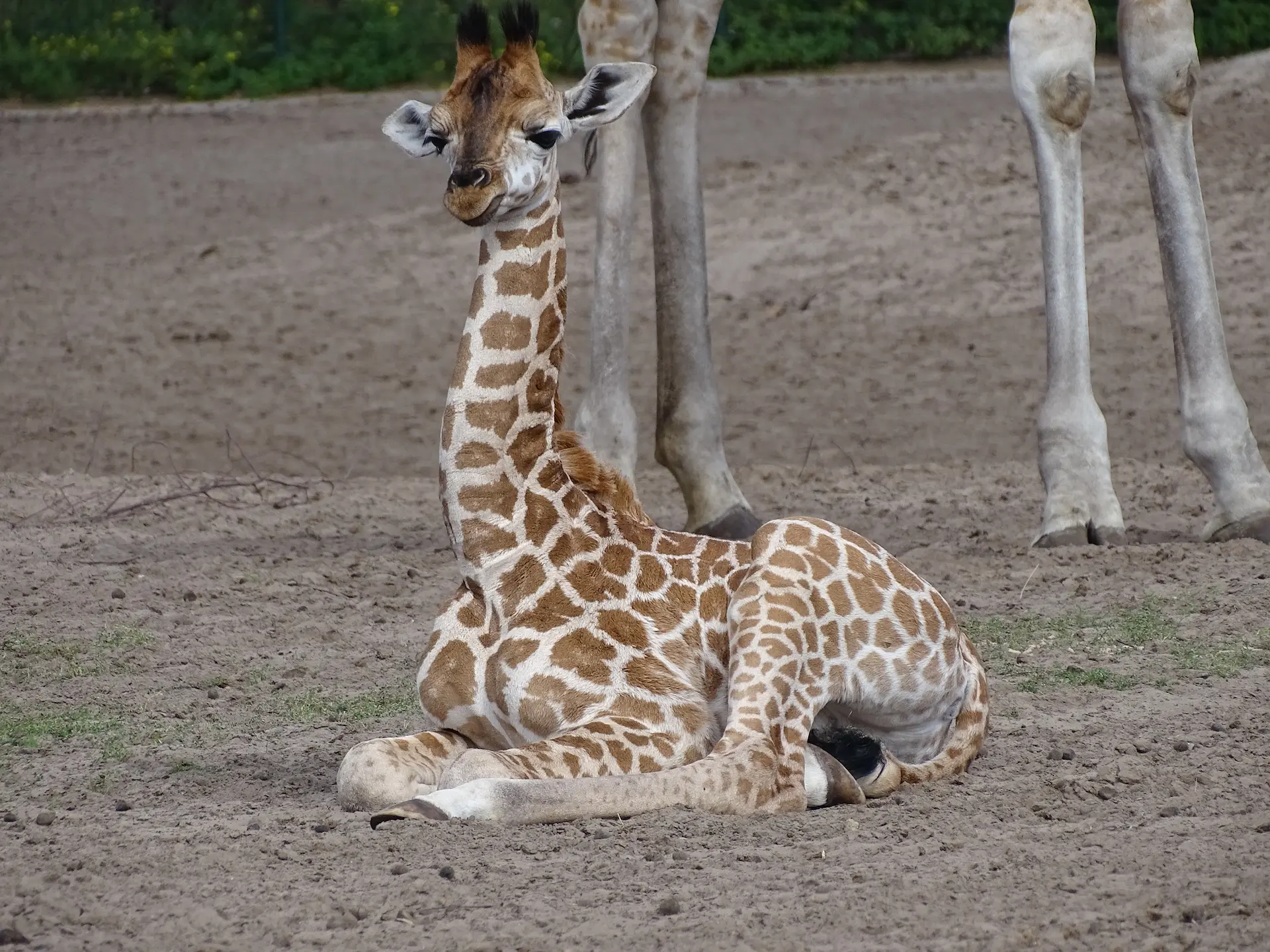
Giraffes, the tallest animals on earth, have sleep habits unlike any other. Their rest is shaped by constant vigilance, their massive bodies, and the environments in which they live. Instead of long stretches of sleep, they take short naps, sometimes while standing with their necks curved back.
For deeper rest, they may fold their legs beneath them and place their heads on their bodies, though this leaves them vulnerable and is rarely seen in adults living in the wild. Altogether, they manage with just 30 minutes to four hours of sleep each day.
Key Takeaways
- Giraffes get very little sleep, sometimes only 30 minutes a day in the wild.
- Most rest happens while standing, with deeper sleep possible only when lying down.
- Their sleep habits are shaped by predation risk, body size, and the need for constant alertness.
- In captivity, giraffes can lie down more often and may sleep up to 4-6 hours.
- Protecting giraffes means protecting their habitats. Donate to Save Giraffes Now to give them a safer future.

How long do giraffes sleep for?
Giraffes are among the lightest sleepers in the animal world. In the wild, where predators are always a threat, they may get only about 30 minutes of true sleep in a day. Most of this rest comes in short naps while standing, which lets them wake and move quickly if danger approaches. Sometimes they lean against trees for balance, but lying down is rare since it leaves them exposed.
In captivity, the pattern changes. A classic study on eight giraffes in a zoological garden found they averaged around 4.6 hours of sleep per day. With no predators nearby, giraffes are more often seen lying down with their legs tucked beneath them. This safer position allows them to rest for several hours, sometimes even up to six in a night, and to enter REM sleep, when their heads grow heavy and they rest them on their own bodies in a curled, pillow-like posture.
Can a giraffe sleep while standing up?
Yes, and most of the time they do. Standing naps are the safest way for giraffes to rest because getting up from the ground takes precious seconds that could mean the difference between life and death if a predator is nearby. While standing, they often enter light, half-awake sleep, sometimes leaning their necks back in a relaxed curve or bracing slightly against a tree for support.
How do giraffes sleep in different environments?
In the wild, giraffes take brief and cautious rest. Open savannas mean predators can approach easily, so they stick to short standing naps and only rarely lie down. Even then, they position themselves where they can spring up quickly if needed.
Plus, their biology plays a big part in this. A giraffe’s heart works incredibly hard to pump blood all the way to the brain, so lying completely flat puts dangerous pressure on both organs. Their size and physiology make that position unsafe, which is why transport teams handle every move with so much precision.
In captivity, the picture changes. With no threats around, giraffes lie down more often and for longer stretches. Zoos have documented individuals sleeping up to six hours a night, a stark contrast to the fragmented rest seen in nature.
Why so little sleep?
Giraffes have evolved to get by on remarkably little rest. Their size makes lying down awkward and slow, leaving them vulnerable to attack. As prey animals, they must remain vigilant, constantly scanning for danger, even at night. On top of that, their digestive system demands long hours of rumination, which limits the time available for deep sleep.
Other large herbivores, like elephants, follow similar patterns, sleeping in short bursts rather than long stretches. For giraffes, this balance of constant vigilance and brief naps has proven to be a survival strategy that works on the open plains.
Save Giraffes Now: Why this research matters
Understanding how giraffes sleep reminds us of the fragility of their lives. Even their rest is shaped by danger. A quick nap standing up, a rare moment of deep sleep on the ground, all comes back to survival in a world where their numbers are shrinking.
That’s where Save Giraffes Now steps in. The organization works across Africa to protect giraffes from poaching, restore safe habitats, and support community-led conservation. Our projects have already helped grow giraffe populations in areas where they were once disappearing.
But there’s still so much more to do. Every donation helps build safer spaces, relocate giraffes to thriving habitats, and give local communities the resources to protect them. When you give, you’re not only keeping giraffes alive. You’re giving them the chance to rest, recover, and live without constant threat.
Frequently Asked Questions
Do baby giraffes sleep more than adults?
Yes. Calves sleep longer and more deeply than adults, often lying down for extended periods since they’re less likely to be targeted when protected by the herd.
What time of day do giraffes usually sleep?
Most giraffes sleep at night, especially just after sunset and before sunrise. However, they may also take short naps during the day while standing.
How does a giraffe sleep compared to a human?
Humans need 7–9 hours of continuous rest, while giraffes manage with less than a fraction of that, sometimes only 30 minutes in total, broken into very short bouts.
Do all giraffe species have the same sleeping habits?
While the general patterns are similar, small differences exist between species and habitats. For example, giraffes in more open, predator-heavy regions may spend less time lying down than those in safer environments.