
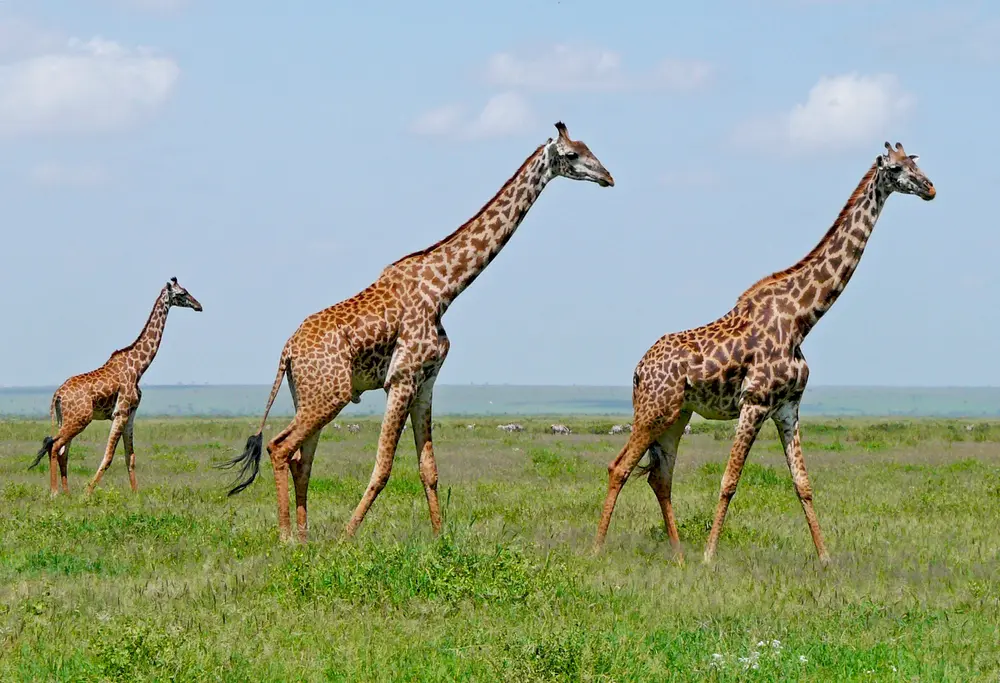
For a long time, many people believed that all giraffes belonged to a single species. New genetic research has changed that understanding. Studies led by scientists show that there are actually four separate giraffe species across Africa. These are the Masai, Northern, Reticulated, and Southern giraffes.
These species live in different parts of the continent and face varying levels of threat. When their numbers are combined, there are only about 117,000 giraffes left in the wild, a sharp contrast to the larger populations that once roamed across Africa.
Key Takeaways
- Africa is home to four giraffe species, each with its own subspecies, markings, and habitat.
- Some groups, like the Nubian and Kordofan giraffe numbers, have become very low and need urgent protection.
- The Southern giraffe count remains the most stable, while Masai and Reticulated giraffes continue to face steep declines in parts of their range.
- Save Giraffes Now works across Africa to protect every species through rescue missions, reintroductions, and long-term habitat support.
Meet Africa’s Four Giraffe Species
Africa is home to four distinct species of giraffes. Each one has its own markings, habitat, and conservation needs. Scientists confirmed this separation through detailed DNA analysis, which showed clear differences between populations once grouped together:
- Northern giraffe
- Southern giraffe
- Masai giraffe
- Reticulated giraffe
These species inhabit different regions across the continent and face distinct challenges. Some populations are stable, while others have dropped to dangerously low numbers.
Giraffe Species and Subspecies in Africa
Here is a simple breakdown of the latest numbers based on the new data:
| Species | Subspecies | Scientific Name | Estimated Population |
| Masai giraffe | Luangwa giraffe | G. t. thornicrofti | 764 |
| Masai giraffe | G. t. tippelskirchi | 43,162 | |
| Northern giraffe | Kordofan giraffe | G. c. antiquorum | 7,037 |
| Nubian giraffe | G. c. camelopardalis | 2,391 | |
| West African giraffe | G. c. peralta | 3,977 | |
| Reticulated giraffe | Reticulated giraffe | Giraffa reticulata | 20,901 |
| Southern giraffe | Southern giraffe | Giraffa giraffa | 68,837 |
| Angolan giraffe | G. g. angolensis | 15,663 | |
| South African giraffe | G. g. giraffa | 53,174 |
Why Giraffe Diversity Matters
Each giraffe species plays a distinct role in the ecosystem in which it lives. Their feeding patterns shape vegetation, their movement helps spread seeds across long distances, and their presence supports a balanced food chain. When one species declines, the surrounding landscape begins to change.
Diversity also strengthens the entire giraffe population. Different species adapt to individual environments, from dry deserts to wooded savannas. This variety helps giraffes survive climate shifts, disease outbreaks, and habitat changes. Losing a species or subspecies removes part of that innate resilience.
Help Us Protect Every Giraffe in Africa
Giraffes once moved across Africa in large, connected herds. Today, many of those herds are gone. Some species are down to only a few thousand individuals, while others survive in small pockets of land where threats continue to grow each year. Their future depends on the protection they receive right now.
Save Giraffes Now is working to change the story. We are doing this by rescuing giraffes from dangerous situations, relocating them to safe and healthy habitats, restoring lands where they can feed and move freely, and supporting rangers who watch over them. Every project brings us closer to a continent where all giraffe species can thrive again.
Your support plays a real role in this work. Donations help fund rescues, secure protected areas, and strengthen community programs that keep giraffes safe. Each contribution helps preserve the beauty and diversity of these animals for future generations.
Donate now and be part of the effort to protect every species that still calls Africa home.
Frequently Asked Questions
What is the difference between a Rothschild giraffe and a Reticulated giraffe?
Rothschild giraffes are a subspecies of the Northern giraffe. They have lighter, less defined patches and no markings on their lower legs, which makes them look like they are wearing white stockings. Reticulated giraffes belong to their own species and have clean, sharp, net-like patterns with bright white lines that form a geometric design.
Which is the most common giraffe?
Many people assume the southern giraffe is the most common overall, since it has the largest wild population across Africa. However, in zoo collections, reticulated and Masai giraffes are among the most frequently seen species in captivity. Reticulated giraffes are widely held in North American and European zoos, and Masai giraffes are increasingly prominent in U.S. zoo breeding programs and public exhibits.
How many giraffe species are officially recognized today?
Researchers now recognize four species: Northern, Southern, Masai, and Reticulated giraffes. Each one has its own range, appearance, and population trend.
Why do giraffe species need to be classified separately?
Different species face different levels of risk. Clear classification helps conservation groups direct funding, protection, and long-term planning to the populations that need it most. It also ensures that critically endangered groups receive the urgent care they require.