
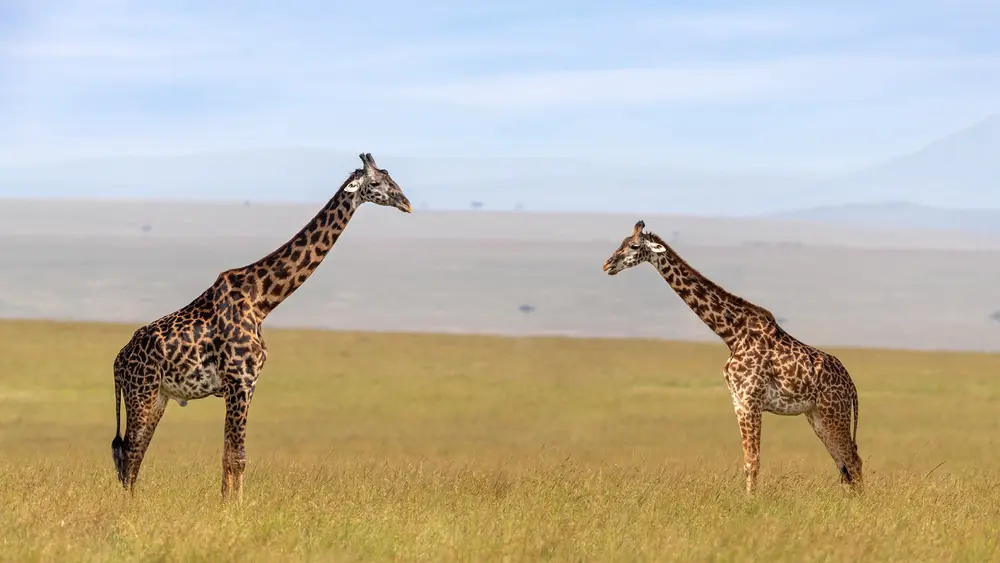
Yes, giraffes are herbivores. They rely entirely on plants for their food and spend much of their day browsing leaves, shoots, flowers, and fruits from trees across Africa’s savannas. Their height, long necks, and strong tongues help them reach vegetation that many other animals cannot easily access.
Being herbivores shapes everything about how giraffes live. It influences where they move, how they feed, and how they survive through long dry seasons. Save Giraffes Now works to protect the habitats that provide these essential food sources, ensuring giraffes have safe, healthy environments to browse in freely
Key Takeaways
- Giraffes are herbivores that rely on leaves, shoots, flowers, and fruits for all their nutrition.
- Their long necks, strong tongues, and specialized stomachs help them reach and digest tough plant material.
- They rarely eat grass because browsing higher vegetation keeps them safer and provides better nutrients.
- Calves start with milk and gradually shift to eating leaves as they grow.
- Habitat loss, drought, and human pressure reduce the availability of the plants that giraffes depend on.
- Save Giraffes Now works to protect and restore feeding habitats so giraffes can thrive in the wild, and you can help.
What Does Being a Herbivore Mean for Giraffes?
Giraffes are browsers, built for a plant-based diet. Their teeth are shaped to strip leaves cleanly, and their long necks give them access to branches other animals cannot reach. Their tongues are strong and flexible, allowing them to pull leaves from thorny trees without injury. Their thick saliva even helps protect them from acacia thorns. Inside, a four-chambered stomach helps break down tough plant material and efficiently absorb nutrients.
Every part of their feeding process is designed for browsing. Their height, steady movement, and digestive system work together to support a lifestyle centered around leaves and other vegetation found high in the treetops.
What Giraffes Eat in the Wild
Acacia leaves are a major part of the giraffe’s diet, but they also feed on mimosa, bushwillows, fresh shoots, and seasonal flowers. When fruit is available, they eat that too. During dry months, they may pull at bark or search for any green growth they can find.
Their diet shifts with the seasons and the region where they live. Some herds rely heavily on acacia woodlands, while others feed among mixed savanna trees. No matter the landscape, giraffes choose plants that give them the most nutrients for their size and daily activity.
Do Giraffes Eat Grass?
Yes, giraffes can eat grass, but they seldom graze. Their long legs and neck make it awkward to bend down far enough to reach short grass, so they prefer to feed at a height that feels natural and safe. Leaves also offer more nutrients than grass, which helps them meet their energy needs without constantly eating.
Plus, grass carries more parasites, and feeding low to the ground exposes giraffes to risks they do not face when browsing trees. Their height, feeding style, and need for safety all make browsing a better option than grazing.
How Much a Giraffe Eats in a Day
An adult giraffe can eat more than 60 pounds of leaves each day, depending on the season and the quality of vegetation around them. Much of their hydration also comes from the moisture in fresh leaves, a huge advantage in dry habitats. They browse slowly from tree to tree, taking small mouthfuls as they move.
Most of their water also comes from the moisture in leaves, so they do not need to drink very often. `A huge advantage in dry habitats. This also helps them stay safe, since bending down to drink puts them in a vulnerable position. When food is scarce, they travel farther and may feed for longer periods to meet their needs.
What Do Baby Giraffes Eat?
Baby giraffes start life on a milk-only diet. They nurse from their mothers for several months, getting all the nutrients they need to grow strong and steady on their legs. As they get older, they begin to nibble on leaves and shoots while still relying on milk for support.
By the time they are 5-10 months old, calves browse more confidently and follow their mothers to trees with soft new leaves. Their shift to a full plant-based diet happens gradually, and the mother’s guidance helps them learn which plants offer the most nourishment.
How Habitat Loss Affects Their Diet
Giraffes depend on healthy woodlands to survive. When trees are cleared for farming, settlements, or charcoal production, the plants they rely on begin to disappear. This forces herds to travel farther in search of food, sometimes moving into areas with fewer trees and lower-quality leaves.
Drought makes the problem worse. Long dry seasons limit new growth, reduce moisture in leaves, and shrink the variety of plants available. Giraffes then spend more time feeding and burn more energy for less nourishment. In some regions, poaching and conflict push them out of their normal feeding grounds, leaving them with restricted access to the trees they once depended on.
A shrinking habitat means a shrinking menu, and that affects their health, movement, and long-term survival.
How Save Giraffes Now Supports Healthy Habitats
We work in several African regions to protect and rebuild the environments that giraffes depend on. Many of the trees they feed on are disappearing, so our organization focuses on securing land, restoring browse areas, and helping herds return to places where food is abundant and safe.
Our projects include moving giraffes out of dangerous areas into protected reserves, supporting rangers who patrol feeding grounds, and working with local communities to reduce tree loss. These efforts help ensure giraffes have steady access to the leaves and plants they need all year round.
Help Us Protect the Browsers of Africa
Giraffes rely on tall trees and healthy woodlands for every part of their diet. When these landscapes disappear, so does their main source of nourishment. Poaching, land loss, and climate pressure are shrinking the areas where giraffes can feed safely. Without strong intervention, many herds will struggle to survive.
We are working to protect these vital feeding grounds. By securing land, restoring browse areas, and supporting rangers. Every protected space gives a herd the chance to grow, stay healthy, and live without constant hunger.
Your support helps expand this work. Make a Donation now to aid field teams, improve protected habitats, and help giraffes access the rich, plant-filled environments that are their birthright. Frequently Asked Questions
Do giraffes ever eat meat?
No. Giraffes do not eat meat. They are strict herbivores and rely completely on leaves, shoots, flowers, and fruits for their nutrition. Are giraffes herbivores or omnivores?
Giraffes are herbivores. Their teeth, stomach structure, and feeding behavior are all designed for a plant-based diet. They do not hunt or consume animal matter.
Do giraffes eat bones?
Sometimes giraffes chew on dry bones, a behavior called osteophagy. They do this to supplement minerals like calcium and phosphorus, not as a source of meat. The bones are not swallowed whole. They simply nibble or chew fragments, especially important for growing calves.
Do giraffes produce milk or not?
Yes. Female giraffes produce milk to feed their calves. Calves drink only milk for the first 9-12 months of life before they begin browsing on leaves while still nursing for support.