This story was originally reported by CNN (Story by Kyle Almond, photographs by Ami Vitale). The following is a rewritten summary published for archival and educational purposes.
Rising waters in Kenya’s Lake Baringo turned a once-connected peninsula into a shrinking island — leaving eight endangered Rothschild’s giraffes stranded and running out of food.
Among them was Asiwa.
Separated from the others and confined to a marshy acre of land, her situation grew increasingly urgent as floodwaters continued to rise.
A coordinated rescue effort was launched by conservation partners, Kenyan wildlife authorities, local community members, and leadership from Save Giraffes Now. The goal: safely relocate the giraffes to protected habitat within the 44,000-acre Ruko Conservancy.
The First Rescue: Asiwa
Asiwa became the first giraffe to be moved.
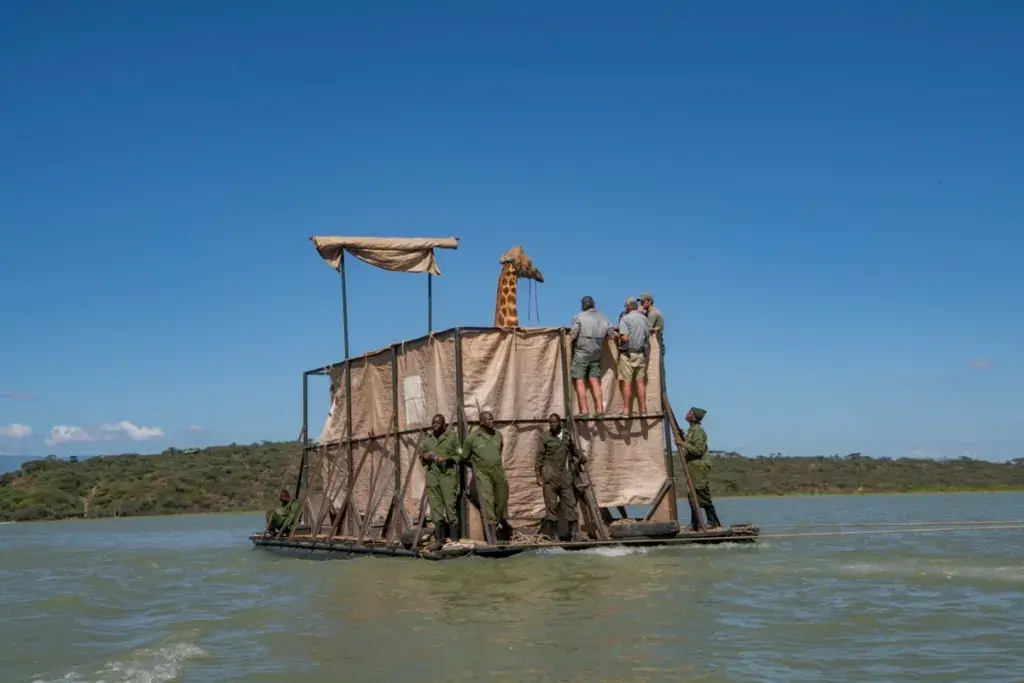
A custom-built steel barge was constructed to transport the animals across the water. Initially, teams hoped to guide the giraffes aboard using food. However, seasonal rains had created abundant vegetation, making treats ineffective.
That left sedation as the only viable option.
Moving a giraffe under anesthesia is exceptionally risky due to their unique physiology. Their height and blood pressure system make them vulnerable to choking or brain injury if not handled precisely.
Once darted, a veterinary team must act immediately — stabilizing the animal and administering reversal medication as needed.
Despite the challenges, Asiwa was successfully guided onto the barge using support ropes and a blindfold to reduce stress. Her journey across Lake Baringo lasted approximately one hour.
When the blindfold was removed upon arrival, she calmly stepped onto mainland soil — marking a major milestone in the rescue mission.
Community, Conservation, and Unity
The relocation site, Ruko Conservancy, is a 44,000-acre protected landscape formed in 2006 by two previously rival communities. The giraffe was chosen as a symbol of peace and cooperation between them.
Photographer Ami Vitale documented the rescue, capturing powerful images that highlighted both the fragility and resilience of wildlife conservation efforts.
At the time of the rescue, only about 2,000 Rothschild’s giraffes remained in Africa, with approximately 800 in Kenya. Habitat loss, poaching, and environmental instability have driven severe population declines.
Six giraffes remained on the island when the initial rescues began, with plans to relocate them safely in the weeks that followed.
Why This Rescue Matters
The Lake Baringo relocation was more than an emergency response.
It represented:
- Collaboration between international conservation groups and local communities
- Innovation in humane giraffe relocation techniques
- A long-term strategy to restore giraffe populations across their historical range
Efforts like these are part of a broader vision to reestablish giraffes across the Western Rift Valley over the coming decades.
This story was originally published by CNN in December 2020, written by Kyle Almond with photographs by Ami Vitale. The content above is a rewritten summary intended to document media coverage of the giraffe rescue mission.