Giraffes (Giraffa spp.) are the tallest land animals and are an important component of African savanna ecosystems. Beyond their distinctive appearance, they play a functional role in shaping vegetation, supporting biodiversity, and maintaining ecological balance across the landscapes they inhabit.
Through browsing behavior, seed dispersal, and movement across large ranges, giraffes influence plant communities and contribute to ecosystem processes such as nutrient cycling. These interactions position giraffes as an important component of savanna ecology, with effects that extend beyond the species itself.
Giraffes as Keystone Browsers
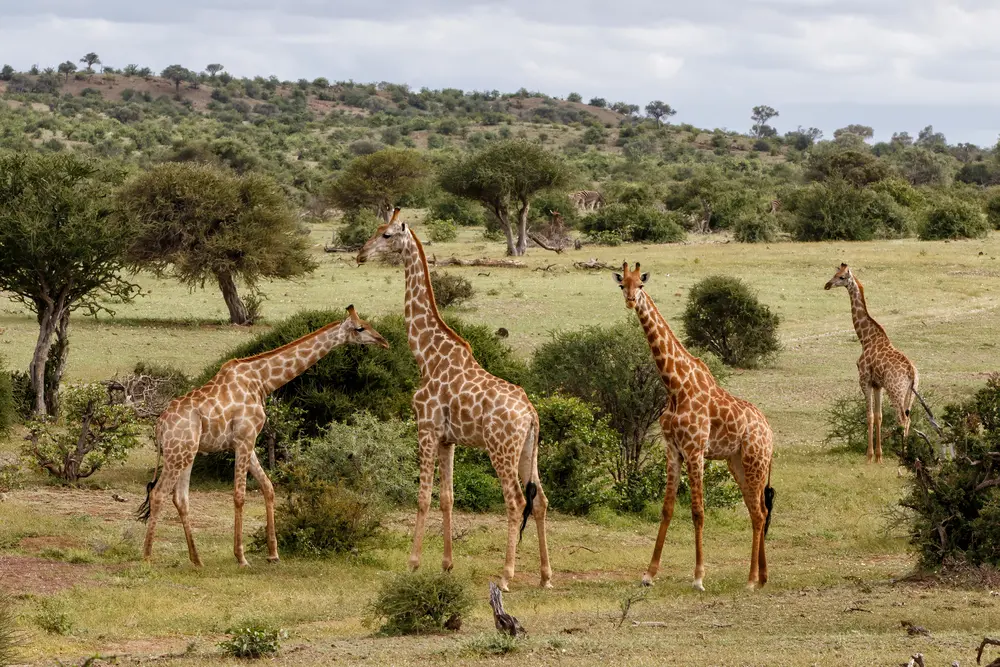
Giraffes occupy a distinct ecological niche as high-level browsers within African savannas. Their feeding activity is concentrated in the upper canopy of woody vegetation, particularly acacia species, which are largely inaccessible to other herbivores. This vertical separation reduces competition and contributes to feeding-height stratification among browsing mammals. [1] [2]
Selective feeding on shoots and leaves influences plant architecture over time. Repeated browsing can modify canopy shape, limit vertical growth, and affect the regeneration patterns of woody species. These interactions contribute to the regulation of vegetation structure and help maintain the balance between tree cover and open grassland.
Changes in browsing intensity have been linked to shifts in savanna composition. Areas with consistent giraffe presence show measurable differences in tree density and canopy distribution compared to areas with reduced browsing pressure. These patterns indicate that giraffes play a role in maintaining vegetation heterogeneity across landscapes. [3]
Ecological effects associated with giraffe browsing extend to other species. Alterations in vegetation structure can influence habitat availability, resource distribution, and foraging patterns of both herbivores and birds, reinforcing the functional importance of giraffes within savanna ecosystems. [4]
Impact on Vegetation Structure
Giraffe browsing contributes to spatial variation in vegetation structure across savanna ecosystems. Feeding activity concentrated in upper canopies alters tree form, reduces vertical dominance of certain species, and influences overall canopy distribution. These effects are most pronounced in regions where browsing pressure is consistent over time. [4]
Selective removal of leaves and shoots affects growth patterns and regeneration rates of woody plants. Reduced canopy density can increase light penetration to lower vegetation layers, supporting the growth of grasses and smaller plant species. This interaction plays a role in maintaining mixed vegetation systems rather than closed woody cover. [3]
Vegetation responses to browsing are not uniform and depend on species composition, rainfall patterns, and herbivore density. However, studies of savanna dynamics indicate that large browsers contribute to limiting woody encroachment, a process that can otherwise reduce grassland availability and alter ecosystem function. [5]
Structural changes in vegetation influence habitat conditions for other organisms. Variations in canopy cover and plant distribution affect shelter, feeding opportunities, and movement patterns for a range of species, linking giraffe browsing activity to broader ecological processes within the savanna.
Role in Seed Dispersal
Giraffes contribute to seed dispersal through the consumption of fruits, pods, and foliage from a range of woody plant species. Seeds ingested during feeding can pass through the digestive system and be deposited in new locations, often at considerable distances from the parent plant. [6]
Long-distance movement patterns increase the spatial range of seed distribution. Giraffes are capable of traveling several kilometers in a day, allowing seeds to be dispersed across fragmented landscapes and between different habitat zones. This process supports plant regeneration and genetic exchange within plant populations. [6] [7]
Passage through the digestive system can also influence seed viability. In some cases, the breakdown of outer seed layers during digestion may enhance germination success by reducing physical dormancy. This interaction links feeding behavior with plant recruitment and ecosystem renewal. [6]
Seed dispersal by large herbivores is considered an important ecological process in savanna systems. The movement and deposition of seeds contribute to vegetation dynamics, particularly in areas where environmental conditions or human activity limit natural regeneration. Giraffes, as wide-ranging browsers, play a role in sustaining these processes. [7]
Supporting Other Species
Giraffes contribute to ecological interactions that support a range of other species within savanna environments. These interactions are often indirect and occur through changes in vegetation structure, resource availability, and host–symbiont relationships. [6] [7]
Associations between giraffes and bird species provide a clear example. Oxpeckers (genus Buphagus) are commonly observed feeding on ectoparasites found on giraffes. This relationship benefits the birds as a food source. However, oxpeckers have also been observed feeding on blood and wound tissue, which can delay healing and cause additional irritation. The overall effect of this relationship can vary depending on environmental conditions and parasite pressure. [7]
Alterations in vegetation caused by browsing can also influence habitat use by other herbivores. Changes in canopy cover and plant composition may improve access to forage for smaller browsing species or create favorable conditions for grazing animals through increased grass growth. These effects link giraffe activity to broader patterns of resource distribution. [5]
Structural variation in plant communities affects shelter and nesting opportunities for birds and small mammals. Differences in tree density and canopy layering can shape microhabitats, contributing to species diversity at multiple trophic levels. These interactions highlight the role of giraffes in supporting ecological complexity within savanna systems. [5] [7]
Influence on Nutrient Cycling
Giraffes contribute to nutrient cycling through their movement patterns and feeding activity across large areas of savanna ecosystems. Consumption of plant material followed by the deposition of dung redistributes nutrients such as nitrogen and phosphorus across the landscape.
Daily and seasonal movement allows nutrients to be transferred between feeding sites and resting areas. This spatial redistribution supports soil fertility in regions that may otherwise receive uneven nutrient inputs, particularly in semi-arid environments. [7]
Dung produced by giraffes provides a resource for decomposers, including insects and microorganisms, which break down organic matter and facilitate nutrient return to the soil. These processes contribute to primary productivity and support plant growth in surrounding areas.
The ecological role of large herbivores in nutrient cycling has been widely documented in savanna systems. As a wide-ranging browser, the giraffe participates in these processes by linking plant consumption with soil nutrient dynamics, reinforcing its functional importance within the ecosystem. [8]
What Happens When Giraffe Populations Decline?
Reductions in giraffe populations can lead to measurable changes in vegetation structure and ecosystem dynamics. Lower browsing pressure allows certain woody plant species to grow unchecked, which may increase canopy density and alter the balance between trees and grasses in savanna systems. [3] [5]
Changes in vegetation composition can affect resource availability for other species. Increased woody cover may limit grass growth, reducing forage for grazing animals and shifting patterns of habitat use across herbivore communities. These changes can influence species distribution and competitive interactions within the ecosystem. [5]
Loss of large browsers may also disrupt seed dispersal processes and nutrient redistribution. Reduced seed dispersal across landscapes can limit plant regeneration and genetic exchange, while reduced dung deposition can affect soil fertility and microbial activity. These combined effects contribute to broader ecological shifts over time. [7]
Such changes are often described within the framework of trophic cascades, where the decline of a key species triggers indirect effects across multiple levels of the ecosystem. In this context, giraffes play a functional role whose reduction can influence both vegetation patterns and associated wildlife communities. [8]
Conservation and Ecosystem Stability
The ecological role of giraffes is closely linked to the stability of savanna ecosystems. Maintaining viable giraffe populations supports processes such as vegetation regulation, seed dispersal, and nutrient cycling, all of which contribute to ecosystem function over time. [7] [8]
Conservation efforts have increasingly emphasized the importance of preserving large herbivores due to their influence on landscape-level processes. Declines in giraffe populations have raised concerns about the long-term effects on vegetation dynamics and biodiversity, particularly in regions where pressures from habitat loss and human activity are increasing. [8]
Organizations such as Save Giraffes Now support initiatives focused on habitat protection, population monitoring, and targeted conservation programs. These efforts aim to maintain ecological balance by ensuring that giraffes continue to perform their functional roles within the environments they occupy.
Sustaining giraffe populations requires coordinated approaches that address both ecological and human-related factors. Conservation strategies that integrate habitat management, community engagement, and long-term monitoring are considered essential for preserving ecosystem stability in regions where giraffes remain a key component of biodiversity. [8]
References
Viljoen, S. (2013). Habitat use and diet preference of extralimital giraffes in the Kgalagadi Transfrontier Park (Master’s thesis, University of Cape Town, Department of Biological Sciences).
van der Waal, C., Kool, A., Meijer, S. S., Kohi, E. M., Heitkönig, I. M. A., de Boer, W. F., & Prins, H. H. T. (2011). Large herbivores may alter vegetation structure of semi-arid savannas through nutrient-mediated feedbacks. Oecologia, 165(4), 1095–1107. https://doi.org/10.1007/s00442-010-1776-3
Soutschka, N. (2010). Does tree size matter? Giraffe influence on African savanna ecosystem properties (Bachelor’s thesis, University of Cape Town).
Taylor, K., van der Merwe, S., Deacon, F., Grobbelaar, A., & Baotic, A. (2025). Ecological exposure history shapes giraffe vigilance responses to anthropogenic noise: A multisite playback experiment. Ecology and Evolution, 15(12), e72763. https://doi.org/10.1002/ece3.72763
Voysey, M. D., Archibald, S., Bond, W. J., Donaldson, J. E., Staver, A. C., & Greve, M. (2021). The role of browsers in maintaining the openness of savanna grazing lawns. Journal of Ecology, 109(2), 913–926. https://doi.org/10.1111/1365-2745.13518
Munyaka, T. V., Cronje, H. P., & Baloyi, M. (2018). An assessment of forage selection by giraffe introduced into a private game reserve in South Africa. Scientifica, 2018, 1–10. https://doi.org/10.1155/2018/9062868
Bond, M. L., König, B., Ozgul, A., & Lee, D. E. (2021). Leaving by staying: Social dispersal in giraffes. Journal of Animal Ecology, 90(12), 2755–2766. https://doi.org/10.1111/1365-2656.13503
Bercovitch, F. B., Bashaw, M. J., & del Castillo, S. M. (2023). The biology and ecology of giraffes. Current Biology, 33(8), R330–R334. https://doi.org/10.1016/j.cub.2023.02.046