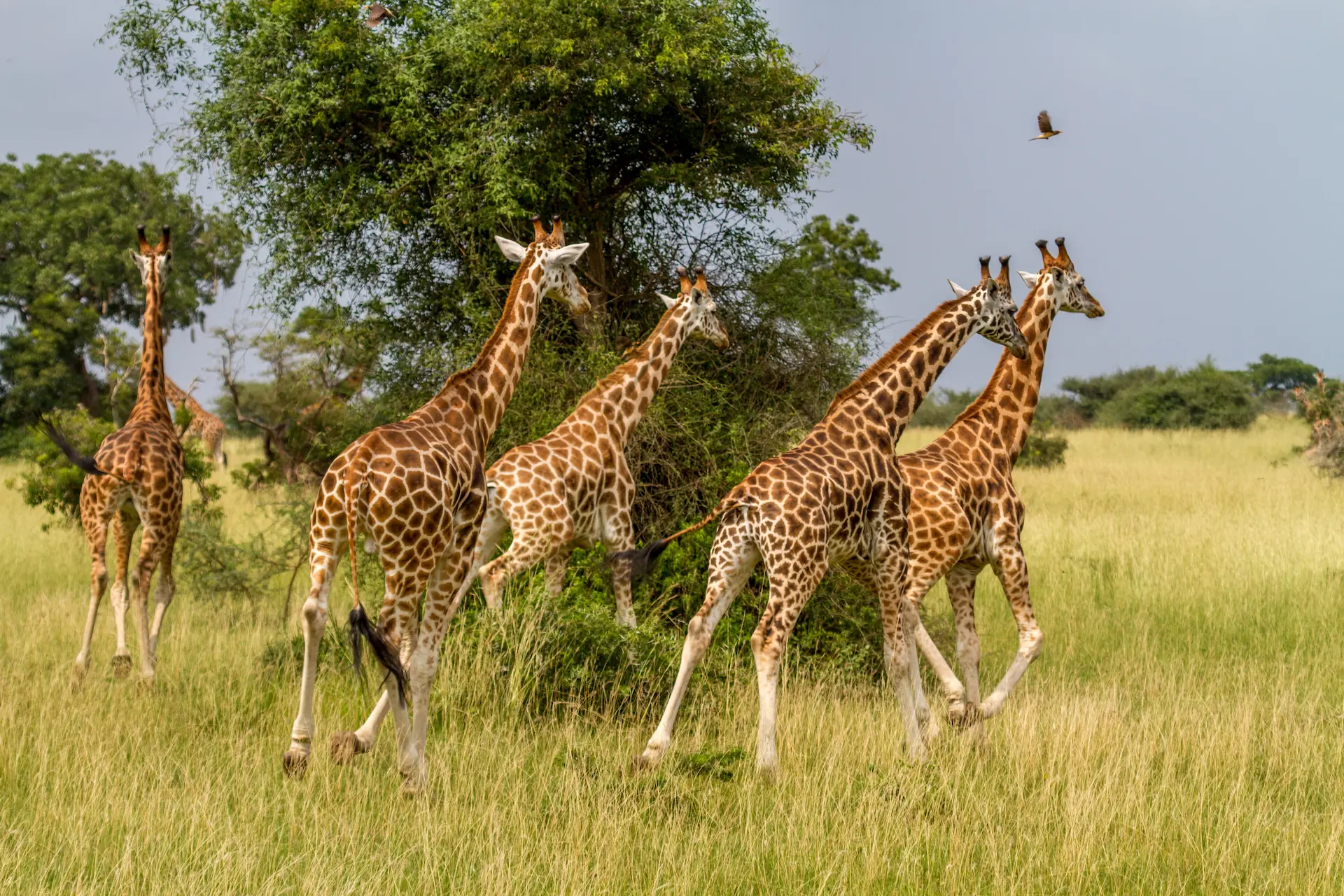
According to the IUCN Red List, giraffes are no longer grouped under a single status. Instead, four species are recognised: Northern, Reticulated, Masai, and Southern giraffes. Their conservation statuses vary, with the Northern giraffe listed as Critically Endangered and others ranging from Endangered to Least Concern.
Giraffes are some of the most recognizable animals in the world, yet their future is more fragile than many people realize. In the last 30 years, their population has dropped by nearly 40%. This decline has been slow and gradual, which is why conservationists often refer to it as a “silent extinction.”
So, are giraffes endangered? The answer is not the same for every type of giraffe. The IUCN now recognises four distinct species. Each faces different levels of risk, with some subspecies under even greater threat.
At Save Giraffes Now, we’re working across 10 African countries to change that story.
Our team partners with rangers to rescue calves, treat injured giraffes, and remove deadly snares. We help communities secure safe water for both people and wildlife, and we support projects that return giraffes to areas where they once roamed freely.
Key Takeaways
- Giraffes are no longer treated as a single vulnerable species. The IUCN now recognises four distinct species: the Northern giraffe, Reticulated giraffe, Masai giraffe, and Southern giraffe.
- Giraffes have lost almost 40% of their population in the last 30 years.
- Major threats include habitat loss, poaching, human conflict, and climate change.
- Conservation programs are making a difference through rescues, translocations, and community partnerships.
- You can help save giraffes by donating, raising awareness, supporting eco-tourism, and advocating for stronger protections.
The Current Status of Giraffes
The International Union for Conservation of Nature (IUCN) no longer lists giraffes under a single overall category. It now recognises four separate species: Northern giraffe, Reticulated giraffe, Masai giraffe, and Southern giraffe. Each has its own conservation status.
Out of the recognized subspecies, two are listed as Endangered and two are Critically Endangered.
The Kordofan giraffe has lost around 90% of its population since the 1980s, and the Nubian giraffe has declined by an alarming 95%. These figures illustrate the urgency of conservation work.
Here are the current IUCN Red List statuses of the eight assessed giraffe subspecies:
|
Masai Giraffe
Once the most numerous giraffe species, boasting around 71,000 individuals just three decades ago, the Masai giraffe now faces a sobering decline.
Fewer than half that number remain in the wild today. Found primarily across Kenya and Tanzania, this species also includes a small, isolated group in northeastern Zambia, known as the Masai Thornicroft population.
Scientific Name: Giraffa tippelskirchi
Population: About 35,000 Masai giraffes remain
IUCN Red List Status:
Masai giraffe: Endangered
Masai Thornicroft: Vulnerable
Northern Giraffe
The Northern giraffe is among the most threatened. Of its three recognized subspecies, two are listed as Critically Endangered and one as Vulnerable.
These giraffes inhabit parts of Eastern and Central Africa, with populations fragmented by conflict and habitat loss. The subspecies include the Kordofan giraffe, the Rothschild’s giraffe (now regarded as the same as the Nubian giraffe), and the West African giraffe.
Scientific Name: Giraffa camelopardalis
Subspecies:
Kordofan: G. c. antiquorum
Rothschild’s (Nubian): G. c. camelopardalis
West African: G. c. peralta
Population: Roughly 5,600 Northern giraffes remain
Kordofan: ~2,000
Rothschild’s (Nubian): ~3,000
West African: ~600
IUCN Red List Status:
Kordofan: Critically Endangered
Nubian (Rothschild’s): Critically Endangered
West African: Vulnerable
Reticulated Giraffe
The Reticulated giraffe, with its striking, net-like coat pattern, is restricted mainly to northern Kenya, with small populations in Ethiopia and Somalia. Sadly, their numbers have fallen by more than half in the past 30 years.
Scientific Name: Giraffa reticulata
Population: About 15,780 remain
IUCN Red List Status: Endangered
Southern Giraffe
In contrast, the Southern giraffe is a conservation success story. This group makes up more than half of all giraffes in Africa today. Within this species, the Angolan giraffe offers a particularly hopeful example: once locally extinct in Angola, it has been successfully reintroduced, and its population has tripled in the last three decades.
Scientific Name: Giraffa giraffa
Subspecies:
- Angolan: G. g. angolensis
- South African: G. g. giraffa
Population: About 54,750 Southern giraffes
- Angolan: 17,750
- South African: 37,000
IUCN Red List Status:
- Angolan: Least Concern
- South African: Least Concern
The Nubian giraffe, now classified under the Northern giraffe species, is listed by the IUCN as Critically Endangered. The South African giraffe, a subspecies of the Southern giraffe, is listed as Least Concern.
The IUCN currently lists the West African giraffe as Vulnerable. Thanks to conservation measures, its numbers have grown from just 49 individuals in 1995 to about 600 today—a remarkable recovery. However, it remains the most at-risk giraffe subspecies and continues to teeter on the brink of extinction.
Why Are Giraffes Endangered?
The decline in giraffe populations (with only 117,000 giraffes remaining in the wild) is the result of several overlapping pressures. These threats vary across regions, but together they have pushed many subspecies toward extinction.
Habitat Loss
As human populations grow, more land is cleared for farming, roads, and settlements. This reduces the size of savannas and woodlands where giraffes feed and roam. Fragmented habitats also make it harder for giraffes to move freely between areas, which weakens populations over time.
Poaching and Illegal Hunting
Giraffes are hunted for their meat, hides, and tails, which are used in cultural practices or sold illegally. In some areas, poaching has caused severe declines. Even when laws are in place, weak enforcement makes giraffes vulnerable to hunters.
Conflict and Human Pressure
In parts of Africa where armed conflict or instability is common, giraffes often become unprotected. They may be trapped in snares, caught in crossfire, or forced into unsafe areas as people compete for land and resources.
Since giraffes have a sweet spot for mangoes and mango flowers, local farmers who rely on this produce for their livelihood also view giraffes as a threat, leading to conflict and retaliation against giraffes that may be raiding mango crops.
Climate Change
Long periods of drought and shifting rainfall patterns are making it harder for giraffes to find water and nutritious plants. These changes also worsen the effects of habitat loss and bring giraffes into more frequent conflict with people who rely on the same land for survival.
What’s Being Done to Protect Giraffes
Across Africa, conservationists are working hard to stop the decline of giraffes and restore their numbers.
Save Giraffes Now leads projects in ten countries, focusing on both emergency rescues and long-term protection. Rangers and community teams play a big role in these efforts, stepping in to remove snares, treat injured giraffes, and care for orphaned calves that would not survive on their own.
Another important step is relocating giraffes to safer areas. In some regions, giraffes have been reintroduced to areas where they had become extinct. These translocations help rebuild healthy populations and expand their range. Anti-poaching patrols also keep giraffes safe from hunters and strengthen the security of protected areas.
We also invest in communities and the people living closest to giraffes. In many places, projects include providing clean water and supporting education programs that encourage people to see giraffes as valuable neighbors rather than competitors.
On a larger scale, advocacy is helping to push for stronger protections. International recognition, such as proposals to list giraffes under the U.S. Endangered Species Act, increases visibility for giraffes and creates pressure for governments to take action. These combined efforts show that while the threats are serious, progress is possible when people work together.
How You Can Help Save Giraffes
Everyone has a role to play in protecting giraffes. One of the most direct ways you can help save giraffes is by supporting conservation programs. Donations help fund ranger patrols, rescue operations, and community projects that give giraffes a chance to survive and thrive.
Sharing knowledge is just as important. Many people are unaware that giraffes are in danger, so spreading awareness through conversations, classrooms, and social media can build the global support needed for long-term change.
Travelers can also make a difference by choosing eco-tourism experiences that support local communities and protect natural habitats. Responsible tourism brings income to regions that rely on wildlife, while also encouraging governments and communities to value conservation.
Absolutely anyone (and everyone) can lend their voice to policy change. Every action, whether large or small, contributes to keeping giraffes in the landscape. Protect giraffes for future generations by donating to Save Giraffes Now.
Frequently Asked Questions
Are giraffes still endangered?
Giraffes as a whole are listed as Vulnerable, but several subspecies are officially endangered or critically endangered. This means that while not every giraffe population faces the same risk, many are still in serious danger and need protection. If we do not intervene and save giraffes now, they are at risk of becoming endangered.
How many giraffes are left in the world in 2025?
Current estimates place the global giraffe population at fewer than 117,000 individuals in the wild. This is a sharp decline from historical numbers and a reminder of how urgent conservation efforts have become.
Are giraffes more endangered than elephants?
Elephants and giraffes face different threats, and both species are at risk. African elephants are listed as either Endangered or Critically Endangered, depending on the subspecies, while giraffes are listed overall as Vulnerable. Some giraffe populations are doing better than those of elephants, but others are just as close to extinction.
How many giraffes are left in zoos?
Around 2,000 giraffes live in zoos worldwide. While zoos play a role in education and research, the vast majority of giraffes live in the wild, where conservation programs are most critical for their survival.
How can I help save giraffes?
You can make a difference by supporting conservation groups like Save Giraffes Now. Share awareness, choose eco-friendly travel options, and back policies that protect giraffes and their habitats. Every action helps, no matter how small.