
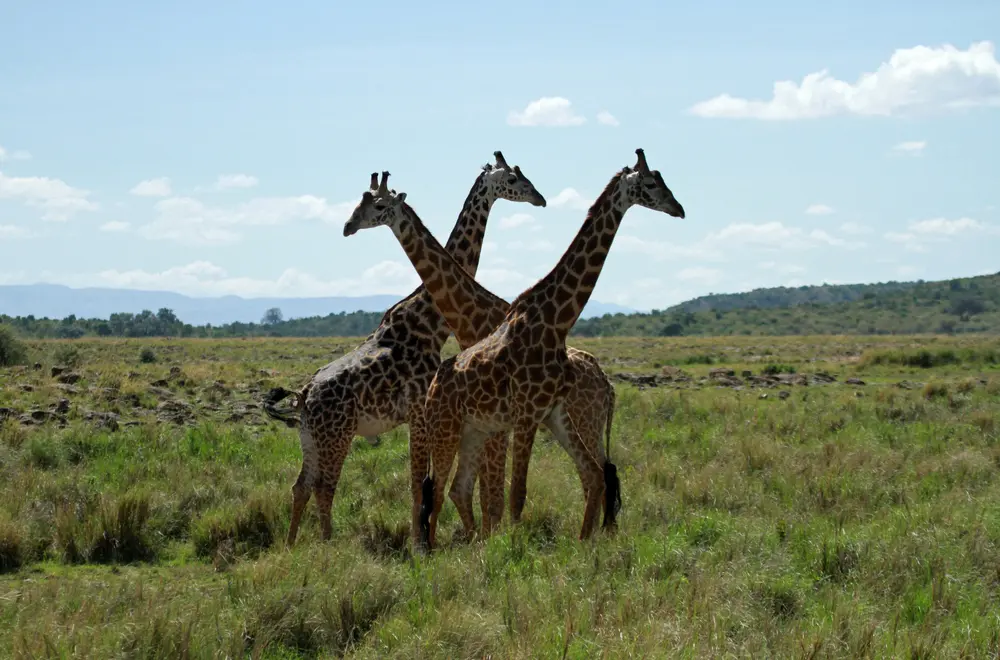
Giraffes often look calm and peaceful, so it is easy to assume they are friendly animals. The truth is a little more nuanced. Giraffes are gentle in many situations, but they are still wild and cautious. They move quietly, avoid conflict, and rarely show aggression unless they feel threatened or need to protect a calf.
Most of what people see as friendliness is simply their calm nature. In the wild, they keep a safe distance from humans. In protected areas, they appear more relaxed because they are used to seeing people, not because they are tame.
Key Takeaways
- Giraffes are calm and gentle, but still behave like wild animals.
- They avoid conflict and prefer to keep a distance from humans in most environments.
- They can become dangerous when protecting calves or reacting to sudden movement.
- Their peaceful nature makes them vulnerable to poaching and habitat pressure.
- Save Giraffes Now protects them by securing safe land and supporting rangers.
Do Giraffes Like Being Around Humans?
Few wild animals like to be around humans, but on the scale giraffe are more tolerant than most. Wild giraffes prefer distance. They watch from afar, move slowly away when people come close, and avoid direct interaction. This is normal for a prey animal that depends on awareness to stay safe.
In protected areas, giraffes often seem more relaxed. They may stand nearby or continue feeding while people watch. This is borne from a trust of routine, safe and caring interactions. Overtime they learn to trust that the environment and the humans they are interacting with can be trusted and are of no threat.
When Giraffes Can Be Dangerous
Giraffes are peaceful, but they can defend themselves when they feel threatened. A strong kick from a giraffe can injure or kill a predator, and mothers react quickly when a calf is at risk. Bulls can also become unpredictable during mating season when competing for dominance.
They do not seek conflict, yet they have the strength to protect themselves. This is why keeping a safe distance is important, even when a giraffe looks calm.
How Their Gentle Nature Puts Them at Risk
Giraffes rely on calm behavior to blend into their surroundings, but this same quiet nature makes them easy targets. Many do not run until danger feels close, which gives poachers an advantage. Habitat loss pushes them into smaller areas where escape routes are limited, and their cautious temperament leaves them vulnerable.
Their peaceful behavior becomes a weakness in an environment where human pressure is high.
How Save Giraffes Now Protects These Peaceful Animals
Save Giraffes Now creates safer environments where giraffes can live without constant fear. We work with local partners to secure habitats, support rangers, and move vulnerable herds into protected areas. These efforts reduce poaching pressure, restore natural feeding grounds, and give giraffes the space they need to behave naturally.
Their calm nature becomes a strength again when they have safe land to roam.
Help Us Keep Giraffes Safe in the Wild
Giraffes face rising threats from poaching, shrinking habitats, and human pressure. Their gentle behavior makes them even more vulnerable in places where safety is no longer guaranteed. Our work is to protect these peaceful animals by securing land, supporting rangers, and helping herds move into safe areas where they can live without fear.
Your support strengthens this work. Donations help expand protected spaces, fund field teams, and give giraffes the chance to live long, calm lives in the wild.
Frequently Asked Questions
Do giraffes like to be petted?
No. Giraffes do not enjoy being touched. They are wild animals that feel safest when people keep their distance. Any close contact in parks or reserves happens under controlled conditions and should never be seen as natural behavior.
Do giraffes bond with humans?
Giraffes may grow comfortable around familiar caretakers or staff in protected areas. It is trust built through routine and safety. From daily interaction, a bond often forms.
How intelligent are giraffes?
Giraffes are observant and quick to notice changes in their environment. They solve problems quietly, remember safe paths, and communicate through subtle movements and low sounds. Their intelligence shows in how they navigate large landscapes with calm awareness.
Are giraffes aggressive to humans?
Giraffes rarely show aggression toward people. They only become defensive when startled, threatened, or protecting calves. Giving them space and avoiding sudden movement keeps encounters safe for both humans and giraffes.