
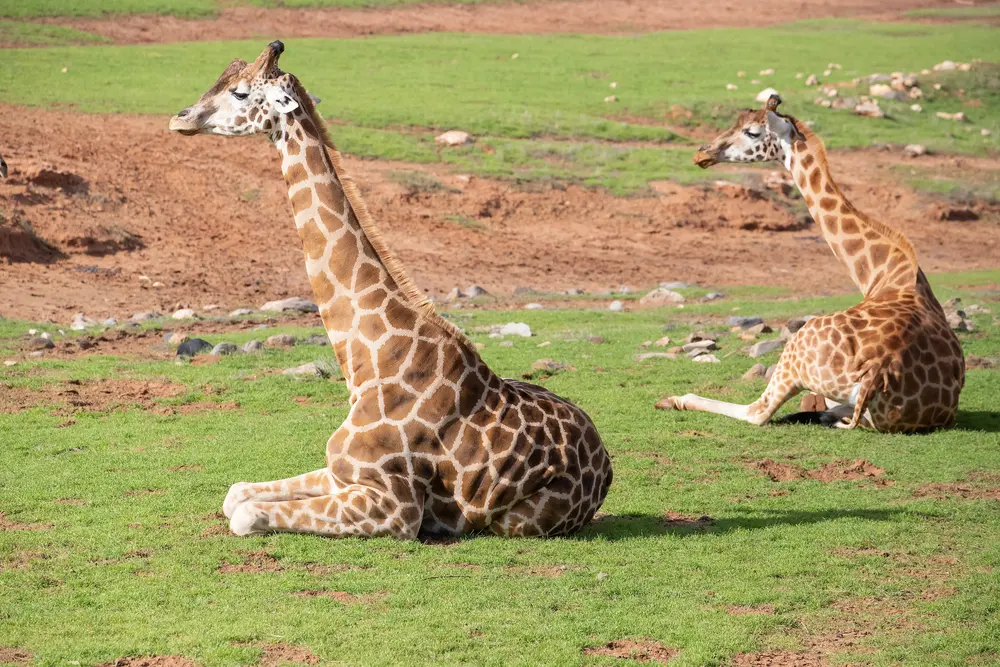
Yes, giraffes can sleep standing up, but that is only part of the story. They take short, light naps while standing, and they also lie down for brief moments of deeper rest. Their sleep is broken into small bursts, and in the wild, they often get no more than half an hour of total sleep in a day.
Giraffes rest in this position because safety is a primary concern that influences every aspect of their routine. A standing nap allows them to wake quickly if danger appears, while lying down leaves them more vulnerable.
Key Takeaways
- Giraffes mostly nap while standing, but also lie down for short periods of deeper rest.
- Wild giraffes often sleep for only about 30 minutes a day, spread across tiny bursts.
- Captive giraffes rest longer and may sleep for more than four hours because they feel safe.
- Save Giraffes Now helps create safer habitats where giraffes can rest and recover without constant fear of predation.

How Giraffes Actually Sleep
Giraffes do not sleep the way most animals do. Instead of settling in for long periods of rest, they take short naps throughout the night and sometimes during the day. These naps last only a few minutes. Their sleep is broken, light, and spread out into small intervals rather than one long stretch.
Most of their rest happens when the surroundings feel calm. If a herd senses movement or hears unfamiliar sounds, they will remain alert and postpone deeper sleep. Their height gives them a good view of the land, which helps them judge when it is safe to relax for a moment.
Standing Naps: Quick, Light, and Alert
Giraffes often rest while standing because it keeps them ready to move at any moment. During these short naps, their bodies stay upright, their legs remain steady, and their eyes may stay partly open. They slip into a light, almost dreamy state that lets them relax without losing awareness of what is happening around them.
This kind of nap is common at night or in quiet moments when the herd feels calm. It helps giraffes recover small amounts of energy without risking a fall to the ground. A quick lift of the head or a small shift in posture is all they need to return to full alertness.
Lying Down for Real Rest
Giraffes only lower their bodies when they feel completely safe, but they do not fully lie flat on the ground. Instead, they bend their legs and rest in a semi-upright position that allows them to stay ready to rise quickly. During these moments, they may briefly rest their heads back against their bodies. This posture gives them a short window of deeper rest than standing naps, without leaving them fully exposed.
But these moments are brief. A few minutes at a time is often enough before they lift their heads again to check their surroundings. In the wild, this posture leaves them vulnerable, so they choose it carefully and only when the herd senses no immediate threat.
How Long Do Giraffes Sleep Each Day?
Giraffes manage only about 30 minutes in a full day, usually in the form of quick naps spread across the night. These short bursts allow them to rest without losing awareness of their surroundings.
In captivity, their sleep patterns appear quite different. With predators removed and the environment controlled, giraffes can relax more deeply and for longer periods. They often sleep for around 4.6 hours within a 24-hour cycle. This demonstrates the significant impact of safety on their ability to rest.
What Giraffe Sleep Tells Us About Their Vulnerability
A giraffe’s sleep pattern reveals how fragile life can be on the open plains. The fact that they rely on brief periods of rest indicates how much they depend on their surroundings. When habitats shrink or become crowded with human activity, giraffes stay alert for longer periods. This reduces the chances of getting the deeper rest they need for growth, healing, and overall health.
Broken landscapes also increase the risk of predators approaching unnoticed. When a giraffe does not feel safe enough to lie down, it loses access to the short, deep sleep that helps its body recover. Young giraffes are especially affected. They need more rest than adults, but they also face the highest risk when lying on the ground.
Their sleep highlights a simple truth. Healthy habitats create calm, predictable spaces where giraffes feel safe enough to rest and thrive. When those spaces disappear, their sleep suffers, and their overall well-being declines.
Help Us Give Giraffes the Safety They Deserve
Giraffes can only rest when the land around them feels calm, yet many no longer have that peace. Habitat loss, human activity, and rising poaching have pushed several giraffe species toward extinction. Herds stay alert for long hours because danger is never far, and this constant stress affects their health, growth, and survival.
Save Giraffes Now is working to change that. Our team protects wild spaces, supports rangers on the ground, and relocates vulnerable giraffes into areas where they can move freely without fear. These projects help create environments where giraffes can lie down, recover, and rebuild their numbers. Every rescue and every restored habitat strengthens their chance of survival.
Your support helps keep this work going. Donations provide equipment for field teams, strengthen protected areas, and create a safe space for giraffes to rest and grow. Each contribution brings these gentle animals closer to a future where they can live without constant threat
Frequently Asked Questions
What happens if a giraffe lies down?
When a giraffe lies down, it becomes more vulnerable to predators because getting back up takes time. Even so, giraffes still lie down for short moments of deep rest when they feel safe. Young giraffes lie down more often because they need extra sleep to grow.
How long do giraffes sleep standing up?
Standing naps are very short. Many last just a few minutes at a time. These quick naps happen throughout the night and are a big part of how giraffes reach their total sleep time each day.
What is the only animal that sleeps standing up?
Giraffes are not the only ones. Horses, zebras, and some birds also sleep while standing. They all use a similar method that locks their legs in place, allowing them to rest without falling.
Do elephants sleep standing up?
Elephants doze while standing, especially when they are in the wild and need to stay alert. They lie down for deeper rest, but only when they feel safe enough to do so.