
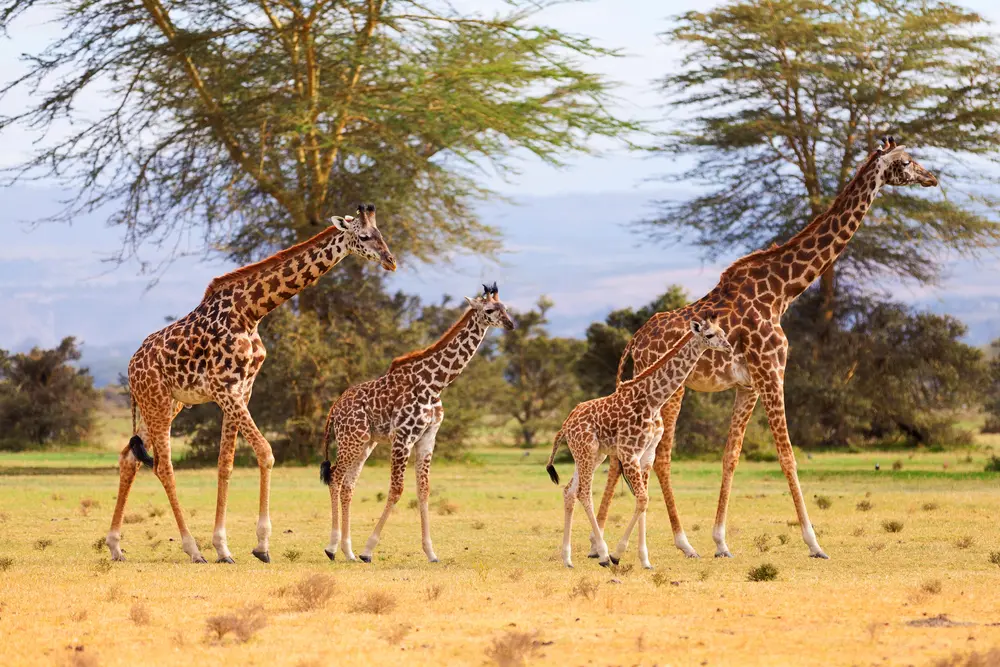
Giraffes have seven cervical vertebrae, the same number of neck bones as humans and most other mammals. Despite their extremely long necks, they do not have extra vertebrae.
What makes a giraffe’s neck so tall is not the number of bones, but the length of each one. Over millions of years, those seven vertebrae became dramatically elongated, creating the height that defines the species today.
Key Takeaways
- Giraffes have seven cervical vertebrae, the same number as humans and most other mammals.
- Their long necks result from the elongation of each vertebra, not from having extra bones.
- Most mammals follow the “seven vertebrae rule,” with rare exceptions such as sloths and manatees.
- In addition to the neck, giraffes typically have 14 thoracic and 5 lumbar vertebrae, along with fused sacral and tail vertebrae.
- The structure of the giraffe spine reflects evolutionary constraints that favor modifying bone length rather than bone count.

How Many Neck Vertebrae Do Giraffes Have?
Giraffes have seven neck vertebrae, known scientifically as cervical vertebrae. This number is consistent across nearly all mammals, including humans, dogs, whales, and horses.
Each cervical vertebra in a giraffe is greatly elongated compared to those of most other animals. In adult giraffes, a single vertebra can measure more than 10 inches in length. The number of bones remains unchanged, but their size creates the dramatic extension of the neck.
This pattern follows what biologists call the “mammalian rule,” which states that most mammals have seven cervical vertebrae regardless of neck length. Giraffes are an extreme example of how evolution can modify bone structure without altering bone count.
If Giraffes Only Have 7 Vertebrae, Why Is Their Neck So Long?
As stated above, the length of a giraffe’s neck comes from the elongation of each individual vertebra, not from adding more bones. Over millions of years, natural selection favored giraffes with longer cervical vertebrae, gradually increasing overall neck length.
Each of the seven vertebrae stretches far beyond what is typical in other mammals. Instead of increasing the number of segments, evolution modified the size and shape of existing ones. This allowed giraffes to maintain the standard mammalian structure while dramatically increasing height.
Research also shows that the boundary between the last neck vertebra and the first thoracic vertebra has shifted slightly in giraffes. This change increases neck flexibility and function without technically adding an extra cervical bone.
The result is a neck that appears structurally different but still follows the same basic anatomical blueprint shared by most mammals.
Do Giraffes Have More Vertebrae Than Other Animals?
Giraffes do not have more neck vertebrae than most other mammals. Like humans, horses, and dogs, they have seven cervical vertebrae.
This consistency is common across the mammalian class. With only a few rare exceptions, such as sloths and manatees, mammals almost always have seven neck bones regardless of how short or long the neck appears.
The difference lies in proportion, not count. In a human, each cervical vertebra is relatively small. In a giraffe, each one is dramatically elongated.
How Many Vertebrae Do Giraffes Have in Total?
Like other mammals, their spine is divided into several regions: cervical (neck), thoracic (upper back), lumbar (lower back), sacral (pelvic), and caudal (tail).
In addition to 7 cervical vertebrae, giraffes typically have 14 thoracic vertebrae and 5 lumbar vertebrae. The sacral vertebrae are fused to form part of the pelvis, and the number of tail vertebrae can vary.
While the total vertebral count may differ slightly between individuals, the cervical region remains constant at seven. The rest of the spine supports the giraffe’s large body, distributes weight across long limbs, and allows flexibility during movement.
How Vertebrae Support a Giraffe’s Body
The giraffe’s vertebrae form the structural framework that supports a body weighing up to 3,000 pounds. Long cervical vertebrae allow giraffes to reach high vegetation, while the thoracic and lumbar regions help stabilize the torso.
Strong joints and dense bone structure distribute weight across the spine and into the limbs. This design allows giraffes to stand for long periods, walk efficiently across open landscapes, and maintain balance despite their height.
The spine also works closely with muscles, ligaments, and the cardiovascular system. Supporting such a tall body requires coordination between skeletal strength and blood circulation, especially when raising or lowering the head.
These adaptations demonstrate that giraffe vertebrae are not simply elongated bones. They are part of a highly specialized system built to support one of the tallest animals on land.
Help Us Protect the Giants Built by Evolution
Giraffes require expansive, secure landscapes to sustain their unique anatomy and daily feeding patterns. As natural habitats shrink or become fragmented, even the most physically adapted animals struggle to survive.
You can donate now to help fund habitat protection, anti-poaching efforts, rescue care, and long-term conservation programs through Save Giraffes Now. These actions reduce injuries, protect food sources, and provide giraffes with the conditions they need to survive at every stage of life.
Frequently Asked Questions
What animal has 7 vertebrae?
Most mammals have seven cervical (neck) vertebrae, including humans, giraffes, dogs, cats, horses, and whales. This pattern is consistent across nearly all mammalian species despite large differences in neck length.
How many vertebrae are in giraffes?
Giraffes have seven cervical vertebrae in their neck. In total, they typically have 7 cervical, 14 thoracic, and 5 lumbar vertebrae, along with fused sacral vertebrae and multiple tail vertebrae. The exact total can vary slightly between individuals.
Which mammal has the most vertebrae?
Whales generally have the highest total number of vertebrae among mammals. Some large whale species can have over 60 vertebrae, primarily due to an extended number of thoracic, lumbar, and tail vertebrae.
Do all mammals have 7 cervical vertebrae?
Nearly all mammals have seven cervical vertebrae, regardless of neck length. Rare exceptions include sloths and manatees, which can have fewer or more due to unique evolutionary adaptations.