
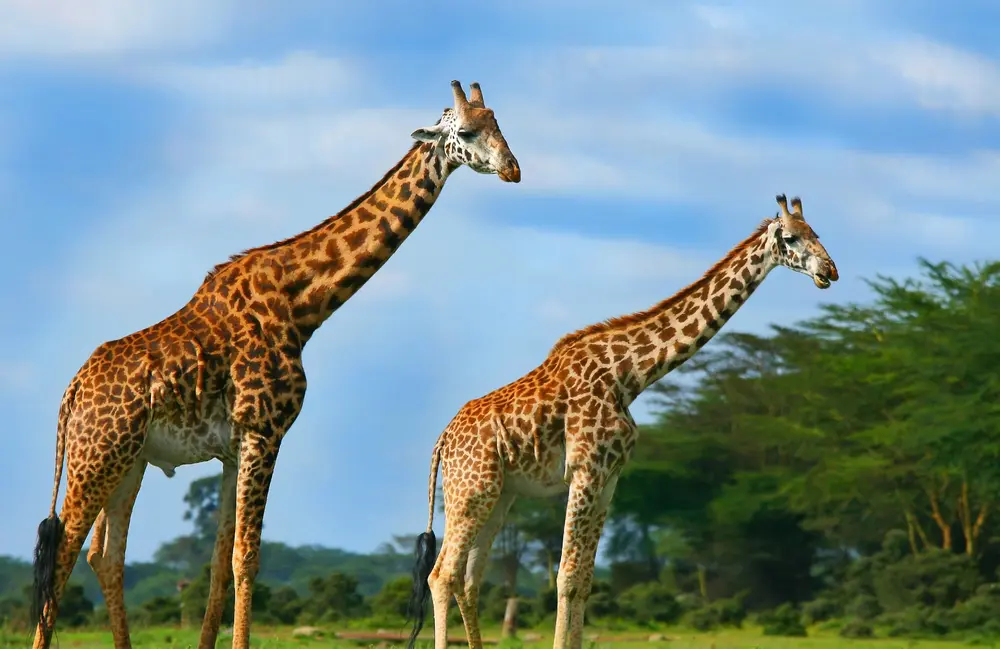
Giraffes typically live about 20 to 25 years in the wild, though some individuals may live longer under favorable conditions. In protected care, such as zoos, giraffes can reach their late 20s or even 34 years of age.
Lifespan varies with factors such as habitat quality, predation, disease, and human impacts. The difference between average lifespan and maximum recorded age often explains why reported numbers vary across sources.
Key Takeaways
- Giraffes typically live 20 to 25 years in the wild, with some individuals reaching their late 20s.
- In captivity, giraffes can live into their late 20s or early 30s under professional care.
- Calf survival plays a major role in overall lifespan averages in the wild.
- Habitat quality, food availability, injury, and human pressures all influence longevity.
- Male giraffes may face a higher risk due to competition and roaming behavior.
- Lifespan directly affects population stability because giraffes have low reproductive rates.
How Long Do Giraffes Live in the Wild?
Giraffes are often said to live around 25 years in the wild, but their true lifespan has been difficult to measure. Long-term monitoring projects have shown that some wild giraffes can live much longer than previously believed. In northwest Namibia, ongoing research has tracked individually identified Angolan giraffes since the late 1990s, documenting some of the oldest recorded wild individuals.
Lifespan in the wild varies widely across regions and predator presence. Even adult giraffes can be preyed upon by lions, while calves and subadults face higher risks from hyenas, leopards, wild dogs, and crocodiles.
In the Serengeti, more than 20 percent of Masai giraffe calves do not survive their first month, and survival rates decline sharply during the first year. In areas with low predator density, early mortality can be significantly lower.
Although adult giraffes are capable of defending themselves with powerful kicks, survival to old age depends heavily on environmental conditions and early-life risk.
How Long Do Giraffes Live in Captivity?
In captivity, giraffes often live longer than their wild counterparts. Many zoo-managed giraffes reach their mid- to late 20s, and some individuals have lived around 34 years under professional care.
The absence of predators, consistent food supply, and access to veterinary treatment contribute to increased longevity. Regular health monitoring enables early detection of disease or injury, thereby improving survival outcomes.
Even in captivity, lifespan varies based on genetics, diet, enclosure design, and overall health management. While zoos can mitigate many natural risks, aging-related health issues still affect giraffes as they age.
Do Male and Female Giraffes Live the Same Length of Time?
Male and female giraffes can have different survival patterns. Females often live slightly longer on average, partly because adult males face higher risks related to competition and territorial behavior.
Male giraffes engage in physical contests known as necking to establish dominance and gain access to mates. These encounters can lead to injury, which may affect long-term survival. Males also tend to roam more widely, increasing exposure to environmental risks.
Females typically remain in more stable social groups and may experience fewer high-risk confrontations. However, both sexes are subject to the same environmental pressures, including habitat conditions and food availability.
What Is the Oldest Giraffe Ever Recorded?
Documented cases suggest that giraffes can live into their late 20s and beyond, particularly in protected care. Some zoo records report individuals reaching approximately 34 years of age, which is considered exceptional.
In the wild, determining the oldest recorded giraffe is more difficult. Long-term monitoring projects have documented individuals living into their late 20s, and some conservation organizations report rare cases exceeding that range. Precise maximum ages are challenging to confirm because many wild giraffes are not tracked from birth to death.
Help Giraffes Live Longer in the Wild
Giraffes can live more than two decades in the wild when they have access to safe habitats, stable food sources, and protection from injury. When those conditions decline, lifespan and population stability are directly affected.
Supporting habitat preservation, anti-poaching patrols, rescue care, and long-term monitoring helps create environments where giraffes can reach their natural lifespan. These efforts protect both adults and calves and improve long-term survival rates.
You can support this work by donating to Save Giraffes Now.
Frequently Asked Questions
Do giraffes mate for life?
Giraffes do not mate for life. They do not form long-term pair bonds. Males compete for access to females, and mating occurs when a female is receptive. After mating, the male does not remain with the female to help raise the calf.
Do elephants live 300 years?
No, elephants do not live 300 years. African and Asian elephants typically live 60 to 70 years in the wild under natural conditions. Claims of 300-year lifespans are myths and are not supported by scientific evidence.
Do giraffes sleep for 2 hours?
Giraffes sleep very little compared to many other mammals. In the wild, they may sleep for 30 minutes to 2 hours per day, often in short periods lasting only a few minutes at a time. This light and fragmented sleep pattern helps them remain alert to predators.
What affects a giraffe’s lifespan?
Several factors influence how long a giraffe lives. One of the most significant is survival during the first year of life. Calves face a high risk of predation, particularly from lions and hyenas. Those who survive early vulnerability have a much higher chance of reaching adulthood.