
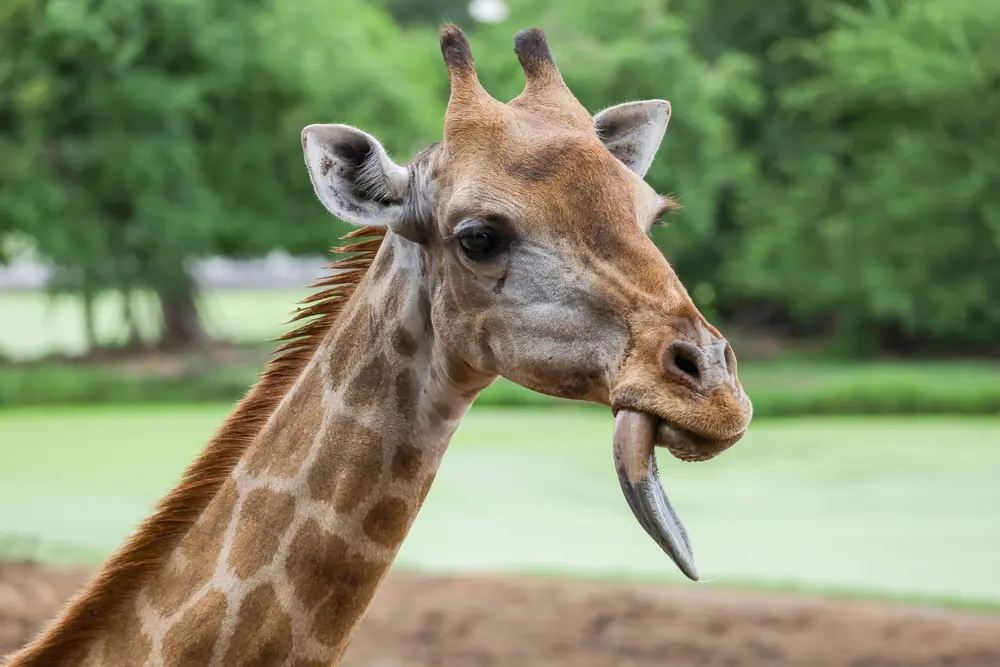
Giraffes have purple tongues because the dark color protects them from sunburn. They spend long hours each day reaching into tall trees for leaves, and their tongues are exposed to the sun the entire time. The deep purple or blue-black shade comes from high levels of melanin, which helps shield the skin from UV damage.
This color is part of their daily survival. A lighter tongue would burn easily, crack, or dry out during long browsing sessions. The dark shade keeps their tongue healthy while they feed across Africa’s savannas. All four giraffe species share this dark-tongue trait, helping them feed for long hours under intense sunlight.
Save Giraffes Now works to protect the landscapes where giraffes browse, making sure they have safe places to feed without the pressures that threaten their survival.
Key Takeaways
- Giraffes have purple or black tongues because the dark pigment protects them from sunburn while they feed.
- Their tongues can reach up to 18 to 20 inches, giving them the reach needed to pull leaves from tall trees.
- Melanin reduces the chance of cracking or dryness during long hours of browsing in the sun.
- Giraffes use their tongues for feeding, grooming, and caring for their young.
- Giraffes have a prehensile tongue, acting like a fifth limb to grip, twist, and pull leaves from thorn-covered branches.
How Long Is a Giraffe’s Tongue?
A giraffe’s tongue can reach about 18 to 20 inches in length. This gives them the reach they need to pull leaves from tall branches without moving their whole body. The tongue is prehensile, acting almost like a fifth limb to grip, twist, and pull leaves from thorn-covered branches. This purple marvel is flexible and strong, able to wrap around twigs and strip them clean in one smooth motion.
This extra length helps giraffes browse safely from thorny trees like acacia. It keeps their face away from sharp branches while still giving them access to the most nutritious leaves.
Do Giraffes Ever Get Sunburn on Their Tongues?
Giraffes can get sunburn on their tongues, but the dark pigment makes it far less likely. Melanin protects the tongue from strong UV rays, which is important because giraffes spend long hours feeding under the sun. Without this pigment, the constant exposure would cause drying, cracking, or discomfort.
Young calves often have lighter tongues, and their color deepens as they grow and begin to browse more often. The darker shade gives them the protection they need as they start feeding from trees on their own.
What Do Giraffes Use Their Tongues For?
Giraffes rely on their tongues for much more than pulling leaves. They use them to strip branches, reach deep between thorny twigs, and grab tender shoots that other animals cannot reach. Thick saliva coats the tongue, helping protect it from acacia toxins and sharp thorns. Their tongue can also move independently from the jaw, giving them precise control as they avoid sharp thorns. The tongue also helps with grooming, allowing giraffes to clean hard-to-reach spots on their bodies. Mothers use their tongues to care for their calves, especially in the early days after birth.
Their ability to stay comfortable while feeding helps them get the nutrients they need in environments where leaves are sometimes scarce. A strong, protected tongue keeps them healthy, steady, and able to move through their habitat without slowing down.
Pressures That Affect Giraffes’ Feeding and Overall Tongue Health
Giraffes rely on healthy woodlands to browse comfortably, but many of these areas are disappearing. When trees are cleared for farming or settlements, giraffes lose the shaded places they depend on during long feeding hours. Drought makes this even harder. Leaves dry out faster, new growth slows down, and herds are forced to browse in open sunlight for longer stretches.
Human activity can also push giraffes into unfamiliar places where food is limited. In some regions, poaching and conflict disturb feeding grounds and restrict normal movement. These pressures do not change the color of their tongues, but they affect how often and how easily giraffes can feed. A challenging environment forces them to work harder for the same amount of food.
A stable, tree-rich habitat supports healthy feeding patterns and reduces the stress that comes with searching for dependable browse. Their remarkable tongues help them reach the upper canopy, but when mature trees disappear, that advantage disappears too.
Help Us Protect the Browsers of Africa
Giraffes rely on steady food sources to stay healthy, yet many of the trees they depend on are disappearing. Habitat loss, drought, and human activity make feeding harder and force herds into unsafe areas. Their dark tongues help them browse under harsh sunlight, but they cannot protect themselves from shrinking landscapes or the dangers that follow.
We are working to change this. By protecting natural habitats, supporting rangers, and relocating giraffes to safe spaces, our organization helps secure the environments these animals need to feed and grow. Each restored habitat and rescued herd strengthens the chances of long-term survival.
Your support helps expand this work. Donate now to help protect essential browse habitats and keep giraffes safe where they feed.
Frequently Asked Questions
Why do giraffes have black tongues?
Giraffes have black or dark purple tongues because the high melanin content protects them from sunburn. Their tongues are exposed to the sun for many hours while they feed, so the dark pigment helps prevent cracking and dryness.
How does the coloring of a giraffe’s tongue help it survive?
The dark color shields the tongue from UV rays. This protection allows giraffes to browse for long periods without damaging the surface of the tongue, which is essential for feeding on thorny trees and reaching leaves high above the ground.
Which other animal’s tongue is purple?
Several animals have dark or purple tongues. Giraffes are the most well-known, but okapis, chow chow dogs, and some cattle breeds also have tongues with deep pigmentation.