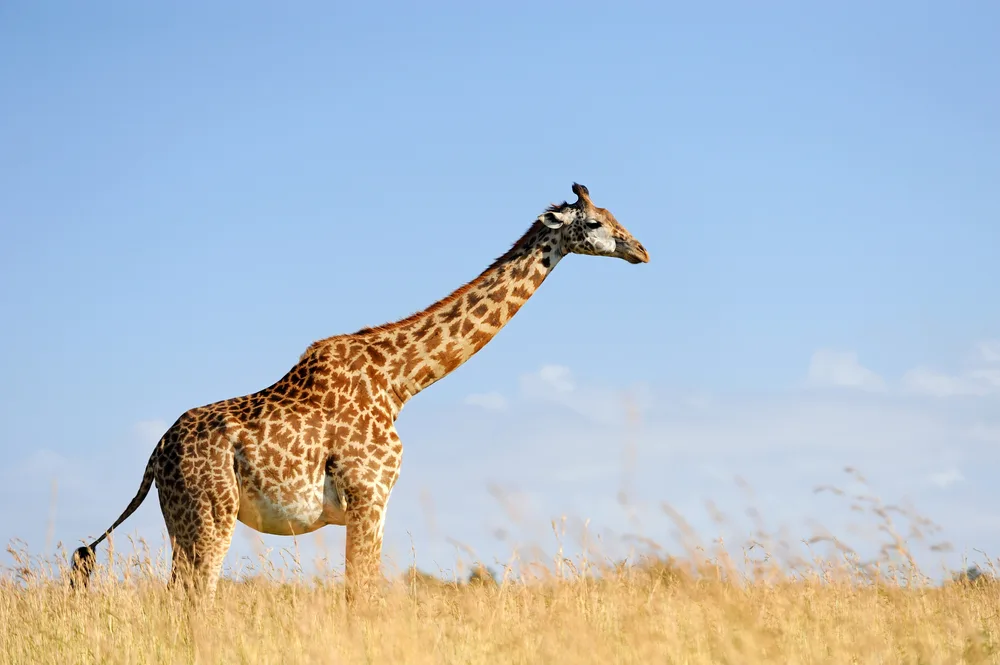
Giraffes are among the most visually recognizable animals on Earth, defined in part by the irregular polygonal patches that tile their bodies in shades of brown and orange against a pale background. The coat is not merely decorative: it is the product of a complex developmental process, shaped by genetics and linked to survival. For this reason, the birth of a giraffe without any spots at all is an event so biologically improbable that documented cases can be counted on one hand.
As of early 2026, the total number of confirmed spotless giraffes on record across all species and all time stands at four: two born in captivity in Japan in 1972, one born in a Tennessee zoo in July 2023, and one photographed in the wild in Namibia in September 2023. A fifth case, the Reticulated giraffe born in Japan in the 1960s, is referenced in archival film footage but has not been formally verified to the same standard as the others. [1] The rarity of these occurrences has made each one a global news event, and their conservation and scientific implications extend well beyond the novelty of their appearance.
This article examines what is currently known about the genetics and biology of the spotless phenotype in giraffes, profiles each documented case, distinguishes the condition from related pigmentation disorders such as leucism and albinism, explores what the phenomenon means for conservation science, and analyzes why spotless giraffes consistently generate the scale of public engagement they do.
1. The Biology of Giraffe Coat Patterns
To understand why spotless giraffes are so unusual, it is necessary to first understand how giraffe coat patterns form and what purpose they serve. A giraffe’s spots and blotches are superimposed on a base of uniformly dark grey skin. The pattern itself arises from two distinct developmental processes: a spatially oriented mechanism that establishes the distribution of melanocyte cells during embryonic development, and a pigmentation-oriented mechanism that determines where and to what extent those melanocytes release melanin after the spatial template is set. [2]
Melanin is the primary pigment responsible for the brown and dark coloring of giraffe patches. The concentration and distribution of melanin-producing cells in giraffe skin are more extensive than in most other mammals. [3] Specific genes control the distribution and intensity of melanin production, and these genetic instructions appear to be passed from parent to offspring.
A landmark 2018 study published in the peer-reviewed journal PeerJ, led by Dr Derek Lee of Penn State University and the Wild Nature Institute, was the first to systematically quantify the heritability of giraffe spot patterns in a wild population. Photographing 31 mother-calf pairs of Masai giraffes and measuring 11 distinct spot traits, including size, shape, color, and edge jaggedness, the researchers confirmed that certain features of a mother’s spot pattern are passed down to her offspring. [4]
The same study produced a second finding with direct bearing on the spotless phenotype: coat patterns are not just heritable; they are linked to survival. Newborn giraffes with larger spots and more irregular edges were significantly more likely to survive their first months of life. [5] The researchers attributed this to camouflage: giraffe calves spend a significant proportion of their early weeks hiding in the dappled light of trees and bushes, and a coat that better mimics that fragmented light environment is harder for visually hunting predators like lions and hyenas to detect. [6]
Spot patterns also appear to serve social functions. There is evidence that spot trait similarity may mediate female social associations in giraffe herds, with individuals who share more similar coat features spending more time in proximity to one another. As animals age, spot patterns do not change, which means they can function as permanent individual identifiers — a property now used by researchers to track individuals across years using photographic databases and pattern-recognition software. [7]
The mechanism that produces a spotless giraffe is not yet fully understood at the molecular level. Scientists believe the absence of the normal pattern is most likely caused by one or more genetic mutations that disrupt the early developmental process by which melanocyte distribution is established in the embryo. [8] Dr Lee described these individuals in a 2023 National Geographic interview not as truly “spotless” animals, but rather as “one-spot-all-over giraffes,” which is a technically more accurate characterization that captures the fact that their uniform brown coloring is itself a form of pigmentation, not its absence. [9] Without detailed genetic analysis of a spotless individual’s genome, the specific genes or mutations involved remain speculative.
2. Spotlessness, Leucism, and Albinism: Clarifying the Terminology
Media coverage of unusual giraffe coloring frequently conflates three distinct biological conditions: spotlessness, leucism, and albinism.
Spotlessness (Patternless Pigmentation)
A spotless giraffe is not a pale or white animal. Kipekee, the most extensively documented spotless giraffe, was described by zoo staff and observers as a solid, uniform brown—darker in overall appearance than the pale interstitial lines of a patterned giraffe but completely lacking the tile-like patches. [10] The underlying skin remains dark grey, as in all giraffes. The condition represents a failure of the patterning mechanism rather than a failure of pigmentation itself.
Leucism
Leucism is a distinct condition caused by a reduction in the number or activity of pigment cells across the skin. Leucistic animals appear white or very pale, with reduced pigmentation in the skin and fur, but retain normal coloring in soft tissues. In giraffes, leucism produces animals that are strikingly white or near-white, with dark eyes. The dark eye color persists because the eye pigment pathway is not affected by the same mechanism. [11] Leucism is more accurately understood as a partial pigmentation failure rather than a complete one.
The most documented cases of leucism in giraffes involve a family of Reticulated giraffes at the Ishaqbini Hirola Community Conservancy in Garissa County, northeastern Kenya. A white female and her pale calf were first reported by community members in June 2017 and confirmed by conservationists shortly after. A second white male was subsequently found in the same group. [12] In March 2020, poachers killed the white female and her calf—events that generated worldwide condemnation and focused renewed attention on the vulnerabilities of visually distinctive wildlife. [13] The surviving white male was subsequently fitted with a GPS tracking device, attached to one of his ossicones, to allow hourly location monitoring by rangers. [14] As of September 2025, he remains alive and monitored.
Earlier documented cases of leucism in giraffes include a white calf spotted in Tanzania’s Tarangire National Park in 2015 and again in January 2016. The condition, while extremely rare in giraffes, is considered more likely to recur in populations with reduced genetic diversity, where recessive alleles responsible for pigmentation disorders become more frequent. [15]
Albinism
True albinism involves a complete inability to produce melanin due to a genetic mutation that prevents the synthesis of tyrosinase, an enzyme essential to the melanin production pathway. True albino animals have white skin, white fur or hair, and characteristically pink eyes, since eye pigmentation is also affected. [16] No confirmed cases of true albinism have been documented in giraffes. The pale giraffes reported in the wild have consistently been confirmed as leucistic rather than albino, identifiable by their dark eyes and normal-colored tail hair. [17] A truly albino giraffe would face severe visual impairment and extreme sensitivity to UV radiation, and scientists consider it highly unlikely that such an individual would survive to reproductive age under natural conditions.
The three conditions compared:
| Condition | Coat Appearance | Eye Colour | Mechanism |
|---|---|---|---|
| Spotlessness | Uniform solid brown | Normal (dark) | Disrupted embryonic patterning; melanin produced uniformly |
| Leucism | White or very pale | Normal (dark) | Reduced pigment cell number or activity; melanin underproduced |
| Albinism | White | Pink (no pigment) | Complete absence of melanin; tyrosinase enzyme absent |
3. Documented Cases of Spotless Giraffes
Japan, 1967 and 1972: The Earliest Records
The earliest documented evidence of a spotless giraffe comes from archival film footage captured at a Japanese zoo in 1967. The footage, referenced in media coverage of the 2023 Tennessee case, shows a uniformly colored giraffe, though it has not been subjected to the same level of scientific documentation as later cases. [18]
The first formally recorded spotless giraffe was a calf born at Ueno Zoo in Tokyo in 1972, named Toshiko. Confirmed through archival photographs, Toshiko was a Reticulated giraffe and is cited by wildlife researchers as the baseline against which subsequent cases are compared. Before the 2023 Tennessee birth, Toshiko remained the only well-documented captive spotless giraffe on record. [19]
Tennessee, USA, July 2023: Kipekee
On July 31, 2023, a female Reticulated giraffe calf was born at Brights Zoo in Limestone, Tennessee. Named Kipekee, meaning “unique” in Swahili, she was immediately identified as spotless by zoo staff. At the time of her birth, she stood six feet tall and was confirmed healthy. [20] Zoo director David Bright contacted giraffe experts across the United States; none could identify a similar case in recent memory. The consensus among those consulted was that she was likely the only solid-coloured Reticulated giraffe alive anywhere on Earth. [21]
Brights Zoo launched a public naming competition that attracted international participation. The zoo’s announcement generated coverage across major outlets, including CNN, NPR, CBS News, National Geographic, and the Associated Press, introducing millions of people to both Kipekee’s existence and, through that coverage, to the broader issue of giraffe population decline.
Zoo founder Tony Bright described the coverage as casting a “much-needed spotlight on giraffe conservation” and noted that the global giraffe population had fallen by approximately 40% over the previous three decades. [22]
Kipekee grew steadily throughout 2023 and into 2024, reaching approximately nine and a half feet in height by the time Brights Zoo reopened for its spring 2024 season. Zoo director David Bright described her as increasingly confident and sociable in the months following her birth. [23]
On November 26, 2025, Kipekee died at just two years old. Her death prompted a global outpouring of condolences. [24] A full veterinary necropsy was conducted by the University of Tennessee, and the results were released in February 2026.
The necropsy revealed that Kipekee had been born with a congenital abnormality affecting the blood vessels to her liver. Because of this developmental condition, her liver never functioned normally, and her body was unable to properly process nutrients and maintain healthy reserves over time. Zoo officials confirmed that the condition had been present since birth and that her rapid decline in the final period could not have been prevented or corrected despite close monitoring and veterinary care. [25] Crucially, Brights Zoo and veterinary experts confirmed that the congenital liver abnormality was unrelated to her coat condition. There is no evidence that the spotless phenotype itself contributed to her death or indicated any broader genetic health problem. [26]
Despite her short life, Kipekee’s conservation legacy extended beyond her death. Zoo founder David Bright noted in December 2025 that people continued to donate to Save Giraffes Now in her name following her passing. [27] Save Giraffes Now published a tribute article in May 2026 reflecting on her conservation legacy.
Namibia, September 2023: The First Wild Spotless Giraffe
Just six weeks after Kipekee’s birth made global headlines, wildlife guide Eckart Demasius photographed a second spotless giraffe during a game drive at Mount Etjo Safari Lodge, a privately owned reserve of approximately 90,000 acres in central Namibia. The calf was an Angolan giraffe (Giraffa giraffa angolensis), photographed alongside its mother against a backdrop of around 800 other giraffes on the reserve. [28] It was the first spotless giraffe ever documented in the wild.
The Namibian discovery was significant for two reasons beyond the rarity of the sighting itself. First, it involved a different giraffe species from Kipekee, demonstrating that the patternless phenotype is not confined to Reticulated giraffes but can occur across the broader genus. Second, it raised the question of whether such occurrences are more common in wild populations than previously understood, simply going undetected in the vast, remote, and difficult-to-survey landscapes that giraffes inhabit. [29]
Scientists acknowledged that the coincidence of two confirmed cases within weeks of each other may reflect increased observation and reporting rather than a genuine uptick in occurrence. Unlike Kipekee, the Namibian calf was observed in its natural habitat, with no captive management or veterinary oversight. As of the available public record, it has continued to thrive within the Mount Etjo reserve population.
4. The Genetics of the Spotless Phenotype
The specific genetic mechanism behind the spotless phenotype in giraffes has not yet been identified through formal genomic analysis. No peer-reviewed study has sequenced the genome of a spotless individual and identified the causal variant. What is currently understood is based on inferences drawn from the broader biology of mammalian coat patterning and the general principles of pigmentation genetics.
In mammals, coat patterns are established during embryonic development through reaction-diffusion systems. These systems, first modeled mathematically by Alan Turing in 1952, determine where and in what density pigment-producing melanocytes will be distributed before birth. The downstream expression of melanin within that spatial template then determines the visible coat color. [30]
For a giraffe to be born without any spots, the most probable explanation is a mutation in one or more genes involved in this early patterning system. Such a mutation could suppress the spatial activation signal, eliminate the contrast between activated and inhibited zones, or cause the melanocyte distribution to be uniform rather than spatially variable. Because the mutation results in a solid brown coat rather than an absence of pigment, it is not a melanin pathway mutation of the type that causes albinism or leucism but rather a patterning pathway mutation that disrupts the spatial template. [31]
The recurrence of the phenotype across two different giraffe species within a short period raises the question of whether the mutation is independent in each case or reflects a shared ancestral variant present at low frequency across the genus. Given that all four giraffe species diverged between 230,000 and 370,000 years ago, it is plausible that a rare recessive allele with the potential to produce the patternless phenotype has persisted across lineages since before their separation. Two unrelated parents carrying the recessive allele at low frequency could independently produce a homozygous offspring displaying the phenotype in the same year.
The heritability data from the 2018 PeerJ study establishes that spot pattern traits are passed from mother to offspring and that “now that we know that genetic variation underlies spot pattern variation in giraffes, it should be possible with the aid of the giraffe genome sequence to discover the specific genes that determine spot patterns.” [32] The documented spotless cases provide exactly the type of extreme phenotypic variant that makes such gene discovery tractable, and formal genomic analysis of any future spotless individual would be of significant scientific value.
Key open questions in the genetics of the spotless phenotype include:
- Whether the mutation is dominant, recessive, or codominant in its mode of inheritance
- Whether the same gene or gene pathway is responsible for the phenotype across different giraffe species, or whether independent mutations in different genes can produce the same outcome
- Whether the mutation affects any biological process beyond coat patterning, and in particular, whether it is linked to any physiological systems relevant to health or survival
- Whether the patternless phenotype has any effect on thermoregulation, since the spots and interstitial lines of a giraffe coat are thought to function as a countercurrent heat exchange system in addition to providing camouflage
5. Conservation Significance
Survival Implications of the Spotless Phenotype
The most immediate conservation question raised by spotless giraffes is whether the absence of a normal coat pattern reduces survival prospects in the wild. The 2018 PeerJ study, which found that newborn giraffes with larger and more irregular spots survived at higher rates than those with smaller or less complex spots, implies that the absence of any patterning at all could confer a camouflage disadvantage during the calf’s critical early weeks. [33] Giraffes are heavily preyed upon as calves, with roughly half of all individuals failing to reach adulthood. A calf that stands out visually against the dappled savanna background rather than blending into it faces a plausibly higher predation risk. [34]
However, as Dr Lee noted to National Geographic in 2023, there is no direct evidence that the spotless phenotype puts an individual at a disadvantage. The Namibian wild calf has persisted in the reserve population without apparent difficulty. [35] Giraffes are also the tallest land animals on Earth, and their primary predator-detection strategy relies on height and vision rather than concealment. Adult giraffes are rarely hunted by predators, meaning the camouflage disadvantage is most acute only in the calf stage. If a spotless calf survives its early months, the phenotype may carry little practical survival cost thereafter.
Visibility and Poaching Risk
The case of the Kenyan white giraffes illustrates a conservation risk specific to visually distinctive animals: elevated poaching pressure. The white giraffe family at Ishaqbini attracted significant public and media attention from 2017 onward, and their unusual appearance is believed to have contributed to their targeting by poachers in 2020. [36] The same dynamic applies, in principle, to spotless giraffes in the wild. An animal that looks conspicuously different from every other giraffe in its herd is easier to track, monitor, and locate for any individual, poacher, or ranger alike.
The response to the killing of the white Kenyan giraffes — the rapid deployment of GPS tracking on the surviving male — represents a template for how conservation authorities can manage the visibility problem for rare-phenotype individuals. [37] Whether similar measures would be applied to a spotless giraffe in the wild would depend on the resources available to the relevant conservation authority and the level of public attention the individual attracted.
What Rare Colour Variants Reveal About Genetic Diversity
From a population genetics perspective, the appearance of rare phenotypic variants such as spotless or leucistic giraffes carries information about the genetic structure of the population from which they arise. Recessive alleles that produce unusual phenotypes are only expressed visibly when an individual inherits two copies — one from each parent. The frequency with which such individuals appear in a population is therefore a rough proxy for the frequency of the underlying allele and, by extension, for the degree of relatedness between individuals within the breeding population.
In small or genetically bottlenecked populations, where effective population size is low, and individuals are more likely to share recent common ancestors, rare recessive alleles become more likely to appear in homozygous form. This is the same mechanism by which isolated populations of livestock or endangered species show elevated rates of genetic disorders. The appearance of multiple unusual color variants in a population can, in this context, serve as an informal indicator of reduced genetic diversity — a concern of particular relevance for the most severely threatened giraffe subspecies, including the Kordofan, Nubian, and West African giraffes.
The Wild Nature Institute’s ongoing Masai giraffe research program in Tanzania, the world’s largest giraffe research project, uses individual coat pattern recognition to identify and track over 6,000 individuals across tens of thousands of square kilometers. This methodology makes it possible to detect unusual phenotypes systematically and to place them within their broader population context — a level of monitoring that does not yet exist for most other giraffe populations. [38]
6. Public Fascination and Its Conservation Implications
Why Spotless Giraffes Go Viral
The public response to Kipekee’s birth in July 2023 was extraordinary by any measure. Within days of Brights Zoo’s announcement, the story had been picked up by every major English-language news outlet and shared millions of times across social media platforms. Multiple factors contributed to this response, and understanding them is relevant to anyone seeking to harness public interest in the service of conservation.
Several psychological and media dynamics drive the viral reach of rare animal stories:
- Visual novelty: a giraffe without spots is immediately visually striking to anyone who has grown up associating giraffes with their distinctive coat; the cognitive dissonance of the familiar form in unfamiliar colouring creates an immediate compulsion to look and share
- Cuteness and scale: Kipekee was a calf, standing six feet tall at birth; the combination of youth, size, and rarity made her a uniquely compelling media subject
- Naming contests and interactivity: Brights Zoo’s decision to open a public naming vote created an ongoing engagement loop that kept media attention focused on Kipekee for weeks after her birth
- Scientific legitimacy: the involvement of credible giraffe researchers in commentary gave the story a layer of scientific substance that helped sustain it beyond the initial novelty cycle
- Conservation hook: the story naturally invited linkage to the broader narrative of giraffe population decline, and journalists consistently included population statistics alongside the Kipekee coverage
The Gap Between Attention and Conservation Action
The scale of public attention generated by Kipekee’s birth raises an important and sobering question: Did that attention translate into meaningful conservation outcomes? The evidence suggests the relationship between viral wildlife stories and conservation action is far more complex than it first appears.
A 2022 study published in FACETS synthesized the peer-reviewed literature on social media and wildlife conservation, finding that while social media can increase pro-conservation behaviors and funding and has, in some cases, contributed to policy changes, “in most cases, content sharing on social media did not result in a detectable impact on conservation.” [39] A 2024 study published in Biodiversity and Conservation found that algorithms on major platforms tend to amplify sensational, anthropomorphic, or emotionally engaging content over educational material, meaning that the reach of a viral wildlife story does not necessarily correlate with conservation learning or behavior change. [40]
The pattern observed around the 2023 spotless giraffe events is consistent with this broader finding. While the global media coverage was extensive, the direct measurable impact on donations to giraffe conservation organizations was modest. This is a common outcome: public attention tends to surge around striking individual animals, then dissipate quickly as the next story cycle begins. The structural factors driving giraffe population decline are less visually compelling and less emotionally immediate than the image of a single unusual calf.
The death of Kipekee in November 2025 added a poignant dimension to this pattern. Her death generated a second wave of global attention, and zoo founder David Bright noted that donations to Save Giraffes Now continued in her name following her passing. [41] Save Giraffes Now, which operates active field programs across ten African countries, including rescue and rewilding, anti-poaching, and water infrastructure projects, represents the kind of operational conservation work that benefits directly when public engagement translates into financial support. [42]
The Double-Edged Nature of Visibility
A final dimension of the public fascination dynamic is the risk that comes with visibility. For leucistic and other unusually colored giraffes, the media attention that accompanies their discovery can inadvertently advertise their location to poachers. The killing of the Kenyan white giraffes—two of only three leucistic individuals ever documented in the wild—occurred in a context where their location, habitat, and physical appearance had been extensively publicized. [43]
This does not mean that conservation organizations should suppress news of unusual animals; the awareness and fundraising potential are real and demonstrably useful. It does mean that the communication of such stories should be managed carefully, with attention to the level of location detail disclosed, the timing of announcements relative to security arrangements, and the framing of coverage to ensure it emphasizes systemic conservation issues rather than treating the individual animal as the story’s endpoint.
7. Spotless Giraffes as a Window into Broader Conservation Challenges
The occurrence of spotless giraffes is, on one level, a curiosity — a biological anomaly that captures public attention precisely because it is so far outside the expected. But the scientific and conservation significance of these individuals extends into broader questions about genetic diversity, population health, and the limits of current monitoring capacity.
With an estimated 117,000 wild giraffes remaining and three of four species classified as threatened or critically endangered, the overall genetic health of giraffe populations is a legitimate conservation concern. Fragmented populations with reduced effective size are more vulnerable to the expression of rare recessive phenotypes, to inbreeding depression, and to the loss of adaptive variation. The appearance of unusual coat phenotypes, while not in itself a conservation crisis, is one of several signals that can contribute to a fuller picture of population genetic status. [44]
The 2018 PeerJ study established that giraffe coat patterns can be used as a non-invasive tool for individual identification, population monitoring, and genetic inference. The extension of that methodology to unusual phenotypic variants, including spotless individuals, offers a way to gather population genetic data through observation rather than invasive sampling. As the Wild Nature Institute’s Tanzania research program demonstrates, systematic photographic monitoring across large populations can yield data on individual survival, reproductive success, and genetic relatedness that would otherwise require substantially greater resources to collect. [45]
Kipekee’s death at two years old, from a congenital liver abnormality that was present from birth and unrelated to her coat condition, adds an important data point to the sparse literature on spotless giraffe biology. Her necropsy, conducted by the University of Tennessee, is the most detailed post-mortem examination of a spotless giraffe on record. [46] The findings confirm what had been inferred from her behavior—that the spotless phenotype itself does not cause systemic health problems, and they provide a baseline for any future veterinary assessment of similar individuals.
Future cases of spotless giraffes are likely inevitable, given the persistence of the underlying genetic variant across giraffe species. When they occur, whether in captivity or in the wild, the combination of genomic analysis, longitudinal monitoring, and coordinated communication between zoos, field researchers, and conservation organizations will determine how much scientific and conservation value can be extracted from these rare encounters. The Kipekee case, for all the brevity of her life, established a framework and a public awareness context that will shape how the next spotless giraffe is received and studied.
References
[1] Snopes. (2025). Rare spotless giraffe lives in Tennessee zoo. Reports suggest it’s not the only one. snopes.com
[2] DNA Science / PLOS. (2018). How the giraffe got its spots: A genetic just-so story. dnascience.plos.org
[3] Lee, D. E., Cavener, D. R., & Bond, M. L. (2018). Seeing spots: quantifying mother-offspring similarity and assessing fitness consequences of coat pattern traits in a wild population of giraffes (Giraffa camelopardalis). PeerJ. peerj.com
[4] Penn State University. (2018). Giraffe babies inherit spot patterns from their mothers. psu.edu
[5] Penn State University. (2018). Giraffe babies inherit spot patterns from their mothers. psu.edu
[6] Wild Nature Institute. Save the Giraffe: Masai Giraffe Conservation Project. wildnatureinstitute.org
[7] Lee, D. E., Cavener, D. R., & Bond, M. L. (2018). Seeing spots: quantifying mother-offspring similarity and assessing fitness consequences of coat pattern traits in a wild population of giraffes. PeerJ. peerj.com
[8] National Geographic. (2023). Another rare spotless giraffe found — the first ever seen in the wild. nationalgeographic.com
[9] National Geographic. (2023). Another rare spotless giraffe found — the first ever seen in the wild. nationalgeographic.com
[10] CNN. (2023). Spotless giraffe: A baby giraffe was born without spots, a Tennessee zoo says. cnn.com
[11] Live Science. (2020). Two of the last white giraffes on Earth were slaughtered by poachers. livescience.com
[12] Mongabay. (2020). Poachers kill two rare white giraffes. mongabay.com
[13] Mongabay. (2020). Poachers kill two rare white giraffes. mongabay.com
[14] CNN. (2020). World’s only known white giraffe gets fitted with a tracking device. cnn.com
[15] A-Z Animals. (2025). See how different white giraffes look compared to their spotted counterparts. a-z-animals.com
[16] IERE. (2025). Are there albino giraffes? iere.org
[17] Live Science. (2020). Two of the last white giraffes on Earth were slaughtered by poachers. livescience.com
[18] TODAY. (2023). Tennessee zoo says it has welcomed a spotless giraffe — what should her name be? today.com
[19] CBS News. (2023). Tennessee zoo says it has welcomed a rare spotless giraffe. cbsnews.com
[20] NPR. (2023). A rare spotless giraffe was born in a Tennessee zoo. npr.org
[21] CBS News. (2023). Tennessee zoo says it has welcomed a rare spotless giraffe. cbsnews.com
[22] CBS News. (2023). Tennessee zoo says it has welcomed a rare spotless giraffe. cbsnews.com
[23] WKRN / WJHL. (2024). Brights Zoo anticipates booming opening to season as rare giraffe grows. wkrn.com
[24] WJHL. (2025). Brights Zoo announces death of rare, spotless giraffe Kipekee. wjhl.com
[25] WVLT. (2026). Cause of death revealed for Kipekee, rare spotless giraffe at East Tennessee zoo. wvlt.tv
[26] A-Z Animals. (2025). What killed the world’s only known “spotless giraffe”? a-z-animals.com
[27] WJHL. (2025). Brights Zoo discusses death of spotless giraffe Kipekee, thanks community for condolences. wjhl.com
[28] National Geographic. (2023). Another rare spotless giraffe found — the first ever seen in the wild. nationalgeographic.com
[29] National Geographic. (2023). Another rare spotless giraffe found — the first ever seen in the wild. nationalgeographic.com
[30] DNA Science / PLOS. (2018). How the giraffe got its spots: A genetic just-so story. dnascience.plos.org
[31] National Geographic. (2023). Another rare spotless giraffe found — the first ever seen in the wild. nationalgeographic.com
[32] Penn State University. (2018). Giraffe babies inherit spot patterns from their mothers. psu.edu
[33] Penn State University. (2018). Giraffe babies inherit spot patterns from their mothers. psu.edu
[34] Save Giraffes Now. (2026). The Silent Extinction. savegiraffesnow.org
[35] National Geographic. (2023). Another rare spotless giraffe found — the first ever seen in the wild. nationalgeographic.com
[36] Mongabay. (2020). Poachers kill two rare white giraffes. mongabay.com
[37] CNN. (2020). World’s only known white giraffe gets fitted with a tracking device. cnn.com
[38] Wild Nature Institute. Save the Giraffe: Masai Giraffe Conservation Project. wildnatureinstitute.org
[39] FACETS Journal. (2022). Evaluating the benefits and risks of social media for wildlife conservation. facetsjournal.com
[40] ScienceDaily. (2024). Power of aesthetic species on social media boosts wildlife conservation efforts. sciencedaily.com
[41] WJHL. (2025). Brights Zoo discusses death of spotless giraffe Kipekee, thanks community for condolences. wjhl.com
[42] Save Giraffes Now. How can we help save giraffes? savegiraffesnow.org
[43] PBS Nature. (2020). Rare white giraffe poaching and what you can do. pbs.org
[44] Save Giraffes Now. (2026). The Silent Extinction. savegiraffesnow.org
[45] Wild Nature Institute. Save the Giraffe: Masai Giraffe Conservation Project. wildnatureinstitute.org
[46] WJHL. (2026). Necropsy reveals cause of death of Kipekee, Brights Zoo’s rare spotless giraffe. wjhl.com