
In the scientific literature on giraffe decline, climate change has historically appeared as a secondary threat, listed after habitat loss, poaching, and armed conflict. That ordering is becoming harder to justify. Direct mortality records and field reporting from recent droughts show that climate change is producing measurable consequences for giraffe populations across East and southern Africa, and its interaction with existing pressures makes other drivers of decline more damaging.
The mechanisms involved are specific. Changing rainfall patterns alter the structure and quality of the vegetation giraffes depend on. Prolonged droughts kill individuals directly and slow population recovery. Rising temperatures raise the physiological cost of staying cool. And as food and water decline, giraffes move into human-occupied landscapes, where conflict and poaching risk rise.
This article examines each dimension in turn, drawing on climate science, documented mortality events, and the conservation responses now being implemented.
What Giraffe Habitats Look Like And What They Require
Giraffes depend on wooded savanna environments that supply browse, water, and shade.
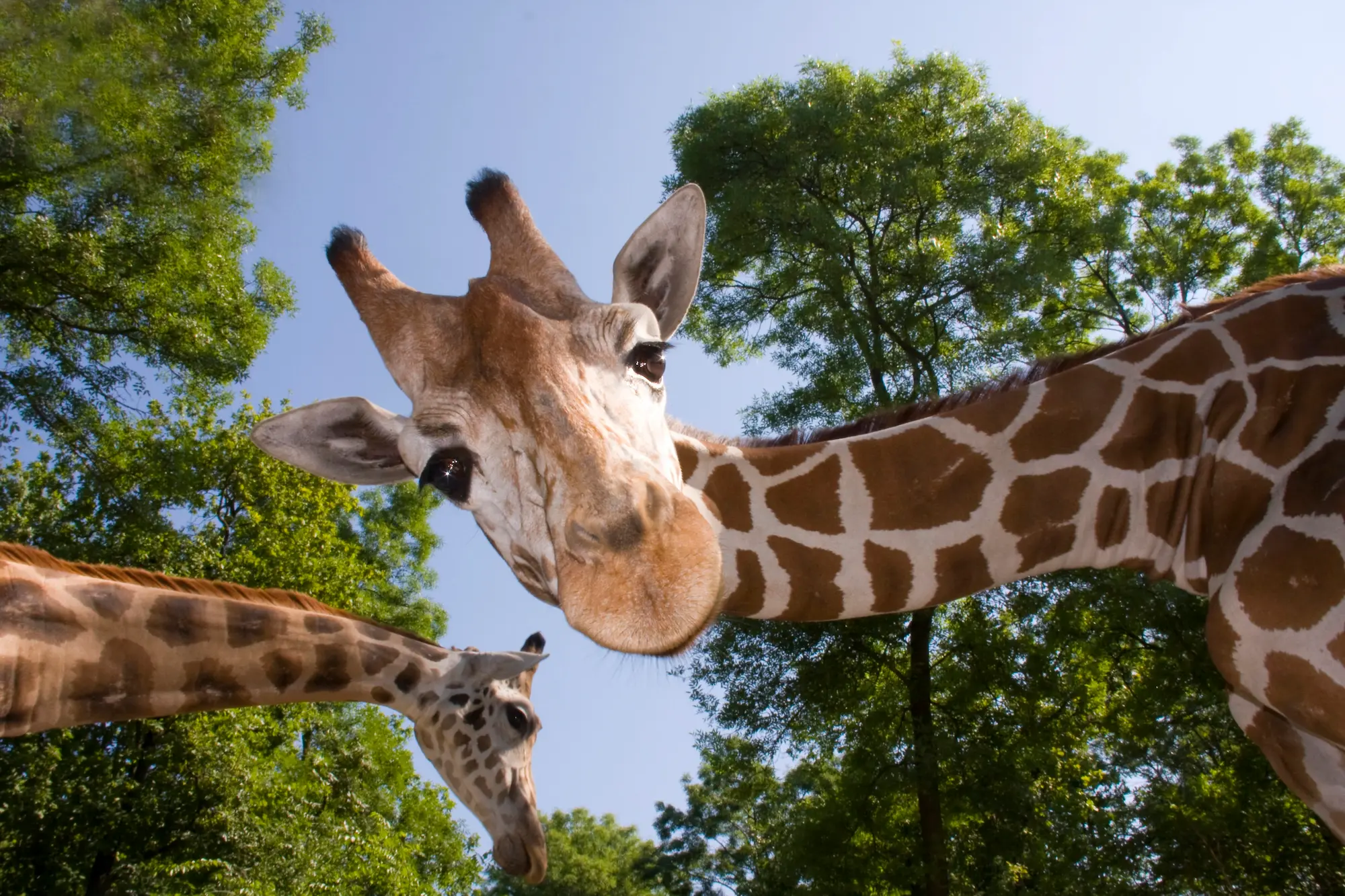
Giraffes occupy open and semi-open savannas, dry woodlands, and bushland across sub-Saharan Africa. They eat hundreds of pounds of leaves each week, travel miles in search of food, and drink only once every several days because most of their water comes from the plants they eat, with acacia trees supplying their preferred leaves. [1]
Three environmental variables are most critical to giraffe habitat suitability: the presence of palatable woody vegetation, the availability of water during dry seasons, and the connectivity of landscapes that allows movement between feeding areas and water sources. When any of these deteriorates, giraffes must range farther for the same resources, raising energy costs at the moment resources are scarcest.
Shifting Rainfall Patterns and What They Are Doing To Savannah Vegetation
Climate change is altering both how much rain falls in giraffe range and when it falls, with knock-on effects on vegetation.
Rainfall projections
Projections differ sharply by region. The IPCC projects increasing aridity and drought across West Southern Africa and East Southern Africa, while heavy precipitation events are projected to become more frequent and intense almost everywhere on the continent. [2]
East Africa is harder to read. Climate models project more rainfall for the region, but observations show the opposite, a mismatch called the “paradox of East Africa climate” that is explained by an observed shortening of the rainy season that the models do not capture. [3] For giraffes in the Horn of Africa and the semi-arid north, the observed reality has been shorter wet seasons and repeated drought.
Woody encroachment and browse quality
Vegetation structure is also shifting in ways that rainfall alone does not explain. A 70-year study across four land uses in South African savannas found woody cover doubled everywhere except low-rainfall conservation areas with elephants and concluded that a global factor, most likely elevated CO2, may be driving encroachment. [4]
More trees do not automatically mean more food for giraffes. Woody encroachment can significantly change fire regimes, herbivore carrying capacity, biodiversity, and carbon storage. [5] A 2025 review in the African Journal of Range and Forage Science identified extreme rainfall as the most important driver of encroachment in semi-arid environments, and found that in one conservation area herbivores were removing palatable tree species while unpalatable species grew denser. [6] Heavier, more erratic rainfall can therefore push savannas toward woody cover that giraffes find less useful.
Drought: Documented Mortality and Population Consequences
Severe drought kills giraffes directly, and recent East African droughts provide the clearest record of that impact.
The 2020 to 2023 Horn of Africa drought
The drought started with failed October to December rains in 2020 and worsened as each of the next four seasons also underperformed. [7] A World Weather Attribution study found that climate change did not significantly alter rainfall but raised evapotranspiration, making the drought roughly 100 times more likely. [8]
Recorded giraffe deaths
Kenya’s official count understates the toll. The tourism ministry reported 12 giraffes among the wildlife killed by drought between February and October 2022, alongside 205 elephants, 512 wildebeest, and 381 common zebras, and cautioned that the figures were likely incomplete because predators may have eaten some carcasses. [9]
Ecosystem-level counts were higher. Data compiled by Kenya Wildlife Service and partners, including IFAW, showed the Amboseli ecosystem alone lost 6,093 animals across 20 species, 93 of them Masai giraffes, the highest drought toll ever recorded there. [10]
Water points themselves became hazards. In December 2021, six giraffes already weakened by hunger and thirst became stuck in mud about 10 meters from a reservoir in Sabuli Wildlife Conservancy and died. [11]
Why recovery is slow
The direct mechanisms through which drought harms giraffes include:
- Starvation: as leaf production stops, giraffes lose body condition, with calves and lactating females most vulnerable.
- Dehydration and entrapment: shrinking water sources turn to mud, as documented in Wajir County in 2021.
- Predation: weakened adults and calves become easier targets for lions and hyenas.
- Reproductive suppression: females in poor condition may delay or fail to conceive, extending losses well past the drought itself.
Because giraffes are long-lived and slow-breeding, any major mortality event takes years to absorb through reproduction.
Rising Temperatures and Thermal Physiology
Giraffes hold a body temperature of about 38.5°C and manage heat by orienting their bodies to the sun and seeking shade. Their slender shape promotes heat loss, their ossicones are well supplied with blood vessels and may help regulate temperature, and their skin contains active sweat glands that are larger under the dark patches, which supports the view that the patches act as thermal windows. [12] Their narrow neck and legs increase cooling from air movement, and their height lifts them above the hottest, stillest air near the ground. [13]
Physiological tolerance does not mean immunity. A 2018 review in the Journal of Animal Ecology cautioned that predictive models often overlook how today’s advantages of body size and shape can become disadvantages as climate change progresses, and that they misjudge how sustainable evaporative cooling is. [14]
Thermoregulation also has behavioral and water costs. Time spent in shade is time not spent feeding, and evaporative cooling through sweating and breathing raises water demand. In arid zones where drought is already shrinking water sources, these costs compound.
Habitat Range Contraction and Fragmentation
Climate pressure is arriving at the same time that land-use change is shrinking and dividing giraffe range.
As suitable habitat becomes patchier, giraffe populations are confined to more isolated areas. In Kenya, community land bordering protected areas has increasingly been subdivided, fenced, and converted to farms. [15] SGN’s research on how infrastructure affects giraffe movements and its wildlife highway crossing research, which examines how drought pushes giraffes onto dangerous roads, address this overlap directly.
Human population growth will intensify the squeeze. The UN Economic Commission for Africa reports that the continent passed 1.5 billion people in 2024 and is projected to reach 2.5 billion by 2050. [16]
The compounding effects include:
- Smaller, less connected populations lose the gene flow that sustains genetic diversity.
- Fragmented populations cannot disperse away from locally degraded habitat during drought.
- Protected areas are often too small to function as long-term climate refuges without management of the surrounding landscapes.
- Roads, fences, and farms limit the movement giraffes need to track shifting resources.
Human-Wildlife Conflict as a Climate Consequence
A review in Nature Climate Change examined three decades of research across six continents and five oceans and found 49 cases in which a climate driver intensified human-wildlife conflict. The leading driver was a shift in resources, which on land most often meant water. [17]
Drought also raises poaching pressure. Reporting from North Eastern Kenya links surging giraffe poaching to demand for illegal game meat in Somalia, while recurring drought has also reduced the region’s giraffe numbers. [18] Communities that lose crops and livestock to the same drought have fewer resources to support conservation, which makes climate, poverty, and wildlife loss a single connected problem.
Climate Change as a Threat Multiplier
The mechanisms above interact, so climate change amplifies the threats giraffes already face.
Habitat loss reduces the area available to giraffes, and climate change reduces the productivity of what remains. Poaching is driven partly by food insecurity, which drought intensifies.
Resource scarcity also raises tension between herders, farmers, and wildlife. A study in northern Kenya found livestock clustered near permanent water while wildlife stayed farther away, so the two distributions were inversely related. [19] During drought, that separation collapses as everything converges on the few water sources left.
For a slow-breeding species, losses from drought, poaching, and retaliatory killing during the same event combine into one compounding crisis, with climate as the underlying trigger.
Which Species Are Most Climate Exposed?
Climate exposure varies across the four giraffe species according to where each lives.
Northern giraffe: highest exposure
The Northern giraffe ranges across the Sahel and the semi-arid lands of East Africa, where small, isolated populations have little buffer against regional climate shifts. IPCC projections show monsoon rainfall rising over the central Sahel and falling over the far western Sahel, so conditions may diverge sharply even within the species’ range. [2] SGN’s Nubian giraffe rescue work addresses one of its most threatened populations.
Reticulated giraffe: high exposure
Kenya’s first National Wildlife Census in 2021 counted 19,725 reticulated giraffes, most of them in the northern and northeastern counties at the center of the Horn of Africa drought zone. [18] Only 5% of the reticulated giraffe’s range falls inside government national parks, as noted on SGN’s Kamuthe Community Conservancy Scout Team page, leaving most of these giraffes sharing land and water with people and livestock during drought.
Masai giraffe: moderate to high exposure
The Masai giraffe occupies the East African savanna zone across Kenya and Tanzania, where heavy losses were recorded in Amboseli during the 2022 drought. [10] Its wider distribution offers more geographic resilience than northern populations, but overlap with densely settled areas exposes it to the climate-conflict interaction described above.
Southern giraffe: lower but growing exposure
The Southern giraffe lives across southern Africa, where projections point to drying. If global warming reaches 2°C by mid-century, southern Africa will very likely see lower average rainfall. [3] Better-resourced conservation infrastructure provides a buffer today, but it does not confer climate immunity.
What Is Being Done
Conservation groups and governments are responding on several fronts, though current efforts remain smaller than the scale of the problem.
Water infrastructure
The most direct defense against drought mortality is reliable water. Save Giraffes Now creates and improves water sources for people, wildlife, and livestock by de-silting dams, opening river access points, and drilling boreholes. In Kenya’s Athi-Kapiti region, SGN has built boreholes at Olosira and Swara Plains conservancies with solar pumps and storage tanks, funded dam improvements in Maanzoni Conservation Area, and rebuilt damaged dams at Swara Plains. [20]
In Kamuthe Wildlife Conservancy in Garissa County, SGN has worked since 2022 to clear an invasive plant that grows up to 40 feet tall along the Tana River, keeping corridors open so communities, wildlife, and livestock can reach the water. In Zimbabwe, SGN funds solar battery systems with the Bhejane Trust to keep borehole water flowing. [20]
Emergency response and coexistence
Governments also act during emergencies. During the 2022 drought, Kenya launched animal feeding programs, trucked water into protected areas, and stepped up monitoring of wildlife outside parks to reduce conflict with people. [21] SGN’s Coexistence program works with communities on practical solutions to human-wildlife conflict, including expanding water access for everyone.
Habitat connectivity
Climate adaptation requires landscapes giraffes can move through. IFAW’s Room to Roam initiative secures and links habitats so wildlife can move safely through their home ranges in East and southern Africa. [15]
The Road Ahead
Climate change has moved from a projected future threat to a documented present one for giraffes.
The evidence now includes mortality records from Kenya’s 2020 to 2023 drought, attribution science linking that drought to warming, and long-term vegetation change across African savannas. Together, these records describe an already-stressed animal facing an accelerating additional burden.
Three priorities stand out. First, conservation funding and policy must incorporate climate adaptation alongside anti-poaching and habitat protection. Second, communities that share land with giraffes need climate-resilient livelihood support that reduces the incentive for retaliatory killing during drought. Third, landscape connectivity must be maintained and expanded so giraffes can respond to shifting conditions.
None of this is out of reach. Save Giraffes Now runs projects in 10 African countries that reach all four giraffe species, from reintroducing giraffes to their historical rangelands in Botswana to water and anti-poaching programs in Kenya. [22] Climate change calls for a broader, better-funded version of the conservation that already works.
See Also
References
- Save Giraffes Now. (2026). Why Giraffes Matter: The Ecological Role of the World’s Tallest Land Animal. savegiraffesnow.org
- Down To Earth. “Africa warming faster than rest of world: IPCC Sixth Assessment Report.” https://www.downtoearth.org.in/news/africa/africa-warming-faster-than-rest-of-world-ipcc-sixth-assessment-report-78424
- Down To Earth. “IPCC Sixth Assessment Report: Insights for African countries.” https://www.downtoearth.org.in/climate-change/ipcc-sixth-assement-report-insights-for-african-countries-78420
- Stevens, N., Erasmus, B.F.N., Archibald, S. and Bond, W.J. (2016). “Woody encroachment over 70 years in South African savannahs.” Philosophical Transactions of the Royal Society B. https://pmc.ncbi.nlm.nih.gov/articles/PMC4978877
- “Increased tree densities in South African savannas: >50 years of data suggests CO2 as a driver.” Global Change Biology (2012).
- “Putting the pieces together: woody plant encroachment across a precipitation gradient in southern Africa.” African Journal of Range and Forage Science, 42(1), 2025. https://the-eis.com/elibrary/search/33560
- World Meteorological Organization. “Catastrophic consequences of Horn of Africa drought will continue in 2023.” https://public.wmo.int/node/20883
- Imperial College London. “Without climate change, the Horn of Africa drought wouldn’t have happened.” https://www.imperial.ac.uk/news/244671/without-climate-change-horn-africa-drought/
- News24 (Reuters). “Drought killed 205 Kenyan elephants in 10 months: minister.” https://www.news24.com/world/africa/drought-killed-205-kenyan-elephants-in-10-months-minister-20221104
- IFAW. “Despite Kenya’s worst drought in 40 years, communities are resilient.” https://ifaw.org/journal/kenya-drought-community-resilience
- CBC Radio. “Grisly photos of dead giraffes highlight devastation of drought in Kenya.” https://www.cbc.ca/1.6287376
- Mitchell, G. and Skinner, J.D. (2004). “Giraffe thermoregulation: a review.” Transactions of the Royal Society of South Africa. https://informahealthcare.com/doi/abs/10.1080/00359190409519170
- University of Pretoria. “How giraffes keep it cool.” https://www.up.ac.za/research-matters/news/how-giraffes-keep-it-cool
- Mitchell, D. et al. (2018). “Revisiting concepts of thermal physiology: Predicting responses of mammals to climate change.” Journal of Animal Ecology, 87(4). https://www.pubmed.gov/29479693/
- IFAW. “Why 2023 was monumental for Kenyan wildlife.” https://www.ifaw.org/journal/2023-monumental-kenyan-wildlife
- The Star (Xinhua). “Strong efforts required to release demographic dividend as Africa’s population crosses 1.5 bln: UNECA.” https://www.thestar.com.my/news/world/2024/07/14/strong-efforts-required-to-release-demographic-dividend-as-africa039s-population-crosses-15-bln-uneca
- NPR. “Climate change is fueling more conflict between humans and wildlife.” https://www.mprnews.org/story/2023/03/02/npr-climate-change-is-fueling-more-conflict-between-humans-and-wildlife
- Nation. “Somali giraffes face extinction threat as poaching surges in North Eastern Kenya.” https://nation.africa/kenya/health/somali-giraffes-face-extinction-threat-as-poaching-surges-in-north-eastern-kenya-4737088
- de Leeuw, J. et al. (2001). “Distribution and diversity of wildlife in northern Kenya in relation to livestock and permanent water points.” Biological Conservation. https://www.ilri.org/knowledge/publications/distribution-and-diversity-wildlife-northern-kenya-relation-livestock-and
- Save Giraffes Now. “Improving Water Sources for Giraffe & Communities.” https://savegiraffesnow.org/improving-water-sources/
- CBS News. “Hundreds of elephants and zebras die as Kenya weathers drought.” https://www.cbsnews.com/news/kenya-elephants-zebras-die-drought
- Save Giraffes Now. Homepage. https://savegiraffesnow.org/
- The Star. “Census shows wildlife thriving as population rises.” https://www.the-star.co.ke/news/2021-08-31-census-shows-wildlife-thriving-as-population-rises