
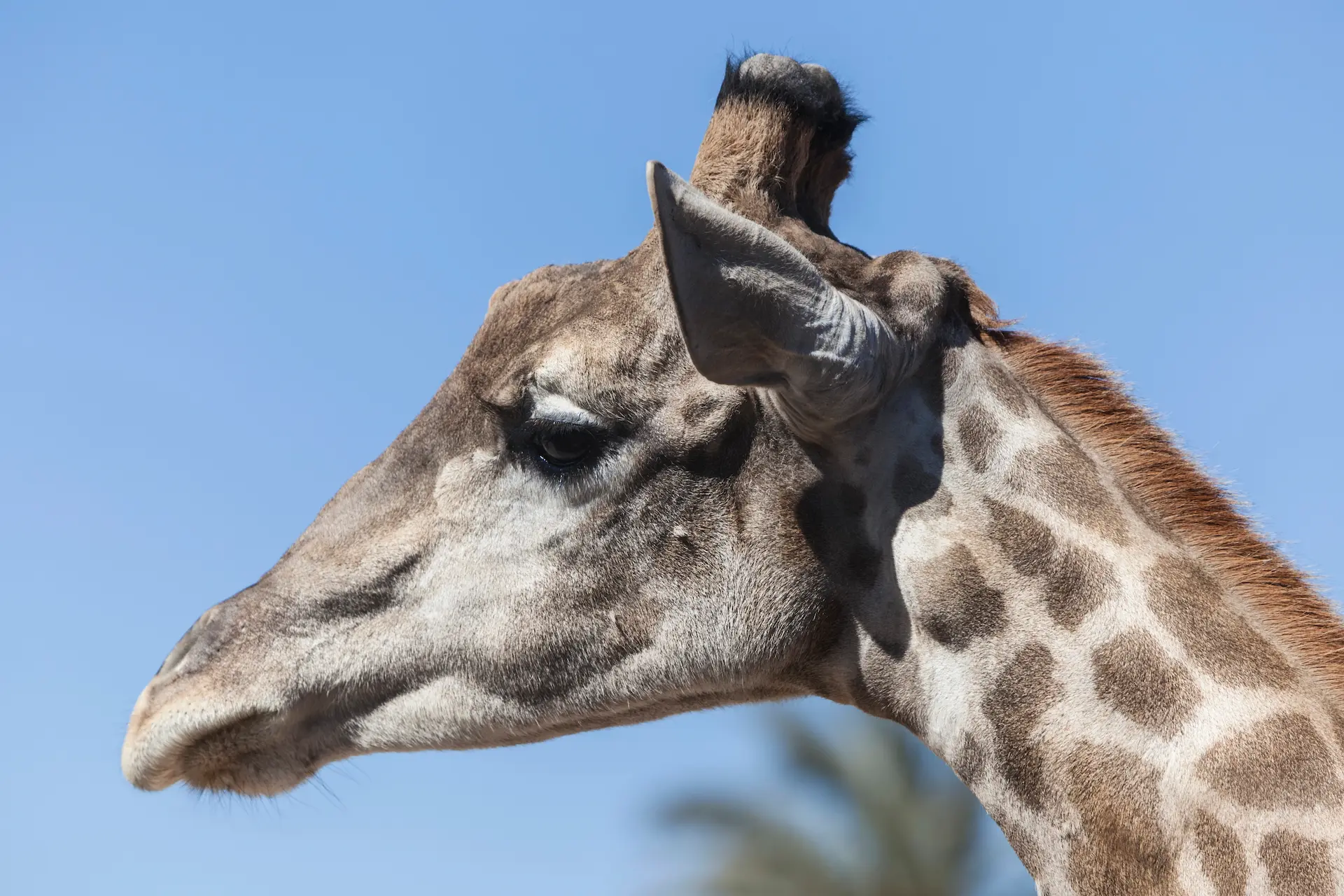
A completely white giraffe looks almost unreal. But the famous white giraffes discovered in Kenya were not albino. Their unusual appearance was caused by a rare genetic condition called leucism, which reduces pigmentation while leaving the eyes normally pigmented.
The giraffes became internationally known after a white-coated mother and her calf were filmed in Kenya in 2017. Three years later, the same animals became the focus of a much darker story. The female and her seven-month-old calf were killed by armed poachers, leaving her young male offspring as the only known surviving white giraffe in the Ishaqbini Hirola Community Conservancy.
Here is what makes these giraffes different and why their rarity has become a conservation concern.
Key Takeaways
- The famous white giraffes of Kenya were leucistic, not confirmed albino.
- Leucism reduces pigmentation but usually leaves the eyes normally pigmented.
- A white-coated female and her calf were killed by armed poachers in Kenya in 2020.
- The surviving male offspring was fitted with a GPS tracker to help conservationists monitor his movements.
- Save Giraffes Now supported the GPS protection effort alongside Kenya Wildlife Service and Northern Rangelands Trust.
- White giraffes can survive and reproduce in the wild, but their unusual appearance can make them more conspicuous.
- Conservation efforts from organizations like Save Giraffes Now help protect giraffes and their ecosystems.
Are Albino Giraffes Real?
The term “albino giraffe” is often used to describe completely white giraffes, but it is not necessarily accurate.
Albinism is a genetic condition involving reduced or absent melanin production. It can affect pigmentation in the skin, hair, and eyes and may also cause changes in vision.
Leucism is different. It can cause an animal’s skin, hair, or feathers to lose much of their pigmentation while leaving pigment in the eyes and other tissues.
That distinction helped researchers identify the famous Kenyan giraffes as leucistic rather than albino. Their dark eyes were one of the clearest visible differences.
Albino Giraffe vs. White Giraffe
| Feature | Albinism | Leucism |
| Main cause | Reduced or absent melanin production | Reduced pigmentation in affected tissues |
| Appearance | Very pale or white | White or unusually pale |
| Eyes | May be unusually pale | Usually retain normal pigmentation |
| Kenyan white giraffes | Not confirmed | Yes |
So, if you are searching for an albino giraffe, the famous white giraffes of Kenya are better described as leucistic giraffes.
Why Are Some Giraffes White?
Leucism is a rare genetic trait that affects pigmentation. In giraffes, it can result in an animal whose usual coat pattern is almost completely absent, leaving a striking white appearance.
The condition does not necessarily mean the giraffe is sick. The white giraffes at Ishaqbini were able to live, feed, and reproduce in the wild. In fact, the female produced a second healthy calf in 2019, bringing the number of known white giraffes in the conservancy to three at the time.
Their unusual coloring did, however, create a potential disadvantage: they were much easier to spot than normally patterned giraffes.
What Happened to Kenya’s White Giraffes?
In March 2020, rangers and community members discovered the remains of the adult female and her seven-month-old calf.
The two giraffes had been killed by armed poachers. Their deaths left the female’s young male offspring as the only known surviving white giraffe in the conservancy.
The incident highlighted a difficult reality about rare wildlife. An unusual appearance can attract public attention, but it can also make an animal easier to identify and locate.
The available reports confirm that the giraffes were killed by poachers. They do not establish that their white coloring was the specific reason they were targeted, so it would be misleading to claim that the animals were killed simply because they were white.
What is clear is that their distinctive appearance made them exceptionally conspicuous.
How Conservationists Protected the Surviving White Giraffe
After the deaths of the female and calf, protecting the remaining male became an urgent priority.
In November 2020, Kenya Wildlife Service, Northern Rangelands Trust, and Save Giraffes Now supported a tracking operation at Ishaqbini. Conservationists fitted a solar-powered GPS unit to one of his ossicones, the horn-like structures on a giraffe’s head.
The device sent location updates every hour, allowing rangers to monitor his movements and identify potential threats.
The tracker gave conservation teams information they could use to keep the giraffe safer in an area where poaching remained a concern.
It also demonstrated how technology can support community-led wildlife conservation. The tracking operation was requested by the Ishaqbini Hirola Community Conservancy, with support from KWS, NRT, and Save Giraffes Now.
Can White Giraffes Survive in the Wild?
Yes. Leucism does not automatically prevent a giraffe from living a normal life in the wild.
The Kenyan female survived to adulthood and produced calves, showing that a leucistic giraffe can feed, reproduce, and function in its natural environment. NRT also reported that the condition itself did not appear to affect the giraffes’ health.
The bigger concern is visibility.
A white giraffe stands out against its surroundings and may have a harder time blending into a herd or landscape. That can potentially increase vulnerability to predators and, in areas affected by poaching, make the animal easier for people to identify.
The Kenyan giraffes show why conservation cannot focus only on population numbers. Sometimes protecting wildlife means understanding the particular risks faced by individual animals.
Join Us to Protect Giraffes
Giraffes are already under pressure from habitat loss, human-wildlife conflict, and poaching. A rare genetic trait can make an individual even more visible in a landscape where staying unnoticed can be an advantage.
The deaths of the female and her calf were a reminder that protecting giraffes means protecting the animals that live in these landscapes, not simply admiring them from afar.
Conservation efforts such as community protection, wildlife monitoring, and anti-poaching work give giraffes a better chance of surviving where they belong: in the wild.
Support Save Giraffes Now and help fund conservation efforts that keep giraffes safe.
Frequently Asked Questions
Are white giraffes rare?
Yes. White or leucistic giraffes are extremely rare. Only a small number have been documented in the wild, making each confirmed sighting unusual.
Can a white giraffe survive in the wild?
Yes. Leucism itself does not prevent a giraffe from surviving or reproducing. The Kenyan female reached adulthood and produced healthy calves.
How did Save Giraffes Now help protect the white giraffe?
Save Giraffes Now supported a 2020 conservation effort that fitted the surviving male with a GPS tracking device. The solar-powered unit sent hourly location updates to help rangers monitor his movements and protect him from potential threats.