
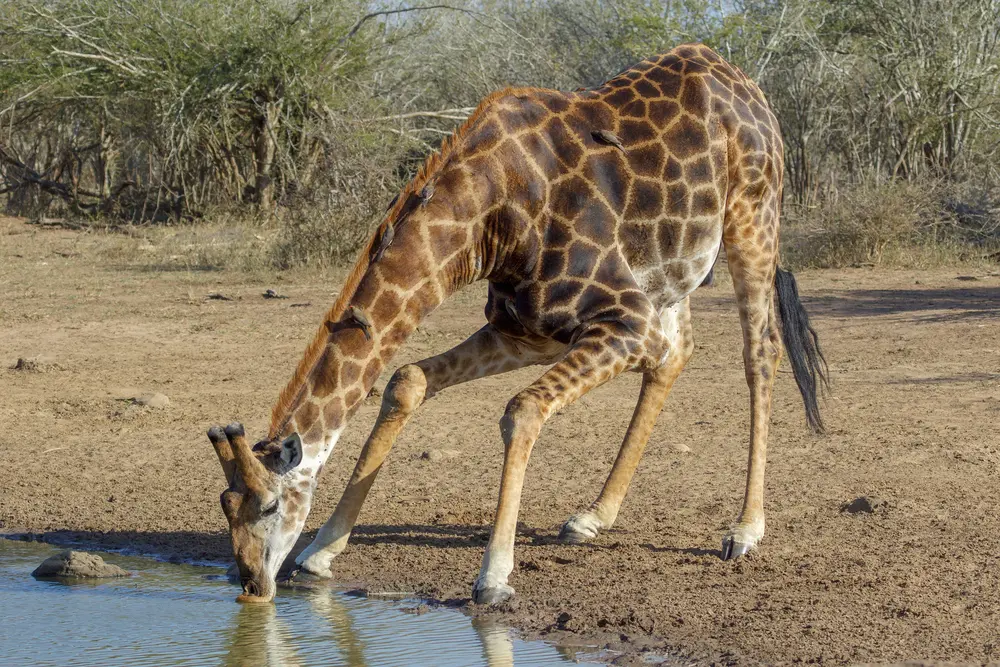
Giraffes can float and move through water, but swimming is challenging for them. Their bodies are designed for land, not pushing through water. Their long legs, heavy torsos, and tall necks make deep water risky, so they rarely, if ever, choose to swim. In the wild, giraffes avoid rivers and lakes, and most sightings show them only wading through shallow areas when there is no other option.
Key Takeaways
- Giraffes can float and move through water, but swimming is very difficult and unsafe for them.
- Their long legs, heavy bodies, and tall necks make deep water hard to navigate.
- Giraffes avoid lakes and rivers because predators often hide nearby, and the terrain slows them down.
- River crossings happen only in shallow or narrow areas, and even then, giraffes move carefully.
- Save Giraffes Now helps protect safe habitats so giraffes can travel without facing risky water barriers.
Can Giraffes Float?
Giraffes can float, but not well. Their bodies can remain on the surface for a short time, but the position is unstable. Their long legs hang downward, the narrow chest dips easily, and the weight of the neck shifts their balance. Floating may keep them above water, but it does not help them move with confidence or control. Even a short swim would use more energy than walking the same distance on land.
Because of this, they avoid deep water entirely. Floating is not a reliable way for them to stay safe, and even shallow water can feel uncomfortable if the ground falls away quickly.
Has a Giraffe Ever Been Seen Swimming?
There are very few confirmed sightings of giraffes swimming in the wild. Most observations show them wading only through shallow water, never moving through deeper areas. This led many people to believe that giraffes could not swim at all.
A study by the University of Portsmouth tested that belief using mathematics and computer modeling. Researchers created a digital model of a giraffe to see how its body would behave in water. The results showed that giraffes could technically float and swim, but they would struggle to do it well. Their long legs, heavy bodies, and tall neck make swimming slow, tiring, and awkward.
Do Giraffes Cross Rivers?
Giraffes may cross shallow rivers or narrow channels when they must, but they avoid deep or fast-moving water. Their long legs make stepping through uneven riverbeds difficult, and strong currents can push their bodies off balance. Deep water can also expose them to crocodiles waiting below the surface. When herds migrate, they choose land routes that keep them on stable ground, even if the journey becomes longer.
Most river crossings happen only when food or a safer habitat lies on the other side, and there is no alternative path. In some regions, giraffes now travel several extra miles each day just to reach food and safe pathways. Even then, giraffes move carefully and only through water that reaches a safe depth.
How Habitat Pressure Affects Movement
Giraffes depend on open, connected landscapes to move safely. When these spaces shrink, herds are pushed into unfamiliar areas that may include rivers, wetlands, or flooded ground they normally avoid.
Plus, drought can dry out feeding areas and force giraffes to travel farther for food, sometimes bringing them close to deeper water. Heavy rains can also reshape their routes, creating new barriers that did not exist before.
Human activity adds more to this pressure. Expanding farms, settlements, and roads cut through natural pathways and restrict movement. When a safe route disappears, giraffes may be left with limited options and face increased risks along the way.
Help Protect Giraffes as They Navigate Their Changing Landscapes
When habitats shrink or water barriers appear, giraffes’ ability to move freely becomes harder, and their risks increase. Many herds are already under pressure from poaching, land loss, and climate shifts, and every new obstacle adds to the struggle.
Save Giraffes Now is working to secure safe places where giraffes can travel, feed, and raise their young without having to cross dangerous routes. This is why we protect land, support rangers, and relocate giraffes to areas where the landscape works in their favor. Each protected path gives a herd the chance to live freely.
Your support keeps these efforts strong. Protecting these travel routes helps giraffes stay connected as herds and reach the resources they depend on. Donate now to expand safe habitats, strengthen field teams, and give giraffes the freedom to move without fear.
Frequently Asked Questions
Is there an animal that cannot swim?
Yes. Some animals cannot swim or struggle to stay afloat. Examples include great apes, camels, and certain birds like ostriches. Giraffes can float but are not comfortable swimmers.
Has anyone seen a giraffe swim?
There are very few documented cases. Most sightings show giraffes wading through shallow water, not swimming in deep areas. True swimming is extremely rare and usually happens only when the animal has no other choice.
How long can giraffes swim?
Giraffes do not swim for long periods. Their body shape makes swimming tiring and unstable, so they avoid deep water entirely. Any movement in water is usually brief and in shallow sections.
Can a giraffe sleep while standing?
Yes. Giraffes mostly sleep while standing, especially in the wild, where they must stay alert. They take short naps throughout the night. They sometimes lie down for deeper sleep, but only when they feel completely safe.