
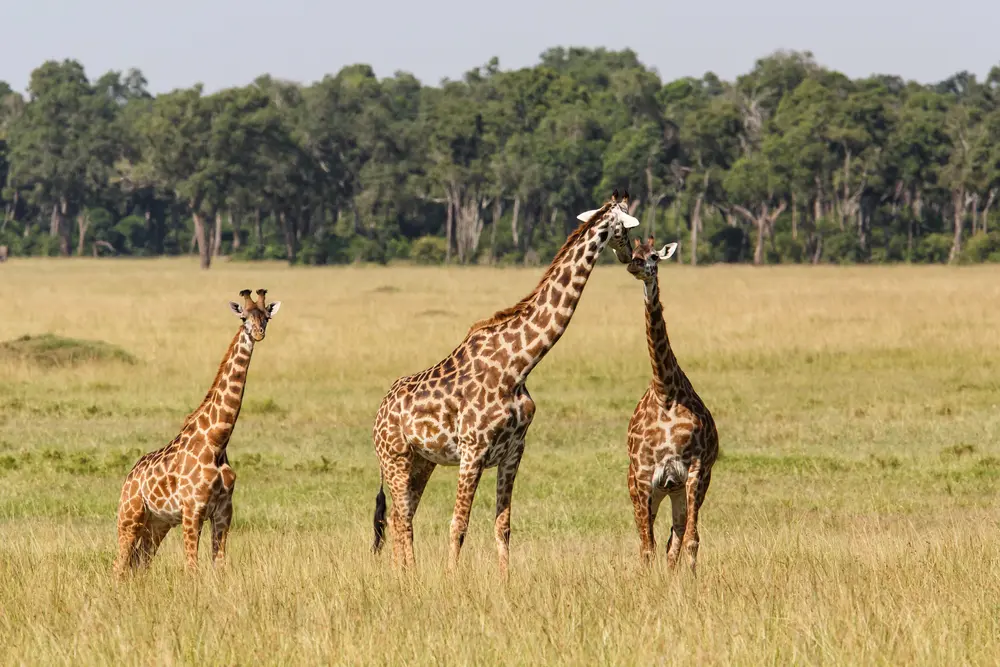
The evolution of giraffes describes the biological and fossil-record evidence explaining how modern members of the family Giraffidae developed their extreme height and elongated necks. Giraffes and their closest living relative, the okapi (Okapia johnstoni), share a common ancestor that diverged from other even-toed ungulates more than 20 million years ago.
Fossil records show that early giraffids displayed a wide range of body sizes and neck lengths, with gradual anatomical changes over millions of years leading to the long-necked forms seen today.
Taxonomic Background
Giraffes belong to the family Giraffidae, a group of even-toed ungulates within the order Artiodactyla that also includes cattle, deer, and antelope. This family has only two living representatives today: the giraffe (Giraffa camelopardalis) and the okapi (Okapia johnstoni).
The okapi, native to the rainforests of the Democratic Republic of the Congo, is the closest living relative of the giraffe despite its shorter neck and more compact body. These two species share a common ancestral lineage within Giraffidae that diverged from other ruminants over 20 million years ago. The Giraffidae family was once more diverse, with numerous extinct genera documented in the fossil record.
Fossil Record and Early Ancestors
The evolutionary history of giraffes is documented by a diverse fossil record spanning millions of years and including numerous extinct members of the family Giraffidae. Early giraffids first appeared in the early Miocene epoch, roughly 25 to 20 million years ago, and were generally small and antelope-like in appearance, lacking the extreme neck elongation of modern giraffes.
One of the earliest known giraffid genera, Canthumeryx, had a lightly built body and comparatively short neck, and fossils of this animal have been found in northern Africa and southern Eurasia.
During the Miocene and subsequent epochs, giraffids diversified into multiple genera distributed across Africa, Europe, and Asia. Fossil taxa such as Palaeotragus resembled the modern okapi more than the modern giraffe, with shorter necks adapted to woodland environments.
Forms like Samotherium exhibited intermediate neck lengths and body proportions, representing transitional stages in the evolution of elongation. The genus Bohlinia, present during the late Miocene, is considered a more direct precursor to the modern giraffe lineage, possessing elongated neck and limb features that foreshadow the anatomy of Giraffa.
Other extinct giraffids, including Sivatherium and Bramatherium, demonstrate the family’s morphological diversity. Sivatherium was a heavily built genus with robust limbs and possibly a large body mass, and its fossils are known from Africa and Eurasia. The presence of these and other genera shows that early giraffids explored a variety of ecological niches before the lineage that gave rise to modern giraffes became established.
Fossil evidence indicates that giraffid evolution involved gradual anatomical changes over millions of years, with neck elongation and limb lengthening occurring in successive stages across multiple taxa.
Evolution of the Long Neck
The elongated neck of the giraffe is one of the most distinctive morphological features among terrestrial mammals. Modern giraffes (Giraffa spp.) possess necks that can exceed 6 feet (about 1.8 meters) in length, formed by seven cervical vertebrae that are proportionally much longer than those of other mammals.
Scientists have proposed multiple hypotheses to explain why giraffes evolved such long necks, and debate continues about the relative importance of different selective pressures. One longstanding explanation, often associated with early formulations of natural selection, holds that longer necks confer a feeding advantage by allowing individuals to reach foliage beyond the reach of competing herbivores. This so-called “browsing hypothesis” posits that neck elongation offered a competitive advantage in environments where low vegetation was depleted by other species.
Another hypothesis focuses on sexual selection, proposing that long necks evolved, at least in part, through intraspecific competition among males. Male giraffes engage in “necking” behavior during combat, using their necks and heads to strike rivals and establish dominance, potentially influencing reproductive success. Under this view, individuals with longer and stronger necks would have higher mating opportunities, contributing to the persistence of elongated neck traits.
Fossil evidence and anatomical studies suggest that both natural and sexual selection may have played roles at different stages of giraffe evolution. For example, extinct giraffids such as Samotherium and Bohlinia show intermediate neck proportions, indicating that neck elongation occurred progressively over time. Some research also emphasizes the nutritional demands of females as a potential driver of early neck lengthening, with later sexual selection possibly accentuating the trait further.
The precise evolutionary pathway that led to the giraffe’s long neck remains an active area of research. While natural and sexual selection both offer plausible mechanisms, the fossil record and comparative anatomy indicate a complex interaction of ecological and behavioral factors shaping this iconic adaptation.
Cardiovascular and Physiological Adaptations
The evolution of the giraffe’s long neck and large body imposed substantial challenges on the cardiovascular system, particularly in maintaining blood flow to the brain against gravity. Giraffes have exceptionally high arterial blood pressure compared with most other mammals, an adaptation that enables circulation across the vertical distance from the heart to the head.
Studies have measured mean arterial pressures at the heart of approximately 200 to 250 millimetres of mercury (mmHg), levels that are more than twice typical mammalian blood pressures and necessary to sustain adequate cerebral perfusion.
To achieve and regulate this high blood pressure, the giraffe’s heart exhibits distinct anatomical and physiological modifications. The left ventricle, the chamber responsible for pumping oxygenated blood to the body, has thick muscular walls that generate sufficient force to overcome hydrostatic pressure during vertical blood transport. This ventricular hypertrophy is associated with neck length and body size, and it allows the heart to generate high pressures without the pathological vascular consequences seen in hypertensive humans.
Additional mechanisms contribute to giraffe circulatory function. A specialized network of blood vessels at the base of the brain, known as the rete mirabile, buffers sudden changes in blood pressure when the head is lowered or raised, protecting delicate neural tissue from dangerous pressure fluctuations. One-way valves in the jugular veins help prevent excessive blood flow into the cranial circulation during downward head movements. These adaptations allow giraffes to drink from ground level and return to an upright posture without fainting or cerebral damage.
Other physiological features support cardiovascular efficiency. Thick, elastic arterial walls accommodate high pressures without rupturing, and the vascular system maintains flow despite the large hydrostatic gradient imposed by the tall body plan. Studies suggest that co-evolution of the neck and cardiovascular traits was necessary to sustain the giraffe’s unique morphology without imposing fatal circulatory limitations.
Limb, Body Size, and Gait Evolution
The evolution of the giraffe’s long neck was accompanied by significant changes in limb length, body size, and locomotion. Modern giraffes possess extremely elongated forelimbs and hind limbs, which contribute to their overall height and allow the body to remain proportionate as the neck lengthened. Fossil evidence from extinct giraffids indicates that limb elongation occurred gradually and in parallel with neck evolution, rather than as a single, rapid change.
As body size increased, giraffes evolved skeletal adaptations to support greater mass. Limb bones became longer and more robust, while joints adapted to distribute weight efficiently during standing and movement. These changes allowed giraffes to maintain stability despite their tall and narrow body profile. Increased body mass also influenced stride length, enabling giraffes to cover large distances efficiently while foraging across open landscapes.
Giraffe locomotion reflects these anatomical changes. When walking, giraffes use a pacing gait, moving both legs on one side of the body at the same time. This gait is common among large mammals with long legs and helps maintain balance. During faster movement, giraffes transition into a gallop characterized by extended suspension phases, allowing them to reach high speeds despite their size.
The combined evolution of limb length, body mass, and gait reduced energetic costs associated with movement and foraging while minimizing the risk of falls or injury. These adaptations demonstrate that giraffe evolution involved coordinated changes across multiple body systems, rather than the isolated development of a single trait.
Genetic Evidence and Modern Research
Advances in molecular biology have provided additional insight into the evolution of giraffes beyond what is available from the fossil record alone. Comparative genomic studies have identified genetic adaptations associated with skeletal growth, cardiovascular regulation, and cellular repair mechanisms that support the giraffe’s extreme height and long neck.
Research comparing giraffe genomes with those of closely related ungulates has highlighted changes in genes involved in bone development, growth factor signaling, and blood pressure regulation. These genetic differences help explain how giraffes can maintain rapid bone growth without increased cancer risk and tolerate high arterial blood pressure without the vascular damage observed in other mammals.
Genetic evidence has also contributed to understanding the timing of evolutionary divergence within the giraffid lineage. Molecular clock analyses support fossil-based estimates that giraffes diverged from their closest relatives during the Miocene epoch. More recent genomic studies have revealed significant genetic differentiation among modern giraffe populations, informing debates over species classification and evolutionary history.
Overall, genetic research complements anatomical and paleontological findings by demonstrating that giraffe evolution involved coordinated changes at the molecular, physiological, and structural levels.
Speciation and Modern Giraffe Lineages
The evolutionary history of giraffes includes the divergence of distinct lineages that gave rise to modern giraffe populations. For much of the twentieth century, giraffes were classified as a single species, Giraffa camelopardalis, with several subspecies distinguished primarily by coat pattern and geographic distribution. This classification was based largely on morphology and limited genetic data.
More recent genetic research has challenged this view. Analyses of nuclear and mitochondrial DNA have identified deep genetic divisions among giraffe populations, suggesting long periods of reproductive isolation. Some studies propose that modern giraffes should be recognized as multiple distinct species rather than a single, widely distributed one. These proposed lineages correspond broadly to regional populations in eastern, southern, and northern Africa.
Geographic separation, habitat variation, and historical climate shifts are thought to have contributed to this divergence. Changes in vegetation and landscape connectivity during the Miocene and Pliocene epochs likely isolated populations, allowing genetic differences to accumulate over time. Limited gene flow between regions reinforced these distinctions and shaped the evolutionary trajectories of modern giraffes.
The question of how many giraffe species exist remains an active area of scientific debate. Ongoing research continues to refine species boundaries using genomic data, population structure analysis, and reproductive isolation criteria. These findings have implications for understanding giraffe evolution and for conservation planning, as genetically distinct lineages may face different evolutionary constraints and risks.
Current Status and Evolutionary Constraints
The evolutionary traits that define giraffes have contributed to their success as large browsing herbivores, but they also impose constraints in modern environments. Extreme height, specialized cardiovascular systems, and large body size limit the range of habitats giraffes can occupy and reduce flexibility in responding to rapid environmental change.
Giraffes reproduce slowly, with long gestation periods and extended parental care, which limits the rate at which populations can recover from declines. Their dependence on specific vegetation types and large, connected landscapes further constrains adaptation when habitats become fragmented. Evolutionary specialization toward height and browsing efficiency has therefore reduced ecological plasticity compared to smaller, more generalist herbivores.
These constraints do not indicate evolutionary failure but reflect trade-offs inherent in extreme specialization. Traits that were advantageous under historical ecological conditions may provide fewer benefits when landscapes, climate patterns, and species interactions change more rapidly than evolutionary processes can accommodate.
Conservation Efforts Related to Evolutionary Preservation
Conservation efforts involving giraffes increasingly consider evolutionary history and genetic diversity as important components of long-term species persistence. Preserving distinct giraffe lineages helps maintain evolutionary adaptations that arose under different environmental conditions and reduces the risk of losing unique genetic traits.
Habitat protection plays a central role in this approach. Large, connected landscapes support natural movement, breeding, and gene flow between populations, which are essential for maintaining evolutionary processes. Fragmentation can isolate populations, increasing inbreeding and reducing genetic variation, which limits adaptive potential over time.
Research programs that integrate genetics, population monitoring, and habitat assessment contribute to identifying evolutionarily significant units within giraffe populations. These data inform management decisions such as translocations, protected area design, and breeding strategies. Conservation planning increasingly uses evolutionary and genetic evidence to prioritize actions that preserve both current populations and their long-term evolutionary capacity.
Organizations Involved in Giraffe Conservation
Multiple organizations contribute to giraffe research, habitat protection, and population monitoring as part of broader conservation efforts. These organizations work across Africa to support field studies, protect critical habitats, and apply scientific findings related to giraffe biology and evolution.
Several conservation organizations, like Save Giraffes Now, support initiatives focused on giraffe research, habitat preservation, and population management. Their work often involves collaboration with governments, researchers, and local communities to address threats while maintaining genetic and ecological diversity.
References
Danowitz, M.; Vasilyev, A.; Kortlandt, V.; Solounias, N. (2015). “Fossil evidence and stages of elongation of the Giraffa camelopardalis neck”. Royal Society Open Science. 2 (10): 150393. doi:10.1098/rsos.150393. PMID 26587249. PMCID PMC4632521.
Laskos, K.; Kostopoulos, D. S. (2024). “On the last European giraffe, Palaeotragus inexspectatus (Mammalia: Giraffidae); new remains from the Early Pleistocene of Greece and a review of the species”. Zoological Journal of the Linnean Society. 203 (2): zlae056. doi:10.1093/zoolinnean/zlae056.
Fennessy, J.; Bidon, T.; Reuss, F.; Kumar, V.; Elkan, P.; Nilsson, M. A.; Vamberger, M.; Fritz, U.; Janke, A. (2016). “Multi-locus analyses reveal four giraffe species instead of one”. Current Biology. 26 (18): 2543–2549. doi:10.1016/j.cub.2016.07.036. PMID 27618261.
Bibi, F.; Cantalapiedra, J. L. (2019). “Evolutionary trends and ecological adaptation in giraffids and their relatives: A review of dietary and habitat signals”. Palaeogeography, Palaeoclimatology, Palaeoecology. 528: 1–12. doi:10.1016/j.palaeo.2019.04.016.
Black, R. (2009). “Sivatherium: A giraffe with a trunk?”. National Geographic. Retrieved November 20, 2009, from: https://www.nationalgeographic.com/science/article/sivatherium-a-giraffe-with-a-trunk
Pennsylvania State University. (2015). “Food, not sex, drove evolution of giraffe’s long neck, new study finds”. Eberly College of Science, Penn State University. Retrieved from https://www.psu.edu/news/eberly-college-science/story/food-not-sex-drove-evolution-giraffes-long-neck-new-study-finds
Quratulann; Riasat, M.; Idrees, S.; Batool, N.; Saeed, U.; Abbas, A.; Aftab, K. (2025). “Neck elongation in giraffes: Fossil evidence and evolutionary theories”. Frontier in Medical and Health Research. 3 (2): 384–388. doi:10.5281/zenodo.15225618 (fmhr.net/index.php/fmhr/article/view/132)
Janis, C. M.; Scott, K. M.; Jacobs, L. L. (2002). “Evolution of the Giraffidae: Archaeological, Paleontological, and Morphological Evidence”. Annual Review of Ecology and Systematics. 33: 1–20. PMID 12012874. PMCID PMC12012874.
ScienceDirect Topics. (n.d.). “Rete mirabile”. ScienceDirect — Veterinary Science and Veterinary Medicine. Retrieved from https://www.sciencedirect.com/topics/veterinary-science-and-veterinary-medicine/rete-mirabile
ScienceDirect Topics. (n.d.). “Giraffa camelopardalis”. ScienceDirect — Agricultural and Biological Sciences. Retrieved from https://www.sciencedirect.com/topics/agricultural-and-biological-sciences/giraffa-camelopardalis
Brown, M. B.; Petzold, A.; Fennessy, J.; et al. (2024). “Population genomics of the southern giraffe”. Molecular Phylogenetics and Evolution. 201:108198. doi:10.1016/j.ympev.2024.108198.