
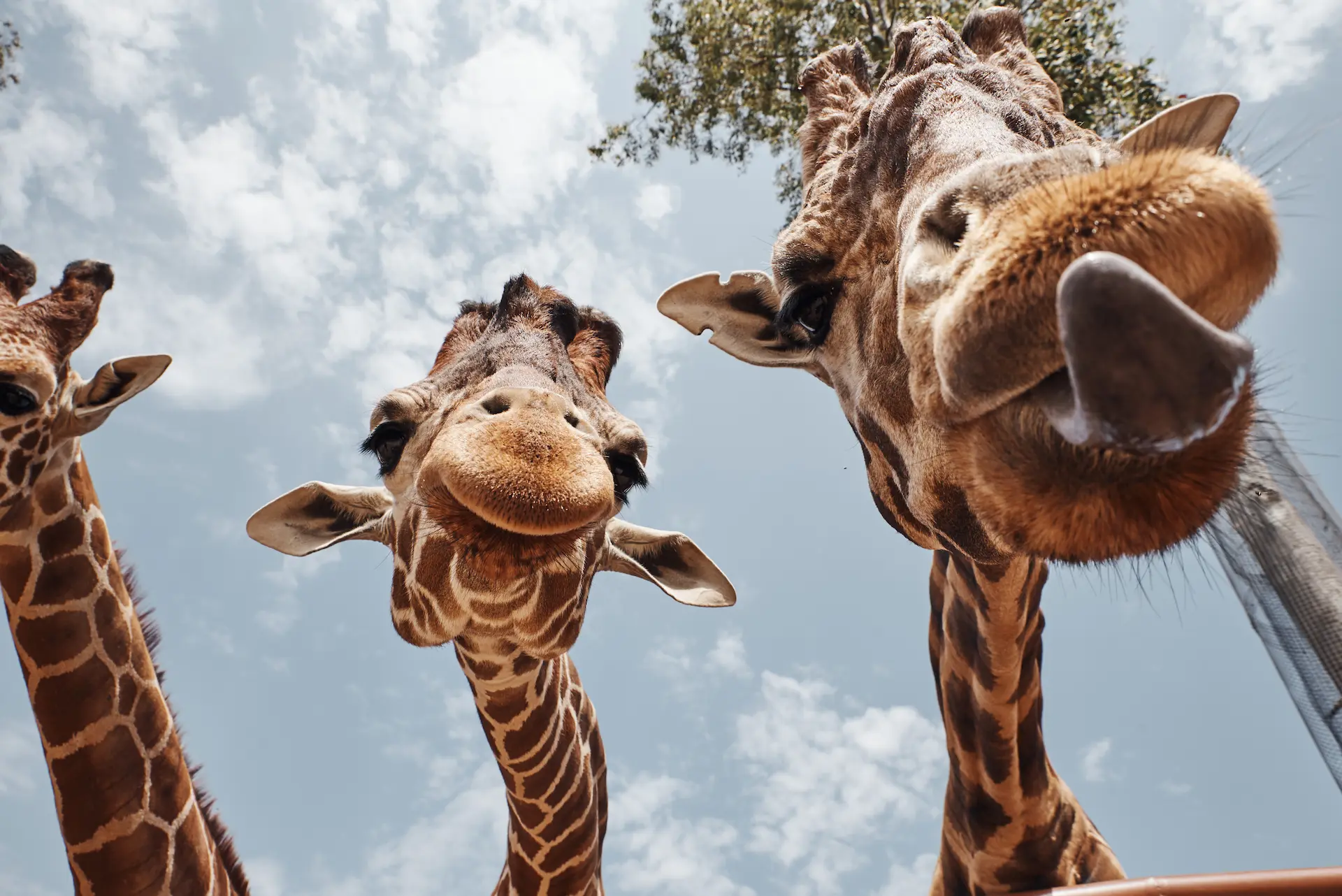
Giraffes are the tallest land animals on the planet, but height is only part of their story. From their unusual sleeping habits to the way they fight, eat, and even communicate, there’s a lot more to learn about these gentle giants.
Here are 12+ surprising and fun facts about giraffes that go beyond the basics:
1. Giraffes aren’t one species — they’re four
For a long time, giraffes were considered a single species with several subspecies. That changed when scientists reclassified them into four distinct species: the Northern giraffe, the Masai giraffe, the Reticulated giraffe, and the Southern giraffe.
2. Giraffes thrive on the African savannahs
They’re found across dry savannahs, open plains, and scattered woodlands, where tall trees provide plenty of food.
3. Giraffes hardly ever drink water
Most of their hydration comes from the leaves they eat, so they only need to drink once every few days.
4. A group of giraffes is called a tower
These towers usually include around 15 members, led by an adult male, with females and young males making up the rest.
5. The tallest mammal on Earth hardly sleeps
Despite their size, giraffes get by on almost no rest. In the wild, they may sleep for just 30 minutes a day, usually in quick naps while standing.
6. Their hearts are built for power
A giraffe’s heart can weigh around 25 pounds (11 kilograms) and pumps blood at twice the pressure of most mammals. That strength is what keeps blood flowing all the way up their long necks to the brain.
7. Their tongues are nearly two feet long
A giraffe’s tongue can stretch up to 20 inches. It’s dark in color, which helps prevent sunburn, and strong enough to strip leaves off thorny branches with ease.
8. Every giraffe has its own pattern
No two giraffes share the same coat. Their spots act like fingerprints, helping researchers distinguish individuals from one another. These patterns also help with camouflage and keeping their bodies cool.
9. Bulls fight by necking
Male giraffes test their strength by swinging their necks and butting heads. These battles look dramatic, but usually end without injury when one walks away.
10. Calves take a big drop at birth
Baby giraffes are born while the mother is standing, so they drop about 5 feet (1.5 meters) to the ground. Within half an hour, they’re on their feet, and a few hours later, they can run alongside their mothers.
11. Giraffes don’t walk like other animals
Instead of moving opposite legs like most mammals, giraffes use a pacing gait — both legs on the same side step forward together. It looks unusual, but it keeps their tall bodies balanced.
12. Giraffes aren’t as silent as we once thought
For years, people believed giraffes made no sounds at all. A 2015 study found they hum at night in low tones, likely as a way to communicate with each other in the dark.
13. Protecting giraffes protects entire ecosystems
When giraffes browse on tall trees, they shape the landscape for countless other animals. Saving them means saving the savannahs they help maintain.
Help Keep These Giants a Part of Our World
Giraffes may be known for their height, but every fact about them shows how unique and fragile they are. From barely sleeping to raising calves that can run within hours of birth, these animals are built for survival, yet their future is far from secure.
You can make a difference. By supporting Save Giraffes Now, you help protect habitats, stop poaching, and give giraffes the chance to thrive for generations to come. Donate now and be part of the effort to keep these giants standing tall in the wild.
Frequently Asked Questions
How fast can a giraffe run?
Giraffes can reach speeds of up to 35 miles per hour (56 km/h) over short distances, which helps them escape predators.
How tall is the average giraffe?
Adult male giraffes can grow up to 18 feet (5.5 meters) tall, while females usually reach around 14 feet (4.3 meters).
How long is a giraffe’s pregnancy?
A giraffe’s gestation period lasts about 15 months, one of the longest in the animal kingdom.
How many vertebrae does a giraffe’s neck have?
Despite its length, a giraffe’s neck has the same number of vertebrae as a human’s, which is seven, but each one can be over 10 inches long.