When Gracie the giraffe disappeared from a ranch in Texas in June 2026, her story quickly became an international curiosity. People searched for sightings, shared memes, and followed aerial searches across the Texas Hill Country.
Gracie was eventually found safe about four miles from her enclosure after spending nearly two weeks outside the ranch. She was later returned safely to Cedar Hollow Ranch.
The happy ending is worth celebrating. But Gracie’s escape also raises a more important question: what does a giraffe need to thrive in human care?
Key Takeaways
- Gracie the giraffe was found safe about four miles from her Texas ranch after nearly two weeks and was returned safely.
- Her escape does not prove that she experienced poor welfare.
- Giraffe welfare involves more than food and veterinary care. It also includes opportunities to browse, forage, move and socialize.
- Research shows that naturalistic feeding and enrichment can influence captive giraffe behavior.
- Gracie’s story highlights why enclosure design needs to account for giraffe behavior as well as their extraordinary size.
What Happened to Gracie the Giraffe?
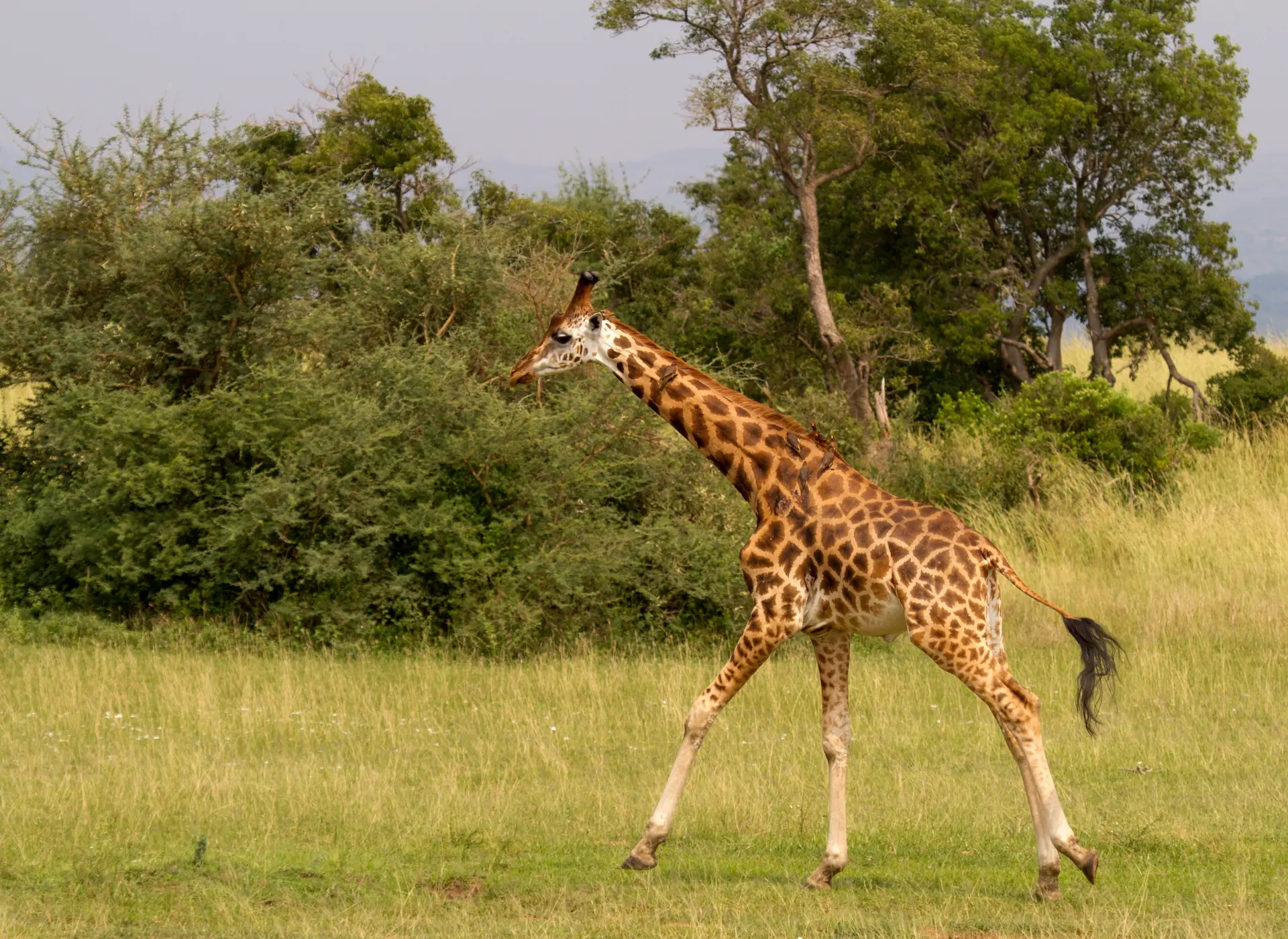
Gracie, a roughly 3-year-old reticulated giraffe, disappeared from Cedar Hollow Ranch in Real County, Texas, in June.
According to ranch owner Vick Jones, Gracie had been moving into a rocky area to feed on trees. The other giraffes had not previously used the area. When Gracie came back down, she ended up on the wrong side of a gate and continued away from the enclosure.
The ranch launched an extensive search, including helicopter flights, while local authorities and members of the public watched for sightings. The ranch also offered a $5,000 reward for information that could help locate her.
On June 26, aerial searches located Gracie roughly four miles south of the ranch. She appeared to be in good condition and had access to water and vegetation. A veterinary team later sedated her and transported her back to the ranch.
Why Was Gracie So Difficult to Find?
Gracie’s size might make a giraffe seem impossible to miss, but the Texas Hill Country provided plenty of cover.
The area around the ranch is rugged, wooded, and difficult to access. Gracie was found near a pond and creek with vegetation for browsing, which may have let her remain in the area without needing to approach people or roads.
Her behavior also highlights an important fact about giraffes: they are browsers that spend much of their time searching for and consuming vegetation.
That motivation does not disappear because a giraffe lives in human care.
What Does Gracie’s Escape Tell Us About Giraffe Behavior?
We cannot know exactly why Gracie continued away from the ranch, and there is no evidence that she deliberately “chose freedom.”
The available account suggests that she was following a feeding opportunity and accidentally ended up beyond the gate.
That distinction is very important.
Giraffes have evolved to search for food across complex environments. In human care, managers therefore need to consider not only where food is provided but also how animals interact with their surroundings while feeding.
What Does Good Giraffe Welfare Look Like?
A well-managed environment should give giraffes opportunities to:
- Browse and forage
- Move around their environment
- Rest and ruminate
- Interact with appropriate social partners
- Explore their surroundings
- Engage in species-typical behaviors
Their behavior can also provide clues about how well their environment is meeting their needs.
Researchers have documented repetitive behaviors in captive giraffes, including licking non-food objects and pacing. A large survey of captive giraffes found that feeding frequency, feeding methods, food type, indoor access, and social conditions were among the factors associated with stereotypic behavior.
Do Giraffes Need Other Giraffes?
Yes. Giraffes are social animals, and their social relationships are an important consideration in managed care.
That does not mean every giraffe needs to spend every moment in a large herd. Social arrangements need to account for the individuals involved, their compatibility, age, sex, and management needs.
Research into giraffes in U.S. zoos has found substantial individual variation in behavior, reinforcing the importance of observing individual animals rather than assuming that every giraffe will respond to its environment in exactly the same way.
Gracie was not living alone at Cedar Hollow Ranch. Reports following her return said she was reunited with the ranch’s other giraffes.
What Can Gracie’s Escape Teach Us About Enclosure Design?
Gracie’s escape does not prove that she was experiencing poor welfare or that Cedar Hollow Ranch’s overall care was inadequate. We do not have an independent assessment that would support such a conclusion.
It does, however, illustrate why giraffe enclosures need to account for the animals’ physical abilities and behavior.
Giraffes are exceptionally tall, powerful animals capable of navigating varied terrain. A secure enclosure therefore needs more than a perimeter that looks adequate from the ground.
Managers need to consider:
- Fence and gate placement
- The height and strength of barriers
- Terrain and natural features
- Areas that attract animals to browse
- Changes in behavior as animals mature
- Potential escape routes
- Emergency response plans
Gracie’s case is particularly useful because the reported escape involved an area that had not previously attracted the ranch’s other giraffes.
Animal behavior can change. Good enclosure management needs to account for that.
What Gracie’s Story Means for Giraffe Conservation
Gracie’s story ended with a giraffe being found alive, healthy, and safely returned home. That is worth celebrating.
It also reminds us that giraffes are not passive animals. They are browsers with complex behavioral, nutritional, and social needs, whether they live in the African savanna or under human care.
For captive facilities, that means welfare must involve a lot more than keeping giraffes physically healthy. Their environments should give them meaningful opportunities to move, browse, forage, socialize, and express natural behaviors.
For wild giraffes, the answer is even simpler: protect the habitats that allow them to do all of those things naturally.
Save Giraffes Now works to protect giraffes and the ecosystems they depend on through efforts including, but not limited to, anti-poaching, coexistence, rescue, and rewilding. Protecting wild habitats ensures giraffes have the space to live freely according to their natural behavior.
You can help protect giraffes in the wild by supporting our conservation work. Donate now to help make this possible.
Frequently Asked Questions
Is Gracie the giraffe still missing?
No. Gracie was found safely on June 26, 2026, roughly four miles from Cedar Hollow Ranch, and was subsequently returned to the ranch.
Where was Gracie the giraffe found?
Gracie was found about four miles south of Cedar Hollow Ranch in the Texas Hill Country. She was near a pond and creek and had access to vegetation.
Are giraffes happy in captivity?
There is no simple scientific test for whether a giraffe is “happy.” Welfare is assessed using multiple indicators, including physical health, behavior, social relationships, feeding, environmental conditions, and opportunities to express natural behaviors.
What do giraffes need in captivity?
Giraffes need appropriate nutrition, veterinary care, suitable social conditions, adequate space, safe enclosures and opportunities to browse and forage. Research suggests that feeding and environmental enrichment can influence giraffe behavior and welfare.