
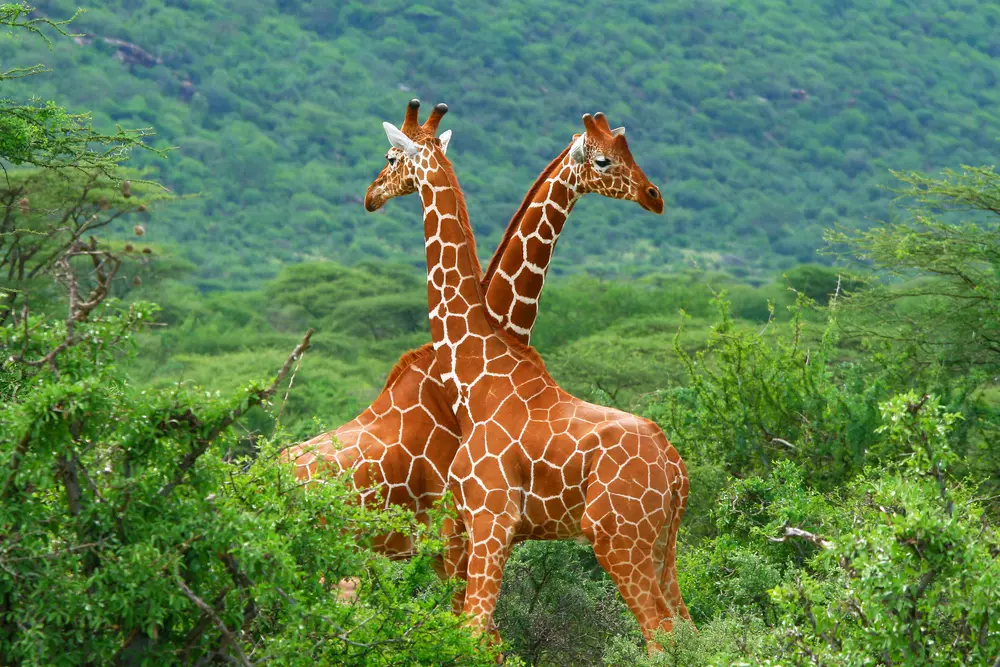
Giraffes mate through a structured courtship process that allows males to determine when a female is fertile and willing to reproduce. A male giraffe first assesses a female by prompting her to urinate and then analyzing chemical signals to detect reproductive hormones. If the female is receptive, the male follows her closely, nudges her, and waits until she stands still.
Once conditions are right, mating occurs briefly, with the male mounting from behind. This is a challenging task given the giraffe’s height and size, which is why timing, balance, and cooperation are essential.
Let’s look at this process in more detail.
Key Takeaways
- Giraffes mate through a structured courtship process that allows males to identify when a female is fertile.
- Male giraffes rely on chemical signals, not appearance, to choose a receptive mate.
- Mating occurs briefly and requires careful timing and balance due to the giraffe’s size and height.
- Female giraffes typically give birth to a single calf after a pregnancy lasting about 15 months. Twins can occur, but they are extremely rare.
- Giraffes reproduce slowly, making population recovery difficult when adults or calves are lost.
- Habitat protection and conservation are essential for successful breeding and long-term survival.
How Do Giraffes Choose a Mate?
Mate selection in giraffes is driven largely by female choice and male competition. Adult males spend much of their time moving between groups of females, looking for signs that a female is ready to reproduce.
To assess fertility, males rely on chemical cues rather than appearance. This allows them to avoid unnecessary competition and conserve energy. When multiple males are present, dominant individuals often gain priority access, though females ultimately control whether mating occurs by accepting or rejecting advances.
Courtship can last minutes or extend over hours as the male follows the female, nudges her gently, and waits for her to stop walking. This process ensures mating only occurs when both animals are ready.
How Often Do Giraffes Mate?
Giraffes do not follow a strict breeding season. Mating can occur at any time of the year when conditions allow, and a female is fertile. This flexibility helps giraffes reproduce in environments where rainfall and food availability vary.
Females typically mate again only after giving birth and weaning a calf. Because pregnancy lasts a long time and raising a calf requires significant energy, reproduction is a slow process. Most females give birth to a single calf every few years.
This low reproductive rate makes giraffe populations especially vulnerable when adult survival drops.
Giraffe Pregnancy and Birth
Giraffes have one of the longest pregnancies of any land mammal. Gestation lasts about 15 months, allowing the calf to develop fully before birth. When the time comes, the mother gives birth standing up.
Newborn calves fall several feet to the ground, which helps stimulate breathing and movement. Within hours, a calf can stand and begin nursing. This early mobility is essential for survival in the wild.
The first months of life are the most dangerous. Calves face threats from predators, environmental stress, and human activity, making maternal care and safe habitat critical.
Reproduction Is a Challenge for Giraffes Today
Successful reproduction depends on stability, space, and safety. Many giraffe populations no longer have these conditions. Habitat loss forces giraffes into smaller areas, increasing stress and disrupting natural breeding behavior.
Injuries from wire snares, vehicle collisions, and poaching reduce the ability of both males and females to reproduce. Even when mating occurs, calves born into fragmented or unsafe habitats face lower survival rates.
Giraffes reproduce slowly by nature. When adult survival drops or calves fail to reach maturity, populations struggle to recover. Protecting breeding environments has become just as important as protecting individual animals.
How Save Giraffes Now Protects Future Generations
Save Giraffes Now works to ensure giraffes can reproduce and raise calves safely in the wild. We support conservation projects that protect habitat, reduce human-driven threats, and stabilize giraffe populations across Africa.
These efforts include anti-poaching patrols, rescue and rehabilitation for injured giraffes, and rewilding programs that return giraffes to areas where they have disappeared. We also partner with local communities to create long-term protection for breeding areas.
Help Support Giraffe Survival
Giraffes can only reproduce successfully when they have safe space, stable habitats, and protection from harm. Conservation support helps make that possible.
Donate now to fund habitat protection, anti-poaching efforts, rescue care, and long-term conservation programs. These efforts protect breeding adults and improve survival rates for calves in the wild.
Frequently Asked Questions
How long does a giraffe urinate?
A giraffe typically urinates for several seconds, though the exact duration can vary. During mating behavior, males pay close attention to this moment because it provides key chemical information about the female’s fertility.
How can you tell if a giraffe is male or female?
Male giraffes are usually larger and have thicker skulls with bald, horn-like structures called ossicones. Females tend to be slightly smaller and retain hair on their ossicones. In the wild, size, behavior, and head shape are often used to tell them apart.
How many calves do giraffes have at a time?
Giraffes usually give birth to one calf at a time. Twins are extremely rare. Because reproduction is slow, population recovery takes time even under ideal conditions.
At what age do giraffes start mating?
Female giraffes typically reach reproductive maturity around 4 to 5 years old. Males may be capable earlier, but usually do not mate successfully until they are older and strong enough to compete with dominant males.