
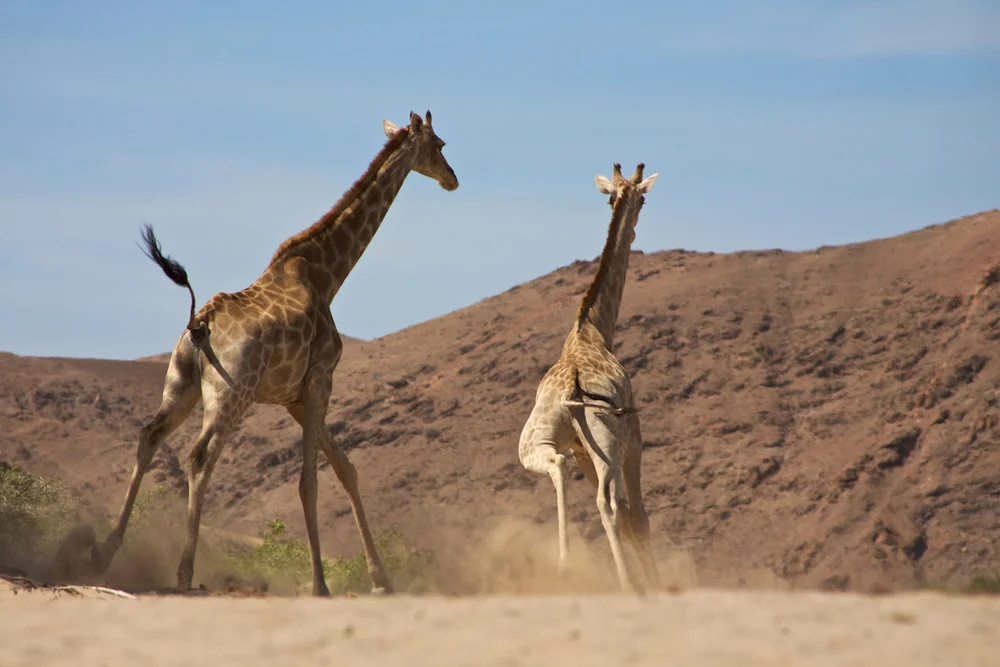
Giraffes are the tallest animals on Earth, instantly recognizable by their long necks and graceful movement across the African savanna. Despite their size, many people are surprised to learn that giraffes are far from slow. One of the most common questions people ask about these iconic animals is simple but fascinating: how fast can giraffes run?
Giraffes can run at speeds of up to 35 miles per hour (56 kilometers per hour) over short distances. Despite their towering height and long legs, they are surprisingly fast when they need to escape danger.
Most of the time, giraffes travel at a steady walking pace of around 10 miles per hour (16 kilometers per hour). When threatened by predators such as lions, they can shift into a fast gallop that allows them to cover ground quickly. Let’s discuss giraffes’ speed in detail!
Key Takeaways
- Giraffes can run at speeds of up to 35 miles per hour (56 kilometers per hour) over short distances.
- Their long legs and powerful stride allow them to move faster than most people expect.
- Speed helps giraffes escape predators, protect calves, and avoid prolonged danger.
- Running is most commonly observed during predator encounters, though giraffes, especially calves, may also run during play or social interactions.
- Human-driven threats such as habitat loss and poaching cannot be outrun.
- Donate to Save Giraffe Now to help restore the safety and space giraffes need to survive in the wild.
How Do Giraffes Run?
Giraffes run using a unique gait that matches the movement of their long legs and narrow bodies. When they walk, both legs on one side of the body move together in a slow, rhythmic pattern. When they run, this motion shifts into a gallop.
During a sprint, a giraffe’s front and back legs extend far off the ground, creating long, powerful strides. This allows them to reach high speeds with fewer steps than smaller animals. Their flexible spine and strong muscles help absorb impact and maintain balance despite their height.
Running is physically demanding for giraffes, which is why they use it sparingly. Most of the time, their size and awareness are enough to avoid danger without sprinting.
How Fast Are Giraffes Compared to Other Animals?
Giraffe speed becomes even more impressive when compared to other animals and humans. Here’s how they compare:
- Giraffes vs humans: The average human runs about 15 miles per hour at top speed. A giraffe can more than double that pace.
- Giraffes vs lions: Lions can reach speeds close to 50 miles per hour, but only for very short bursts. A giraffe that spots danger early often has enough speed to escape.
- Giraffes vs horses: Horses can run faster than giraffes over longer distances, but giraffes remain one of the fastest animals of their size in the wild.
Speed alone does not decide survival. Awareness, terrain, and timing all play a role when giraffes face threats in the wild.
When Do Giraffes Run in the Wild?
Giraffes do not run often. Sprinting requires a great deal of energy and puts stress on their long legs, so it is used only when necessary.
Most running occurs during predator encounters, especially when lions target calves or isolated individuals. Adult giraffes usually rely on early detection and distance to avoid danger before a chase begins. If a threat comes too close, speed becomes the final line of defense.
Running also happens when calves are separated from the herd. In these moments, quick movement helps reunite families and reduce the risk of predation. Outside of these situations, giraffes prefer calm movement and vigilance over constant speed.
Speed Alone Can’t Save Giraffes Anymore
Speed evolved to help giraffes escape natural predators. It does nothing to protect them from the dangers created by humans. Fences, roads, shrinking habitats, and wire snares cannot be outrun.
As landscapes become more fragmented, giraffes have fewer safe places to flee. Migration routes disappear, forcing them into smaller areas where escape options are limited. In some regions, poaching and accidental snaring cause injuries that permanently reduce a giraffe’s ability to run.
Giraffe populations have declined sharply over the past few decades. This loss has not happened because giraffes became slower, but because the world around them has changed faster than they can adapt.
Save Giraffes Now Helps Protect Giraffes in the Wild
Save Giraffes Now works to protect giraffes where speed and instinct are no longer enough. Our organization supports on-the-ground conservation projects across Africa that focus on keeping giraffes safe in their natural habitats.
These efforts include anti-poaching patrols, habitat protection, rescue and rehabilitation for injured giraffes, and rewilding programs that return giraffes to areas where they have disappeared. We also work with local communities to help create solutions that protect both people and wildlife.
Join Us to Protect Giraffes Where Speed Falls Short
Giraffes still have the strength, speed, and instincts to survive in the wild. What they lack is protection from human-driven threats. Conservation support helps restore that balance.
Donations to Save Giraffes Now fund habitat protection, anti-poaching efforts, rescue care, and community-led conservation programs. These actions give giraffes the space and safety they need to live as they were meant to.
Frequently Asked Questions
Can giraffes run faster than horses?
Horses are faster than giraffes over longer distances. A healthy horse can reach speeds of around 40 to 45 miles per hour, while giraffes top out at about 35 miles per hour. Giraffes rely on long strides and short bursts of speed rather than endurance running.
Can a giraffe outrun a lion?
Lions are faster than giraffes in a direct sprint and can reach much higher top speeds. A giraffe can still escape if it detects danger early and creates distance before a chase begins. Awareness and timing matter more than raw speed in these encounters.
How fast can a giraffe run in km/h?
Giraffes can run at speeds of up to 35 miles per hour (56 kilometers per hour) over short distances. Their usual walking speed is much slower, averaging around 10 miles per hour (16 kilometers per hour).
Are giraffes deaf?
No, giraffes are not deaf. Their hearing is well developed, though it is tuned to lower-frequency sounds rather than sharp noises. This ability helps giraffes detect distant movement and potential threats across open landscapes.