
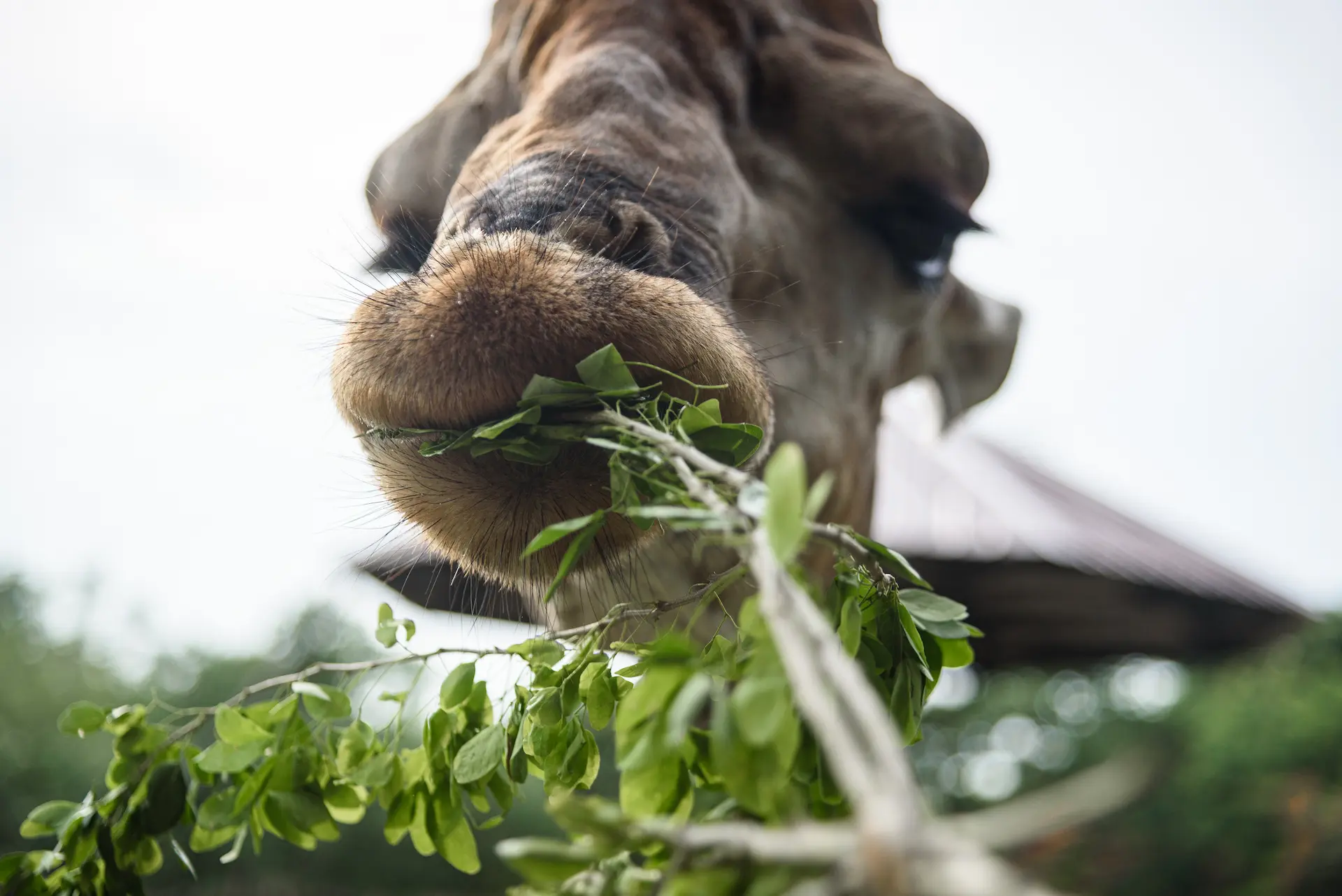
Giraffes may be famous for their long necks, but what really makes them unique is how they use that height to feed. Their diet is made up mostly of leaves, shoots, mango tree flowers, and twigs from tall trees that few other animals can reach. Acacia, mimosa, and wild apricot trees are among their favorites. On an average day, a giraffe eats close to 75 pounds of food, though they can manage with about half that amount if resources are scarce.
One of the most important food sources for giraffes is the acacia tree. Here’s a closer look at its classification:
- Scientific name: Acacia
- Family: Fabaceae
- Genus: Acacia; Mill.
- Kingdom: Plantae
- Order: Fabales
- Subfamily: Caesalpinioideae
Key Takeaways
- Giraffes eat mostly leaves, shoots, bark, and fruits from tall trees such as acacia, mimosa, and wild apricot.
- An adult giraffe can eat between 30 and 75 pounds of food each day, spending up to 20 hours feeding.
- Their long tongues and height allow them to reach food that other animals cannot, making them essential for shaping ecosystems.
- Save Giraffes Now is working across Africa to restore habitats, reintroduce giraffes, and protect the land they depend on. Donate now to help make this mission a success.
Giraffe Diet in the Wild
A giraffe’s day is shaped by food. In the wild, they spend up to 16 hours browsing, moving slowly from tree to tree in search of leaves and shoots. Their favorite feeding spots are tall canopies where other animals cannot reach, giving them a reliable source of nutrition even in crowded ecosystems.
The diet changes with the seasons. After the rains, trees are full of fresh leaves, flowers, and seed pods, and giraffes feed heavily on this abundance. When the land dries out, they shift to tougher options such as bark and dried twigs, using their strong tongues and jaws to strip what little remains.
How Giraffes Eat
Giraffes are built to reach food that other animals cannot. Their long necks give them access to high branches, while their tongues, which can stretch up to 20 inches act like flexible tools for pulling leaves. The tongue is prehensile, meaning it can curl around branches and strip off clusters of leaves with ease.
Acacia trees, one of their main food sources, are covered in sharp thorns, yet giraffes handle them without trouble. Their tongues and lips are tough enough to avoid injury, and their narrow muzzles let them pick between the spines to reach tender green shoots.
How Much Do Giraffes Eat?
A giraffe’s size means it needs a steady supply of food each day. On average, an adult will eat between 30 and 75 pounds of leaves, shoots, and bark daily. In lush seasons, they can easily reach the higher end of that range. When food is scarce, they survive on less, sometimes closer to 30 pounds, by browsing almost constantly.
Giraffes spend up to 20 hours a day feeding. Their slow, deliberate style of eating allows them to consume large amounts without wasting energy. Because most of their diet is made up of water-rich leaves, giraffes can go for long periods without drinking from rivers or waterholes. This adaptation helps them thrive in dry areas where water is hard to find.
Even with such a heavy intake, giraffes are selective feeders. They prefer young, nutrient-rich leaves when possible, which provide the energy they need to maintain their towering frames and long daily treks across the savanna.
Diet of Giraffes in Zoos
Giraffes living in zoos have diets carefully designed to match what they would eat in the wild. Their main food is hay and browse, which includes branches and leaves from safe, non-toxic trees. Keepers also provide alfalfa, fruits, and vegetables to add variety and extra nutrition.
To encourage natural feeding behavior, zoos often place food in tall feeders or hanging baskets. This setup allows giraffes to stretch their necks and use their tongues the same way they would in the wild. By mimicking natural browsing, zoos keep giraffes active and prevent health problems that come from eating only ground-level food.
Supplements may also be added to ensure giraffes receive the minerals and vitamins they need. These controlled diets not only keep giraffes healthy in captivity but also help researchers and conservationists better understand their nutritional needs.
Why Diet Matters for Giraffe Survival
The way giraffes eat shapes entire ecosystems. By browsing high in the trees, giraffes control plant growth and open up space for sunlight to reach smaller plants. This balance supports a wide range of other animals and plants that share the same habitat.
Their feeding habits also make them natural seed dispersers. As giraffes move across long distances, they drop seeds in their waste, helping new plants grow far from the parent tree. This process keeps savannas and woodlands diverse and healthy.
When giraffes lose access to their food sources, the effects are felt throughout the ecosystem. Habitat loss and climate change reduce the number of trees they depend on, forcing giraffes into smaller areas and closer conflict with people and livestock. Protecting their food supply is as important as protecting the giraffes themselves.
Conservation groups like Save Giraffes Now work to secure safe habitats so giraffes can continue their role as “ecosystem gardeners.” Every protected area and every rescued giraffe helps preserve not just the species, but the balance of the land they call home.
Protecting Giraffes Starts With Protecting Their Food
Giraffes survive because of the trees and plants that sustain them. Leaves, shoots, flowers, and fruits are the foundation of healthy ecosystems and a lifeline for these gentle giants. But with habitats shrinking and populations falling, protecting giraffes means protecting their food sources too.
Save Giraffes Now is leading this mission by rescuing giraffes, restoring safe habitats, and building community partnerships that keep both people and wildlife thriving. These efforts prove that giraffes can recover, but the work depends on continued support.
Every donation helps plant new hope for giraffes. It funds rangers, protects feeding grounds, and ensures that future generations can look up and see these animals walking tall across Africa’s savannas.
Donate now and help keep giraffes fed, safe, and free in the wild.
Frequently Asked Questions
Do giraffes eat meat?
No, giraffes are strict herbivores. They eat only plants, mainly leaves, shoots, bark, and fruits from trees.
What trees do giraffes eat the most?
Giraffes feed heavily on acacia, mimosa, and wild apricot trees. These species provide tender leaves and shoots that are rich in nutrients.
How often do giraffes eat?
Giraffes spend most of the day feeding. They can eat for up to 16–20 hours a day, slowly moving between trees as they browse.
Do giraffes need to drink water?
Giraffes can survive for long periods without drinking directly from rivers or waterholes. Most of their hydration comes from the leaves they eat, which contain high amounts of water.
How much food does a giraffe eat each day?
An adult giraffe eats between 30 and 75 pounds of food daily. On average, they consume about 66 pounds, though they can survive on less during scarce seasons.