
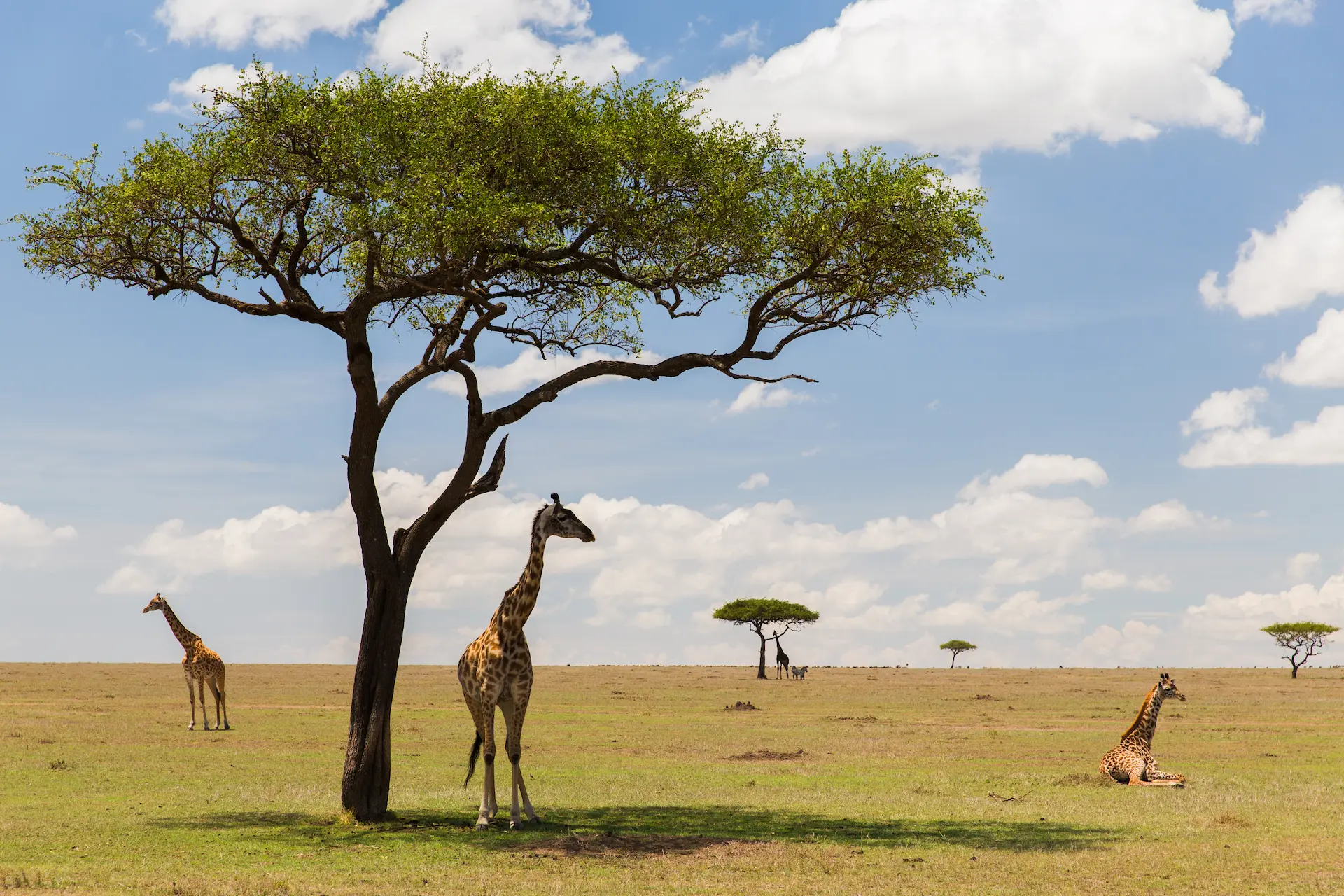
Giraffes live only in Africa, where they roam open savannas, grasslands, and woodlands. These habitats provide the tall trees and wide landscapes they need for food, safety, and space to move in herds. While they were once found across much of the continent, today their range is more limited, with populations surviving in smaller areas than before.
This shrinking range has made giraffes more vulnerable, but it has also driven action. Save Giraffes Now is working across Africa to protect and restore the places giraffes call home. By rescuing herds, reintroducing giraffes into safe reserves, and partnering with local communities, they are helping to protect and preserve these gentle giants.
Key Takeaways
- Wild giraffes live only in Africa, mainly across savannas, woodlands, and grasslands.
- Their range once covered much of the continent but is now limited to 21 countries.
- Species are unevenly distributed — some, like the Southern giraffe, remain stable, while others, like the Nubian and Kordofan, are critically endangered.
- Habitat loss, poaching, and climate change are major threats to giraffe survival.
- Protecting giraffe habitats also protects entire ecosystems that countless animals and people rely on. Join Save Giraffes Now and help protect these gentle giants before it’s too late.
Giraffe Habitats in Africa
While the largest population of Rothschild’s (Nubian) giraffes is found in Uganda, East Africa, giraffes thrive in ecosystems that provide both food and open space. This makes the African savanna their most common home, with vast grasslands dotted with acacia, mimosa, and other tall trees that supply the leaves they rely on.
In addition to savannas, giraffes are found in dry woodlands, open forests, and even small deserts. Here, scattered trees and shrubs provide a steady diet of leaves and shoots, even during the dry season when other food is scarce. Some populations also live near river valleys, where vegetation stays green longer and supports herds through harsher conditions.
Countries Where Giraffes Are Found Today
Giraffes are found in 21 African countries, though their numbers vary widely from one region to another. Some nations still support strong, stable populations, while others have only a few hundred giraffes left.
East Africa
Kenya and Tanzania are home to large populations, including the Masai and Reticulated giraffes. Ethiopia also has smaller groups, though they are more fragmented.
Southern Africa
Botswana, Namibia, and South Africa support some of the largest numbers of giraffes. These countries are considered strongholds for the Southern giraffe, which remains the most stable of all species.
Central Africa
Chad, Cameroon, and the Central African Republic are home to the Kordofan giraffe, a subspecies that has experienced severe declines. Populations here are small and scattered, making them especially vulnerable.
West Africa
Niger is the only country where the West African giraffe still survives. Once widespread across the region, this subspecies now lives in just one part of the country, where conservation programs are keeping it from disappearing completely.
These regional differences show how unevenly giraffes are distributed today. While some areas remain strongholds, others are at risk of losing giraffes forever without urgent protection.
Species and Their Ranges
| Species | Range | Status |
| Masai giraffe | Kenya and Tanzania | Endangered |
| Northern giraffe | Central and East Africa (Chad, Ethiopia, South Sudan, Uganda) | Critically Endangered |
| Reticulated giraffe | Northern Kenya, southern Ethiopia, Somalia | Endangered |
| Southern giraffe | Namibia, Botswana, Zimbabwe, South Africa | Least Concern |
The Northern giraffe is one of the four main giraffe species recognized today. Within that species, there are several subspecies — smaller groups that live in specific regions and have slightly different traits.
Two of those subspecies are:
- Nubian giraffe → lives in parts of Ethiopia, South Sudan, and Uganda
- Kordofan giraffe → lives in Chad, Cameroon, and the Central African Republic
Both of these subspecies have faced very steep population declines (90%+ in some areas) and are listed by the IUCN as Critically Endangered. While the Northern giraffe as a whole is in trouble, some of its subspecies are in much more urgent danger.
How Human Activity Affects Giraffe Habitats
The biggest challenge giraffes face today is the loss of the land they depend on. Expanding farms, roads, and towns cut into savannas and woodlands, leaving less space for giraffes to roam and fewer trees for them to feed on. In some areas, fences block migration routes, trapping giraffes away from water and food sources.
Poaching adds another layer of pressure. Even in protected areas, giraffes are generally commercially hunted for meat, hides, and tails. In regions affected by conflict, law enforcement is weak, making it easier for poachers to operate.
Climate change is also reshaping giraffe habitats. Longer droughts and unpredictable rainfall reduce the growth of the trees they rely on, forcing giraffes to compete with livestock for food. These combined threats make survival more challenging and have already led to reduced populations in many regions.
Help Us Save Giraffes from Going Extinct
Giraffes belong in Africa’s savannas and woodlands, where their towering presence shapes the land and inspires everyone who sees them. Yet their habitats are shrinking, and their numbers have fallen by nearly 40 percent in just three decades. Without action, more species and subspecies could disappear from the wild.
Save Giraffes Now is dedicated to preventing this outcome. By protecting habitats, rescuing injured giraffes, and reintroducing herds to safe reserves, the organization is giving these gentle giants a chance to recover. Partnerships with local communities are creating lasting solutions that benefit both people and wildlife.
Your support makes this work possible. Every donation funds rangers, rescue operations, and conservation projects that keep giraffes safe. Together, we can stop their silent decline and ensure giraffes remain a living symbol of Africa’s beauty for generations to come. Donate now and join the mission to save giraffes from extinction.
Frequently Asked Questions
Do giraffes live outside of Africa?
No. Giraffes are native only to Africa. They are sometimes found in zoos around the world, but wild giraffes live exclusively across African savannas, grasslands, and woodlands.
Where do most giraffes live today?
The largest populations are found in East Africa (Kenya and Tanzania) and Southern Africa (Botswana, Namibia, and South Africa). These regions remain strongholds for giraffes.
What kind of environment do giraffes live in?
Giraffes live in savannas, open woodlands, and grasslands, where tall trees like acacia provide the leaves they feed on. These environments also give them wide visibility to spot predators.
Do giraffes live in herds?
Yes. Giraffes are social animals and usually live in loose herds called towers. Group sizes vary, often shifting as giraffes move between feeding areas.