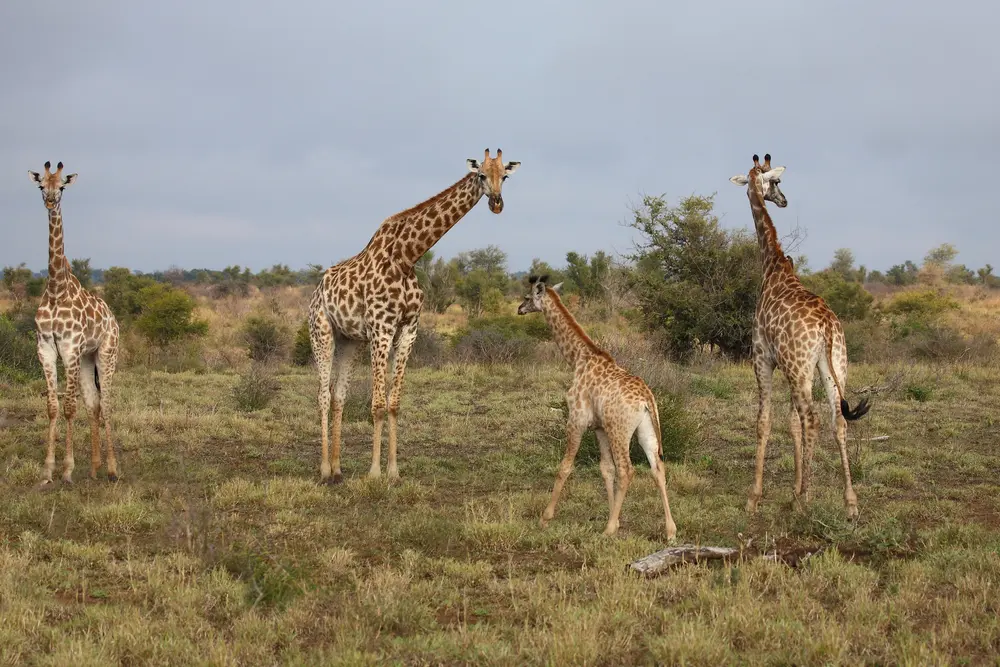
What happens to a landscape when its tallest herbivore disappears? For giraffes, this is no longer merely a hypothetical question. They have already gone locally extinct in at least seven African countries: Nigeria, Burkina Faso, Guinea, Eritrea, Malawi, Mauritania, and Senegal. [1]
Across Central and East Africa, wild populations have declined by approximately 40% since the 1980s, shrinking from around 155,000 to roughly 117,000 today. [2] Three of the four recognized species are now classified as threatened or critically endangered.
The ecological role that giraffes perform is not decorative. As the only high-level browsers in African savanna ecosystems, they occupy a vertical feeding niche that no other herbivore fills. They shape vegetation structure, disperse seeds across wide landscapes, redistribute nutrients through movement and dung, and sustain the feeding relationships of birds and predators that depend on their presence.
This article examines what the scientific and observational record suggests regarding the potential ecological consequences of giraffe disappearance, from vegetation change and food-web disruption to possible economic losses associated with the erosion of Africa’s megafauna.
1. Woody Encroachment: What Happens to the Savanna Without High-Level Browsers
The loss of giraffes could contribute to a change in vegetation structure, specifically woody encroachment. This refers to the directional increase in the density and height of shrubs and trees within savanna ecosystems, which shifts the ecological balance away from the open grass-tree mosaic that defines functional savanna and toward closed thicket or woodland. [3] Woody encroachment is already widespread across sub-Saharan Africa: current estimates suggest it affects approximately 750 million hectares, or 55% of non-forest biomes on the continent. [4] The loss of large browsers, including giraffes, is among the factors that may contribute to woody encroachment, although its importance varies among ecosystems and cannot be separated from influences such as rainfall, fire, atmospheric carbon dioxide, land use, and the broader herbivore community.
Giraffes feed on the upper canopy of woody vegetation, accessing leaves and shoots at heights of three to six meters, including foliage inaccessible to most other browsing ungulates. This vertical reach allows giraffes to influence woody plant growth at heights used less extensively by most other browsers. When that pressure is removed, some woody plants may experience reduced browsing pressure, although the resulting vegetation response will depend on other herbivores, fire, climate, soils, and land management. [5] Over time, this could contribute to increases in canopy density, reductions in light penetration, and suppression of grasses and low-growing plants in susceptible savanna systems.
A study published in the journal Oecologia found that fire and herbivory together act to reduce woody cover below the rainfall-driven maximum across many African savanna locations and that disruptions to herbivore communities constitute a mechanism through which woody encroachment is accelerated. [6] Research modelling the effects of woody encroachment on mammal communities found that increased woody cover triggers a significant reorganization of the herbivore assemblage, with open-area grazers progressively replaced by browsing species as canopy density grows. [7]
The practical consequences of bush encroachment extend well beyond habitat aesthetics:
- Grass cover declines as increased woody canopy reduces the light available to ground-level vegetation, directly reducing the forage base for grazing species including zebra, wildebeest, and buffalo
- Encroaching woody species are frequently thorny and unpalatable to domestic livestock, meaning the process simultaneously reduces grazing capacity and the viability of pastoralist livelihoods in affected areas [8]
- Vegetation heterogeneity decreases: the varied mosaic of open grassland, bush, and woodland that defines savanna character collapses toward a more uniform, closed canopy, reducing the range of microhabitats available to wildlife
- Fire behavior changes: dense woody cover produces different fire intensity and spread patterns compared to open savanna, which can further accelerate the transition away from grass-dominated states
- Soil structure and water infiltration are altered as deep-rooted woody plants displace the shallower root systems of grasses, changing the water table and reducing surface water availability
The encroachment dynamic is not easily reversed. Once giraffe populations are lost and woody encroachment becomes established, restoration may require sustained, long-term active management rather than simply allowing the ecosystem to recover on its own. [9]
2. Cascade Effects on Other Herbivores
The vegetation changes that could be associated with the loss of giraffe browsing do not affect plants alone. They could have broader consequences for the herbivore community, altering the distribution of forage, the structure of habitat, and the competitive dynamics among species that depend on open savanna conditions.
As woody canopy density increases in the absence of high-level browsers, light penetration to lower vegetation layers diminishes and grass cover declines. The species most directly affected are large grazers, which depend on open grassland for both foraging and predator detection. Wildebeest, zebra, and buffalo are obligate grazers whose carrying capacity in a given landscape is tightly linked to grass biomass and grassland accessibility. In areas where bush encroachment reduces these conditions, grazer populations contract, shift their range, or become fragmented into smaller, less viable groups. [10]
The displacement of grazers by browsers, which modelling studies show occurs progressively with increasing woody cover, represents a fundamental restructuring of the herbivore community. In a functional savanna, grazers and browsers partition resources along both vertical and horizontal axes, maintaining complementary pressures on different vegetation layers. Removing the highest-level browser alters that vertical partitioning, but the magnitude and direction of subsequent community changes have not been established experimentally for giraffe loss alone.
There is also an indirect effect mediated through predator-prey dynamics. When migratory prey species such as wildebeest and zebra are abundant, lions and other large predators focus their hunting effort on these preferred targets and reduce their pressure on secondary prey such as giraffe calves. Research in Tanzania’s Tarangire Ecosystem, published in PLOS ONE, found that when migratory wildebeest and zebra herds were present, giraffe calf survival rates improved significantly, because predator attention shifted toward the migrants. [11] When migratory prey populations decline or disappear, predation pressure on resident species, including giraffes, increases. Whether giraffe decline would indirectly alter predation pressure through vegetation-mediated changes in other prey populations remains a plausible but untested hypothesis.
Specific changes to the herbivore community expected following significant giraffe decline include:
Reduced diversity in the browsing guild
Giraffe occupies a unique height niche that no other browser accesses; its loss leaves the upper canopy unbrowsed regardless of how many other herbivores remain in the system
Habitat shifts in medium-sized antelopes
Species such as kudu and gerenuk that browse at mid-canopy heights could be affected by resulting changes in vegetation structure, although direct evidence that giraffe loss reduces the availability of mid-level browse is currently limited.
Competitive pressure on small browsers
As woody encroachment creates denser vegetation, associated habitat changes could reduce the edge habitats and mixed-structure zones that some smaller browsers use.
Grazer contraction
Wildebeest and zebra populations are directly sensitive to grassland quality, and substantial woody encroachment can reduce carrying capacity for these species across affected landscapes. [12]
3. Seed Dispersal Breakdown and Plant Community Change
Giraffes are among the most effective large-mammal seed dispersers in African savanna ecosystems. Their feeding range covers a wide variety of woody plant species, including acacia, marula, mopane, sausage tree, and shepherd’s tree, and seeds ingested during browsing pass through the digestive system intact and are deposited in dung at distances that can reach several kilometers from the parent plant. [13] This spatial redistribution of seeds is ecologically significant in ways that go beyond simple reproduction.
A peer-reviewed study by Stokke and du Toit, published in the Journal of Tropical Ecology, assessed the dispersal of acacia seeds by large herbivores in South African savanna and found that in the absence of large mammals, acacia seeds were dispersed only in the shade directly beneath the parent tree crown, where seedling survival is substantially lower due to competition and low light. With large herbivores present, seeds were dispersed into open, non-shaded habitats where germination and recruitment success were significantly higher. The study identified giraffes specifically as the primary disperser of Acacia nilotica seeds, depositing approximately 1,060 dispersed seeds per hectare per year. [14]
The digestive passage itself improves germination probability for some species. Scarification of the outer seed coat during gut passage softens physical dormancy and accelerates germination. For plant species that have evolved with large herbivores as their primary dispersal vector, this process is not incidental but integral: their seeds are adapted to survive gut passage and perform better after it than without it. The loss of the dispersal agent therefore affects not just the spatial distribution of those plants but their recruitment success and, over time, their population viability within the ecosystem. [15]
The broader consequences of seed dispersal breakdown include:
- Reduced genetic exchange between plant populations: giraffes carry seeds across fragmented landscapes and between habitat patches, sustaining gene flow between populations that are otherwise separated; without them, plant populations become genetically isolated, reducing adaptive capacity [16]
- Loss of long-distance dispersal for key savanna species: acacia trees, which form the structural and food web foundation of much of the savanna, lose their primary long-distance dispersal agent and become confined to areas immediately adjacent to existing stands
- Altered succession dynamics: the removal of a keystone seed disperser changes the trajectory of vegetation succession, favoring species with other dispersal mechanisms and altering the composition of the savanna over decades
- Reduced ecosystem resilience: the genetic diversity and spatial spread of plant populations maintained by large dispersers contribute to the ecosystem’s ability to recover from disturbances such as drought, fire, and disease; losing that dispersal function narrows the resilience window [17]
4. Nutrient Cycling Disruption
Giraffes are wide-ranging animals, routinely travelling several kilometres per day between feeding sites and resting areas. This movement underpins their role in nutrient cycling, a process through which nutrients consumed at one location are deposited as dung at another, redistributing nitrogen, phosphorus, and organic matter across the landscape. The loss of a species that performs this function at the scale and range of a giraffe creates spatial gaps in soil fertility that are not replicated by smaller, more sedentary herbivores. [18]
Giraffe dung provides a concentrated resource for dung beetles, bacteria, and other decomposers that break down organic matter and return nutrients to the soil. Dung beetle communities in African savannas are highly diverse and ecologically important, and their activity is closely calibrated to the size, moisture, and composition of available dung. Large herbivore dung supports different and often more specialized beetle assemblages than small herbivore dung, meaning the removal of giraffe from a system does not simply reduce the total volume of dung but changes its character in ways that affect which decomposer species can persist. [19]
In semi-arid environments, where soil nutrient levels are naturally low and patchy, the redistribution function performed by large mobile herbivores is particularly important for sustaining primary productivity. Areas where nutrients are consistently deposited support higher plant growth, which in turn supports higher herbivore density, creating positive feedback loops that maintain productive hotspots across otherwise low-fertility landscapes. The removal of wide-ranging dispersers like giraffes narrows the spatial extent of these nutrient hotspots and reduces overall landscape-level productivity over time.
5. Predator Community Shifts
Giraffes are not the primary prey of any African predator, but they are preyed upon—particularly as calves—by lions and several other large carnivores. Their removal from the prey base does not eliminate these predators, but it does alter the distribution of hunting pressure across the remaining prey community in ways that can affect population dynamics across multiple species.
Lions are the predators most directly associated with giraffe hunting. Field data from across the African savanna show substantial variation in the proportion of giraffe kills in lion diets by location. In Tsavo, Kenya, zebra, giraffe, Cape buffalo, and waterbuck together account for over 70% of lion diet. [20] Lions are the only predators, besides humans, capable of preying on the largest African herbivores, including giraffes, and they are the primary predator responsible for giraffe calf mortality across the continent. [21]
Only one quarter of giraffe infants survive to adulthood due to high predation rates, with lions, hyenas, and leopards responsible for the majority of calf deaths. [22] In Tanzania’s Tarangire Ecosystem, research published in PLOS ONE demonstrated that local lion predation pressure was significantly negatively correlated with giraffe neonatal and calf survival probabilities and that the presence of migratory wildebeest and zebra reduced lion focus on giraffe calves by providing a preferred alternative prey source. [23]
The predator community consequences of giraffe disappearance are best understood through the lens of prey switching. When a prey species disappears, predators that previously hunted it shift effort toward whatever alternative prey is available. Predators may switch among available prey as prey communities change, but the consequences of giraffe decline for predation on other species have not been directly demonstrated. [24]
Because adult giraffes represent large but relatively infrequent prey items, their decline would reduce one component of the prey base available to lions. The population-level consequences for predators would depend on the abundance and composition of alternative prey.
6. Bird and Invertebrate Communities
The ecological dependencies that giraffes support extend into the bird and invertebrate communities of the savanna. The most direct relationship is with oxpeckers (Buphagus spp.), two species of birds that forage primarily on the hides of large mammals, removing ticks, ectoparasites, and in some contexts, feeding on wound tissue, blood, and mucus. Both the red-billed oxpecker (B. erythrorhynchus) and the yellow-billed oxpecker (B. africanus) have a demonstrated and highly specific dependence on large terrestrial mammal hosts. Giraffes, due to their body size and high ectoparasite load, are among the most important hosts in the systems where they occur. [25]
A study published in PLOS ONE on mammal-bird mutualisms in African savannas concluded that large mammal declines have already had measurable cascading effects on oxpecker populations, documenting local extinctions of both species outside protected areas where wildlife has been replaced by livestock. The study found that strong host preference and limited plasticity outside preferred hosts are the primary factors that make oxpeckers particularly vulnerable to co-extinction as large mammal populations decline. [26] Across southern Africa, oxpecker declines and local extinctions have been documented, particularly in areas where large wild mammal communities have been substituted by livestock herds, which oxpeckers are largely intolerant of due to human disturbance. [27]
Research at Hwange National Park in Zimbabwe documented the distribution and density of oxpeckers on giraffes in detail, finding that birds aggregated disproportionately on certain individuals and preferred the mane, back, and neck regions where tick density is highest. [28] The specificity of this host-use pattern means that any significant reduction in giraffe density reduces the available host base below the threshold required to support viable oxpecker populations in the same system.
Beyond oxpeckers, structural changes to vegetation following giraffe decline affect a wider range of bird communities:
- Ground-nesting birds that depend on open savanna grassland are directly affected by the bush encroachment that results from reduced browsing pressure; species such as korhaans, coursers, and some larks require open ground with sparse vegetation cover, conditions that woody encroachment eliminates progressively
- Canopy-nesting species benefit initially from increased woody cover but may be adversely affected in the long term as encroachment transitions toward closed thicket, which supports a different and generally less diverse bird community than open woodland or mixed savanna
- Raptors that hunt in open areas, including several eagle and falcon species, lose hunting habitat as grassland cover diminishes and visibility is reduced by denser vegetation
- Dung beetle communities, which are ecologically critical for nutrient cycling and secondary seed dispersal, are sensitive to changes in large herbivore composition; the loss of giraffe dung removes a specific substrate that supports specialized beetle species not replaced by dung from smaller animals [29]
7. Local Extinction Precedents: What the Record Already Shows
Rather than relying solely on ecological modelling, it is possible to examine the consequences of giraffe loss through the lens of countries where local extinction has already occurred. Giraffes have disappeared from at least seven African nations: Burkina Faso, Eritrea, Guinea, Malawi, Mauritania, Nigeria, and Senegal. [30] In each case, the extinction was driven by a combination of habitat loss, poaching, and civil disruption, and in most cases it occurred without systematic monitoring of the ecological changes that followed.
The absence of post-extinction ecological baselines for these countries means it is not possible to directly quantify the vegetation or food web changes that followed giraffe loss in each location. However, the Sahel and Sudan savanna zones of West Africa, where countries including Nigeria and Burkina Faso are located, have experienced some of the most severe and well-documented woody encroachment and grassland degradation on the continent over the same period during which giraffe populations were collapsing. While these changes cannot be attributed solely to giraffe loss, they are broadly consistent with vegetation changes associated with altered fire, climate, land use, and herbivore communities. [31]
Uganda provides the most detailed case study of partial giraffe collapse and partial recovery within a single country. Civil conflict in the 1970s and 1980s caused giraffe numbers to fall by approximately 90% from an estimated 1,800 individuals to fewer than 100. Three of five established populations went locally extinct. [32] Field reports and conservation assessments from that period document the abandonment of wildlife management across large areas of the country’s savanna zones, and the subsequent proliferation of dense bush in areas that had previously been maintained as more open landscapes by a combination of fire management and herbivore browsing. Giraffe populations have subsequently been restored in parts of Uganda through translocation and protected-area management; however, available evidence does not isolate the ecological effects of giraffe recovery from those of broader habitat protection and wildlife management. [33]
The Niger West African giraffe case offers a further instructive data point. From a low of just 49 individuals in the mid-1990s, the population has grown to approximately 600 through sustained conservation efforts coordinated between the Niger government, local communities, and international partners. [34] The recovery has occurred alongside community-based habitat protection in the Kouré landscape. These concurrent changes demonstrate the value of integrated conservation but do not establish that giraffe recovery itself caused changes in vegetation condition.
What these precedents collectively demonstrate is that giraffe declines frequently occur within landscapes already experiencing habitat loss and ecological degradation. Giraffe disappearance may further reduce browsing, seed-dispersal, and nutrient-redistribution functions, but the magnitude of these effects has not been directly quantified in most former range states.
8. Human Communities and Economic Consequences
The ecological consequences of giraffe disappearance have direct and indirect economic dimensions that affect millions of people across Africa. Wildlife tourism is a primary economic driver in many African countries and contributes to regional economies by generating jobs in hospitality, transport, guiding, and community-based conservation. [35] For countries including Kenya, Tanzania, and South Africa, wildlife tourism is among the top sources of foreign exchange earnings. Megafauna, including iconic species such as giraffes, are the primary draw for international safari visitors.
Giraffes are an iconic component of African wildlife tourism. Their height, visibility, and distinctive appearance make them a centrepiece of the savanna tourism experience, and operators consistently cite them as one of the species that travellers most specifically request. The safari industry as a whole generates over 12 billion US dollars annually across Africa’s top wildlife destinations, and each safari job supports an estimated 8 to 10 dependents. [36]
Research has documented substantial tourism losses associated with elephant poaching, illustrating the economic importance of conserving iconic megafauna. [37] No equivalent peer-reviewed valuation is currently available for giraffes, so the economic cost of giraffe loss should not be inferred directly from estimates for elephants.
The economic consequences of giraffe disappearance extend beyond direct tourism revenue:
- Community conservancies and wildlife corridors in Kenya, Tanzania, and Namibia that were established and funded partly on the basis of giraffe populations would lose a key component of their conservation and tourism proposition, threatening both funding models and community incentives for coexistence with wildlife
- Photographic safari operators, who represent the premium tier of the wildlife tourism market and who pay the highest per-visitor fees to national parks and conservancies, specifically design itineraries around species diversity; the removal of giraffes from savanna systems reduces the diversity of a wildlife experience in ways that affect destination desirability and pricing
- Livestock and dryland farming systems adjacent to giraffe range are already affected by bush encroachment: the transition from open savanna to closed thicket reduces the grazing capacity of pastoral land, which in semi-arid economies is directly linked to household income and food security [38]
- Cultural significance: Giraffes hold cultural meaning in multiple African societies, featuring in traditional art, storytelling, and ceremony across the continent; their disappearance represents a cultural loss alongside the ecological one
In Kenya, tourism comprises approximately 12% of GDP, and the wildlife sector is the primary driver of that contribution. [39] Any significant reduction in the availability of iconic savanna species, including giraffes, could affect Kenya’s competitiveness as a safari destination relative to countries with more intact megafauna assemblages. The economic argument for giraffe conservation is therefore not a secondary consideration but a central one for the national development strategies of the major wildlife tourism economies in Africa.
9. Trophic Cascades and the Irreversibility Problem
The combined consequences described in the preceding sections illustrate the potential for cascading ecological effects: the indirect effects that the loss of a functionally important species may produce at multiple levels of an ecosystem simultaneously. The giraffe’s functional importance operates across several ecological roles at once, which is the feature that makes its potential disappearance particularly disruptive. A species whose loss affected only one ecosystem process would be easier to absorb. Giraffes affect vegetation structure, seed dispersal, nutrient redistribution, the prey base of large predators, and the host base of specialist birds, all at the same time. [40]
The irreversibility problem is the most important dimension of this framework. Many of the consequences described here could become difficult to reverse once established. Woody encroachment, once established, resists reversal because encroaching species suppress grass regeneration and produce conditions that favor further woody establishment. Seed dispersal networks, once disrupted, leave plant populations isolated in ways that reduce genetic diversity over plant generation timescales, meaning the effects accumulate slowly but persist for decades or centuries. Predator community adjustments that intensify pressure on remaining prey species could further alter prey communities, although such effects have not been demonstrated specifically following giraffe loss. [41]
Restoring ecological functions after the loss of large-browser diversity is likely to be difficult, but the available evidence does not establish that such restoration is impossible. Partial recovery is documented in cases where single species have been rebuilt through sustained conservation effort, as in Niger and Uganda. These recoveries demonstrate that giraffe populations can rebound when suitable habitat, protection, and sustained conservation support remain available. The longer giraffes remain absent from a landscape, the greater the possibility that associated ecological changes will become established, and the more resource-intensive any future restoration may prove to be. [42]
This is the ecological case for treating the current decline with urgency proportional to its scale. The question is not just whether giraffes will survive as a species, important as that is. It is whether the savanna ecosystems of Africa will retain the functional complexity that makes them among the most biodiverse and economically valuable landscapes on Earth. The two outcomes are closely connected. Savanna without giraffes is not simply a savanna missing one species; it may become a different ecosystem, with altered vegetation, wildlife communities, and soil dynamics, and a potentially diminished capacity to support both biodiversity and the human communities whose livelihoods depend on it.
10. Conservation Framing: What Preventing This Scenario Requires
The ecological consequences described throughout this article are preventable. The scientific and conservation record is clear that giraffe populations can recover when the right conditions are created and sustained. West African giraffes grew from 49 individuals to over 600 through community engagement, habitat protection, and consistent anti-poaching effort in Niger. [43] Nubian giraffes in Uganda have recovered from near-total population collapse through translocation and protected area management. Southern giraffes have thrived across Namibia, Botswana, and South Africa, where wildlife management frameworks have been adequately resourced and maintained.
What these successes share is a common set of enabling conditions: legal protection of habitat, active anti-poaching enforcement, community incentives for coexistence with wildlife, and sustained financial investment in conservation management over years and decades rather than months. These conditions are not naturally occurring. They require deliberate policy choices, institutional capacity, and consistent funding. [44]
Save Giraffes Now operates active conservation programs across ten African countries, addressing the most immediate threats to giraffe populations through a combination of rescue and rewilding operations, snare removal and wound treatment, water infrastructure development to reduce human-wildlife conflict, community anti-poaching partnerships, and emergency response in areas where populations are in acute crisis. [45] These programs represent direct interventions against the drivers that, if left unchecked, would produce the ecological scenario described in this article.
At the policy level, the proposed listing of several giraffe species under the US Endangered Species Act, the 2019 CITES Appendix II listing, and the IUCN’s formal recognition of four distinct giraffe species in August 2025 all represent progress in building the institutional framework within which giraffe conservation can be resourced and enforced. [46] The gap between the scale of the problem and the current level of conservation investment remains significant. There are now fewer wild giraffes than African elephants, yet giraffes attract substantially less research funding, international policy attention, and public financial support. [47] Closing that gap is the most direct way to prevent the ecological cascade that giraffe disappearance would set in motion.
References
[1] Save Giraffes Now. (2026). The Silent Extinction. savegiraffesnow.org
[2] Save Giraffes Now. (2026). Giraffe Population Decline: A Data-Driven Timeline (1980–Present). savegiraffesnow.org
[3] Skhosana, et al. (2025). The impacts of woody encroachment on nature’s contributions to people in North America and Africa: A systematic review. People and Nature. besjournals.onlinelibrary.wiley.com
[4] Skhosana, et al. (2025). The impacts of woody encroachment on nature’s contributions to people in North America and Africa. People and Nature. besjournals.onlinelibrary.wiley.com
[5] Save Giraffes Now. (2026). Why Giraffes Matter: The Ecological Role of the World’s Tallest Land Animal. savegiraffesnow.org
[6] Venter, Z. S., et al. (2017). Determinants of woody encroachment and cover in African savannas. Oecologia. pmc.ncbi.nlm.nih.gov
[7] Wigley, B. J., et al. (2015). Predicting the effects of woody encroachment on mammal communities, grazing biomass and fire frequency in African savannas. PLOS ONE. ncbi.nlm.nih.gov
[8] O’Connor, T. G., et al. (2004). An approach to tree thinning to structure southern African savannas for long-term restoration from bush encroachment. Journal of Environmental Management. sciencedirect.com
[9] Skhosana, et al. (2025). The impacts of woody encroachment on nature’s contributions to people. People and Nature. besjournals.onlinelibrary.wiley.com
[10] Wigley, B. J., et al. (2015). Predicting the effects of woody encroachment on mammal communities. PLOS ONE. ncbi.nlm.nih.gov
[11] Bond, M. L., et al. (2017). Migratory herds of wildebeests and zebras indirectly affect calf survival of giraffes. PLOS ONE. ncbi.nlm.nih.gov
[12] Wigley, B. J., et al. (2015). Predicting the effects of woody encroachment on mammal communities. PLOS ONE. ncbi.nlm.nih.gov
[13] Save Giraffes Now. (2026). Why Giraffes Matter: The Ecological Role of the World’s Tallest Land Animal. savegiraffesnow.org
[14] Stokke, S., & du Toit, J. T. (1996). Dispersal of Acacia seeds by ungulates and ostriches in an African savanna. Journal of Tropical Ecology. cambridge.org
[15] Field Studies Council. (2024). Giraffe Ecology and Conservation SFS 3253: Course Syllabus. fieldstudies.org
[16] Save Giraffes Now. (2026). Why Giraffes Matter: The Ecological Role of the World’s Tallest Land Animal. savegiraffesnow.org
[17] Stokke, S., & du Toit, J. T. (1996). Dispersal of Acacia seeds by ungulates and ostriches in an African savanna. Journal of Tropical Ecology. cambridge.org
[18] Save Giraffes Now. (2026). Why Giraffes Matter: The Ecological Role of the World’s Tallest Land Animal. savegiraffesnow.org
[19] Save Giraffes Now. (2026). Why Giraffes Matter: The Ecological Role of the World’s Tallest Land Animal. savegiraffesnow.org
[20] Tsavo Trust. (2025). What do lions eat? tsavotrust.org
[21] Lion Alert. (2024). The ecological role of lions. lionalert.org
[22] African Wildlife Foundation. (2025). Giraffe. awf.org
[23] Bond, M. L., et al. (2017). Migratory herds of wildebeests and zebras indirectly affect calf survival of giraffes. PLOS ONE. ncbi.nlm.nih.gov
[24] Bond, M. L., et al. (2017). Migratory herds of wildebeests and zebras indirectly affect calf survival of giraffes. PLOS ONE. ncbi.nlm.nih.gov
[25] Brockmann, A., et al. (2018). Large mammal declines and the incipient loss of mammal-bird mutualisms in an African savanna ecosystem. PLOS ONE. ncbi.nlm.nih.gov
[26] Brockmann, A., et al. (2018). Large mammal declines and the incipient loss of mammal-bird mutualisms in an African savanna ecosystem. PLOS ONE. ncbi.nlm.nih.gov
[27] Brockmann, A., et al. (2018). Large mammal declines and the incipient loss of mammal-bird mutualisms in an African savanna ecosystem. PLOS ONE. ncbi.nlm.nih.gov
[28] Reullier, A., et al. (2019). Distribution and density of oxpeckers on giraffes in Hwange National Park, Zimbabwe. bioRxiv. biorxiv.org
[29] Save Giraffes Now. (2026). Why Giraffes Matter: The Ecological Role of the World’s Tallest Land Animal. savegiraffesnow.org
[30] Save Giraffes Now. (2026). The Silent Extinction. savegiraffesnow.org
[31] Skhosana, et al. (2025). The impacts of woody encroachment on nature’s contributions to people. People and Nature. besjournals.onlinelibrary.wiley.com
[32] Save Giraffes Now. (2026). The Silent Extinction. savegiraffesnow.org
[33] Save Giraffes Now. (2025). Are giraffes going extinct? savegiraffesnow.org
[34] African Wildlife Foundation. (2016). IUCN recognizes giraffe as vulnerable to extinction. awf.org
[35] African Wildlife Foundation. (2020). Wildlife economies: What are they and how do they impact conservation? awf.org
[36] Berkeley Economic Review. (2023). Tourist Economy: The Impact of Safari in Developing African Countries. econreview.studentorg.berkeley.edu
[37] Naidoo, R., et al. (2016). Estimating economic losses to tourism in Africa from the illegal killing of elephants. Current Biology. ncbi.nlm.nih.gov
[38] O’Connor, T. G., et al. (2004). An approach to tree thinning to structure southern African savannas for long-term restoration from bush encroachment. Journal of Environmental Management. sciencedirect.com
[39] World Economic Forum. (2015). The economics of Africa’s wildlife. weforum.org
[40] Save Giraffes Now. (2026). Why Giraffes Matter: The Ecological Role of the World’s Tallest Land Animal. savegiraffesnow.org
[41] Skhosana, et al. (2025). The impacts of woody encroachment on nature’s contributions to people. People and Nature. besjournals.onlinelibrary.wiley.com
[42] Save Giraffes Now. (2025). Are giraffes going extinct? savegiraffesnow.org
[43] African Wildlife Foundation. (2016). IUCN recognizes giraffe as vulnerable to extinction. awf.org
[44] Save Giraffes Now. How can we help save giraffes? savegiraffesnow.org
[45] Save Giraffes Now. (2026). The Silent Extinction. savegiraffesnow.org
[46] Save Giraffes Now. (2025). Are giraffes going extinct? savegiraffesnow.org
[47] International Fund for Animal Welfare. (2025). Are giraffes endangered? ifaw.org
Reviewed by Dr. Liza Dadone— Director of Veterinary Medicine at Save Giraffes Now, zoo veterinarian, and veterinary advisor for giraffes with the Association of Zoos & Aquariums (AZA). Dr. Dadone reviewed this article to help ensure its veterinary accuracy.