
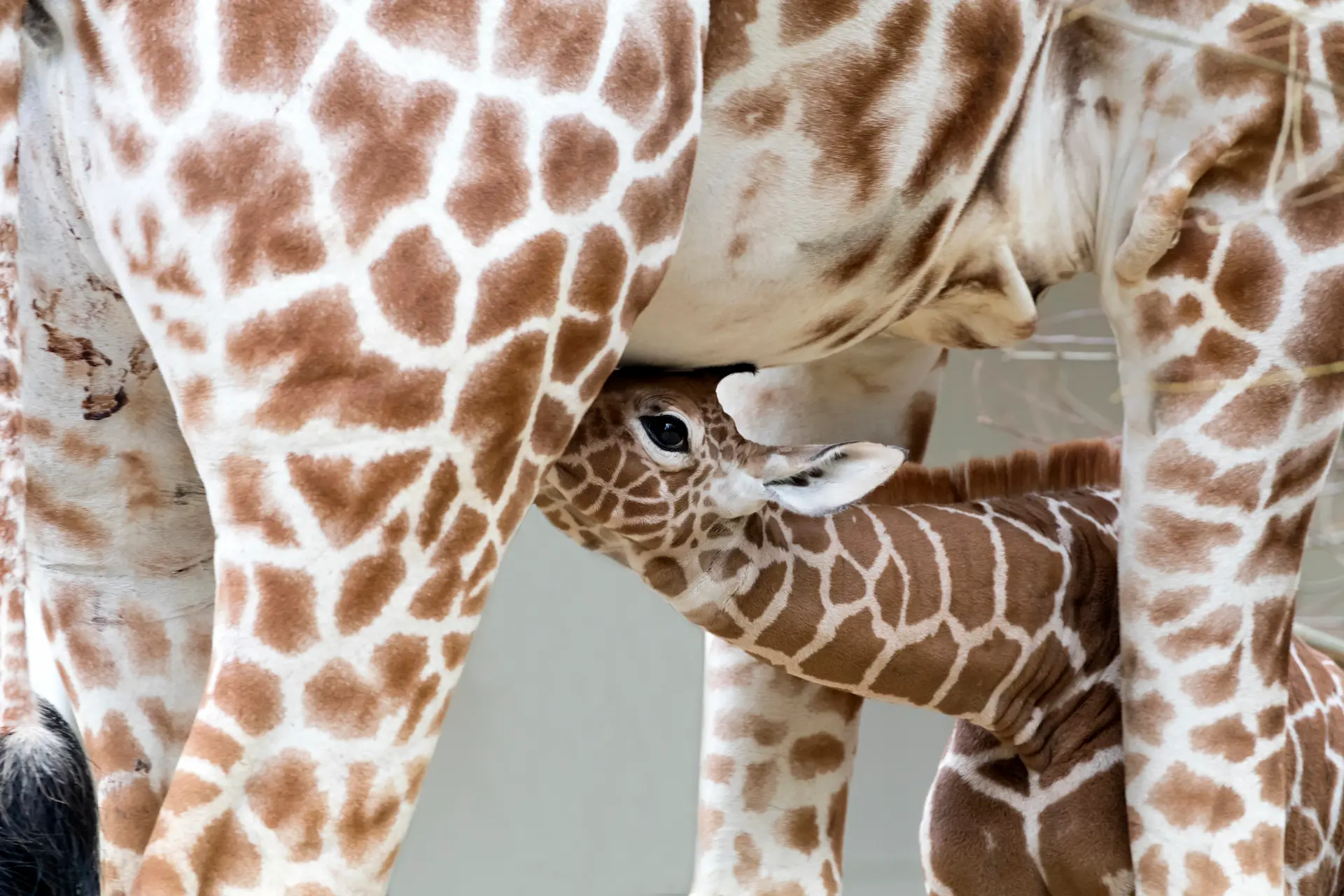
A baby giraffe may be born around 6 feet tall, but it still has a lot of growing to do.
Known as a giraffe calf, a newborn spends its first months learning how to walk, feed, avoid predators, and navigate the complex social world of a giraffe herd. Its rapid development starts almost immediately after birth.
Key Takeaways
- A baby giraffe is called a calf.
- Newborn calves are about 6 feet tall and weigh roughly 100–150 pounds.
- Giraffe calves can stand and walk shortly after birth.
- They start with their mother’s milk and gradually transition to leaves and other vegetation.
- Calves may spend time in nursery groups, where other females and young giraffes contribute to a complex social environment.
- The first year is especially important because young giraffes face significant risks from predators.
- Conservation efforts from organizations like Save Giraffes Now help protect giraffes and their ecosystems.
What Is a Baby Giraffe Called?
A baby giraffe is called a calf. A female giraffe usually gives birth to one calf after a pregnancy lasting about 15 months. Twins are possible but extremely rare.
A newborn calf is already remarkably developed. It can stand, walk, and nurse shortly after birth, which is essential because giraffe calves are born in open habitats where they cannot simply hide in a nest or den.
Baby Giraffe at a Glance
| Fact | Baby giraffe |
| Name | Calf |
| Height at birth | About 6 feet (1.8 m) |
| Weight at birth | About 100-150 pounds (45-68 kg) |
| Birth | Mother gives birth standing |
| Standing | Usually within an hour |
| Walking | Shortly after standing |
| Diet | Mother’s milk, followed by leaves and other vegetation |
| Nursery groups | Calves may spend time in groups with other young giraffes |
| Main predators | Lions and other large African predators |
What Happens When a Baby Giraffe Is Born?
A giraffe gives birth while standing, so the calf enters the world with a roughly 5- to 6-foot (1.5- to 1.8-meter) drop to the ground. After birth, the mother cleans and encourages the newborn as it begins trying to stand.
Within roughly 30 to 60 minutes, a healthy calf can usually get onto its feet. It begins walking soon afterward and can nurse once it is standing. A calf may also be capable of running within its first day if it needs to escape danger.
How Big Is a Baby Giraffe?
A newborn giraffe is about 6 feet (1.8 meters) tall and typically weighs between 100 and 150 pounds (45–68 kilograms).
Giraffe calves grow quickly during their first year, adding several feet to their height. Their long legs and neck continue developing as they transition from dependent newborns into increasingly independent juveniles.
Baby Giraffe Growth: From Newborn to Juvenile
A giraffe calf’s first year involves rapid physical and social development.
At birth: The calf is already around 6 feet tall and can begin standing within an hour.
During the first days: It develops greater coordination and becomes increasingly mobile. The mother remains an important source of milk and protection.
During the first months: The calf becomes more active and increasingly interacts with other giraffes. Giraffe social development shows that young individuals form associations within nursery groups and continue maintaining strong connections with other group members during their early development.
Around four months: Calves can begin sampling leaves and other vegetation while still relying on milk.
Around the first year: The calf is much larger and increasingly dependent on solid food, although the exact timing of weaning varies. Research on mother-calf relationships has found that nursing and proximity change substantially as calves develop.
What Do Baby Giraffes Eat?
Baby giraffes start life on their mother’s milk.
As they grow, calves gradually begin nibbling leaves and shoots. This transition allows them to learn how to feed like adult giraffes while continuing to receive nutrients from milk.
Giraffes are herbivores that rely mainly on leaves, shoots, flowers, fruits, and other plant material.
Do Baby Giraffes Stay With Other Giraffes?
Yes. Young giraffes may spend time in nursery groups, or crèches, where several calves remain together while adult females forage.
Research on wild Masai giraffes found that nursery groups function as cooperative rearing units. Females with offspring formed stronger social associations, while calves and juveniles maintained strong relationships with nursery-group members. These groups may also give young giraffes opportunities to develop social skills they will need later in life.
A broader review of giraffe social behavior found evidence of alloparental care, where females other than a calf’s mother may help care for young. Allonursing has also been documented.
This is one reason scientists no longer view giraffes as socially simple animals.
Baby Giraffes Are Vulnerable to Predators
Young giraffes are particularly vulnerable during their first months because they lack the size, strength, experience, and defensive ability of adults. Lions are among their most significant predators, while other large predators can also threaten young calves depending on the habitat.
This makes rapid development crucial. A calf that can stand, walk, and eventually run within hours of birth has a much better chance of responding to danger than a newborn that remains helpless for days.
Calf survival also matters for giraffe populations because giraffes reproduce relatively slowly. A female typically carries a calf for about 15 months and usually gives birth to one calf at a time.
Help Protect Giraffe Calves!
Every giraffe calf represents another generation of a species that reproduces relatively slowly. A 15-month pregnancy usually results in a single calf, and that calf must survive its vulnerable early months before it can contribute to the future of its population.
That is why protecting giraffes means more than protecting adult animals. Calves need safe habitats, access to food and water, protection from human-wildlife conflict, and healthy populations around them.
Our mission is to save giraffes from extinction so they can live freely and safely in the woodlands and savannas of their native Africa. Our work includes rescue and rewilding, habitat protection, wild giraffe welfare, and practical solutions that help communities and giraffes coexist.
The future of giraffes begins with the calves being born today. Donate now and help protect the habitats, populations, and wild giraffes that will give these calves a chance to grow up.
Frequently Asked Questions
How long does a baby giraffe stay with its mother?
The length and nature of the mother-calf relationship vary as the calf develops. Calves remain closely associated with their mothers during early life but increasingly become independent as they grow. Research has found that mother-calf proximity and nursing behavior change considerably during the first year.
Can baby giraffes defend themselves?
Young giraffes are vulnerable to predators, particularly during their first months. They become increasingly capable of defending themselves as they grow, but staying close to their mother and other giraffes remains important for survival.