
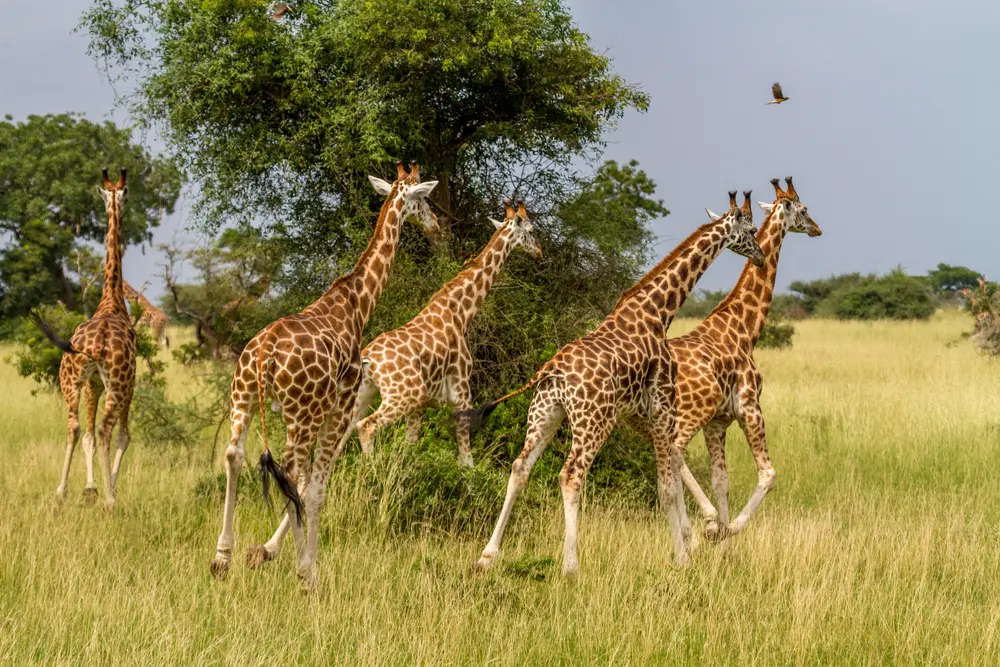
A group of giraffes is most commonly called a tower. The name comes from their extraordinary height and the way several giraffes standing together resemble tall structures rising above the landscape.
Other collective terms have occasionally been used, but “tower” is the best-known and most widely recognized name. Beyond the name itself, giraffe groups also reveal interesting patterns of social behavior, movement, and survival in the wild.
Key Takeaways
- A group of giraffes is most commonly called a tower
- The name comes from the giraffe’s height and upright appearance
- Giraffes live in flexible social groups rather than permanent herds
- Towers can vary in size depending on habitat and food availability
- Giraffes communicate through body language, movement, and low-frequency sounds
- Group living helps improve awareness and protect vulnerable calves
- Giraffes have some of the highest blood pressures of any land animal due to their long necks
- Habitat loss, poaching, and human expansion continue to threaten giraffe populations
- Conservation efforts from organizations like Save Giraffes Now help protect giraffes and their ecosystems
What Is the Official Name for a Group of Giraffes?
The most widely accepted collective noun for giraffes is a tower.
The term is commonly used in wildlife education, animal references, and popular language. It reflects the giraffe’s height and upright posture, especially when several animals stand together in open savanna environments.
Some sources also mention terms like “journey” or “corps,” but these are far less common. “Tower” remains the primary and most recognizable name used for a group of giraffes.
Why Is a Group of Giraffes Called a Tower?
The name “tower” is largely based on appearance.
Giraffes are the tallest land animals, with adults reaching heights of up to 18 feet. When several stand together, their long necks and upright bodies create a silhouette that resembles tall vertical structures across the landscape.
Collective animal names in English are often descriptive or symbolic. Just as lions form a pride and crows form a murder, giraffes became associated with the word “tower” because of their height and visual presence.
The term is not connected to a scientific classification. It is a traditional collective noun shaped by observation and language.
Do Giraffes Usually Live in Groups?
Giraffes are social animals, but their groups are generally loose and flexible rather than tightly organized.
Unlike species that move in permanent herds, giraffes form temporary social groups that change over time. Individuals may join or leave depending on food availability, location, age, or reproductive behavior.
Females with calves are often seen together, which can help improve awareness of predators and provide additional protection for young giraffes. Adult males may spend time alone or move between groups.
This fluid social structure is sometimes described as a “fission-fusion” system, where group composition changes regularly instead of remaining fixed.
How Many Giraffes Are Usually in a Tower?
The size of a giraffe group can vary significantly.
Some towers may include only two or three giraffes, while others can have more than a dozen. Group size often depends on food availability, water access, habitat conditions, and the season.
Giraffe groups are also flexible. Females and young giraffes are more likely to form small groups, while adult bulls may spend time alone or move between groups, especially when searching for females to mate with. Some males may also gather in loose bachelor groups.
Seasonal factors can also influence grouping behavior. Areas with abundant resources may attract larger numbers of giraffes, while drier conditions can lead to smaller and more dispersed groups.
How Do Giraffes Communicate Within Groups?
Giraffes communicate primarily through body language and visual awareness.
Movement, posture, and positioning help giraffes respond to one another within a group. Their height gives them a wide field of vision, allowing them to detect changes in the environment and react quickly to potential threats.
Research has also shown that giraffes produce low-frequency humming sounds, particularly at night. These vocalizations are not always audible to humans and may play a role in communication between individuals.
Calves communicate closely with their mothers through movement and proximity, especially in unfamiliar or risky environments.
Are Giraffes Social Animals?
Yes, although their social behavior is calmer and less structured than that of many herd animals.
Giraffes do not compete constantly for dominance within groups, and aggression is relatively uncommon outside of male “necking” behavior used to establish hierarchy.
Mother-calf relationships are among the strongest social bonds observed in giraffes. Females may also form nursery groups where several calves remain together while adults stay nearby.
Their social structure supports awareness and survival rather than strict group control. Giraffes benefit from the added visibility and collective awareness that comes from moving in groups.
What Other Animal Groups Have Unique Names?
Many animals have distinctive collective nouns, often based on appearance or behavior.
Some well-known examples include:
- A pride of lions
- A herd of elephants
- A crash of rhinos
- A parliament of owls
- A pod of dolphins
Like a tower of giraffes, these names are part of traditional English language usage rather than scientific classification.
Giraffe Social Behavior Matters for Survival
Living in groups provides important survival advantages for giraffes.
Multiple animals watching the environment at the same time improves the chances of spotting predators early. This is especially important in open habitats where lions and other threats may approach from long distances.
Group behavior also helps protect calves, which are more vulnerable than adults. Mothers can respond more quickly to danger when several giraffes remain nearby.
Social movement patterns may also help giraffes navigate large landscapes more efficiently while locating food and water resources.
What Threatens Giraffe Populations Today?
Natural predators are not the biggest threat to giraffes today. Human activity is.
Habitat loss, poaching, and expanding development are reducing giraffe populations across parts of Africa. Open spaces that giraffes rely on for movement and feeding are becoming increasingly fragmented.
This decline is often described as the silent extinction because it has received far less global attention than the decline of many other large animals.
Reduced habitat can also disrupt social behavior by limiting movement and separating groups across smaller areas.
Help Keep Towers of Giraffes Standing Tall in the Wild!
A tower of giraffes represents more than a unique collective noun. It reflects a species built around awareness, movement, and survival in open ecosystems.
Today, many giraffe populations are under pressure from habitat loss and human expansion. Conservation efforts are helping protect these animals and preserve the environments where they continue to live and move together in the wild.
We at Save Giraffes Now are working to stop the silent extinction of giraffes through habitat protection, conservation programs, and targeted support for vulnerable populations.
Donate now to support giraffe conservation efforts and help protect their future.
Frequently Asked Questions
What is a group of baby giraffes called?
Baby giraffes do not have a separate collective noun. A group that includes young giraffes is still called a tower. However, young giraffes may also gather in a nursery-like group called a crèche. In a crèche, one mother or another adult female may stay with the calves while the other females move away to feed. In many ways, this shared care is another reminder that giraffes are just like us.
Are giraffes endangered?
Some giraffe species and subspecies are currently endangered or vulnerable. Habitat loss, poaching, and human expansion have contributed to population declines across parts of Africa.
What animal has the highest blood pressure in the world?
Giraffes are known to have some of the highest blood pressures of any land animal. Their powerful cardiovascular system helps pump blood all the way up their long necks to the brain.