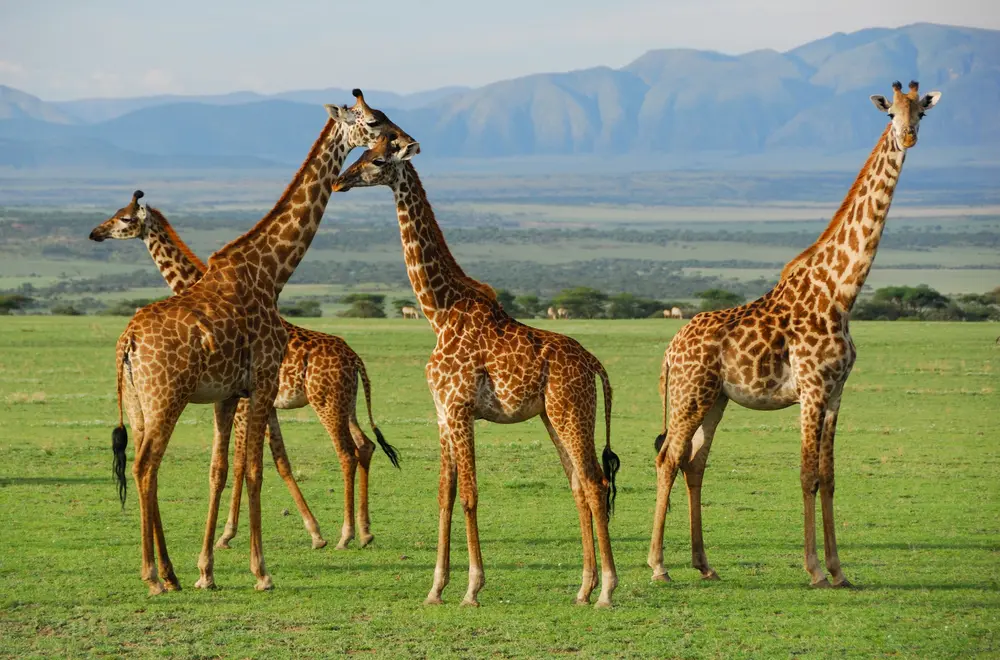
Giraffes are commonly associated with perspective, calm strength, and awareness. Their height allows them to see far across open landscapes, while their quiet, non-aggressive nature reflects a form of strength that does not rely on dominance.
These traits have shaped how giraffes are viewed across cultures and belief systems. In this article, we’ll look at what giraffes symbolize, how those meanings connect to their real-world behavior, and how their significance continues to evolve today.
Key Takeaways
- Giraffes commonly symbolize perspective, calm strength, and awareness.
- These meanings are rooted in real traits like height, behavior, and movement.
- Different cultures interpret giraffes through observation, not abstract ideas.
- Spiritually, giraffes are linked to clarity, balance, and measured awareness.
- In dreams, they often represent the need to step back and see the bigger picture.
- Modern symbolism reflects uniqueness, visibility, and quiet confidence.
- Giraffes are currently facing a silent extinction driven by habitat loss and human activity.
- Conservation efforts, including the work of Save Giraffes Now, are helping protect their future.
What Do Giraffes Symbolize at a Glance
Giraffes are often used to represent qualities that reflect both their physical traits and behavior. Here’s what they symbolize:
- Perspective and foresight
- Calmness and patience
- Quiet strength
- Awareness and observation
These meanings are not random. They are rooted in how giraffes live and interact with their environment.
Giraffes Represent Perspective and Vision
Giraffes are strongly associated with perspective because of their height.
Standing up to 18 feet tall, a giraffe can see far across open landscapes. This physical advantage translates into symbolism. It represents the ability to step back, take a wider view, and understand situations beyond what is immediately visible.
In many interpretations, this becomes a reminder to pause and look at the bigger picture. Instead of reacting quickly, the idea is to observe, assess, and move with awareness.
Giraffe Symbolism: Calm Strength and Grace
Giraffes are often considered a symbol of strength that does not rely on aggression.
They are powerful animals, capable of defending themselves when needed, yet they rarely initiate conflict. This balance between strength and restraint is what gives them a sense of quiet authority. They do not need to dominate to remain in control.
Their movement adds to this meaning. Giraffes walk with a steady, measured rhythm that reflects balance and coordination. There is no rush or wasted motion, just controlled, deliberate action.
What Do Giraffes Symbolize in African Culture?
Giraffes do not carry a single fixed meaning across all African cultures, so it is more accurate to examine specific regions, traditions, and artworks. One strong example comes from the rock engravings at Biesje Poort in the Northern Cape Province of South Africa, where giraffes appear as part of a wider engraved landscape. In The Giraffe: Engraved Meanings, Roger C. Fisher explains that these depictions of the giraffe were not treated as simple animal drawings. They were part of a cultural system where images could communicate memory, belief, and meaning.
Fisher’s reading of the Biesje Poort engravings connects the giraffe to several symbolic ideas. The animal’s size, long neck, patterned hide, and upward gaze made it visually powerful. He also discusses the giraffe in relation to liminal spaces, fertility, creation, restoring order, and “giraffe medicine,” which was considered strong in some Bushman/San spiritual traditions.
This makes the giraffe more than a symbol of height or grace. In southern African rock art contexts, it could represent spiritual strength, transformation, and a connection between the physical world and unseen forces. Its long neck and skyward presence may help explain why the animal was so meaningful to the people who engraved it.
Still, giraffe symbolism should not be generalized across the whole continent. African cultures are diverse, and meanings change by region, period, and community.
What Does a Giraffe Symbolize Spiritually?
Giraffe symbolism is often tied to awareness, but it goes deeper than simply “seeing far.”
Their height is usually interpreted as the ability to rise above noise and distraction. Not everything needs an immediate reaction. The idea is to pause, observe, and respond with clarity instead of impulse.
There is also a strong link to balance. A giraffe operates with both awareness and restraint. It stays alert without being restless. That combination has come to represent a steady state of mind, where attention is present but not overwhelming.
Another layer of meaning comes from how giraffes move through their environment. They do not compete for attention or force control. They exist with a quiet presence, which is often associated with confidence that does not need to prove itself.
In this sense, giraffe symbolism is less about mysticism and more about perspective, control, and measured awareness.
Giraffe Symbolism in Modern Culture
Giraffes are often used in modern culture to represent uniqueness and visibility.
Their appearance makes them instantly recognizable. Research on charismatic animals supports this broader point. The long neck, patterned coat, and height set them apart, which is why they are frequently used in branding, design, and media to signal individuality or standing out.
They are also associated with approachability. Despite their size, giraffes are generally perceived as calm and non-threatening, making them suitable for use in children’s content, education, and lifestyle branding.
Protect What Giraffes Represent Before It Disappears
Giraffes have come to symbolize perspective, calm strength, and awareness. Those meanings are not abstract. They are rooted in how giraffes live and survive in the wild. But while the symbolism remains strong, the animals themselves are facing a quieter reality.
Giraffe populations have declined across parts of Africa in what is often described as a silent extinction. Habitat loss, human expansion, and poaching are reducing their numbers without the level of attention seen in other wildlife crises. The risk is not always visible, but it is ongoing.
Efforts from organizations like Save Giraffes Now are helping to address this. Our work includes protecting habitats, supporting anti-poaching initiatives, and carrying out targeted rescue and relocation programs to stabilize vulnerable populations. These actions are focused on ensuring that giraffes continue to exist not just as symbols but also as a living part of the ecosystem.
Awareness is one step. Action is what makes the difference. Protecting giraffes means supporting conservation efforts, paying attention to how wildlife is impacted by human activity, and contributing where possible.
If these animals represent clarity, balance, and awareness, then protecting them is a reflection of those same values. Donate now to support the protection of giraffes and help prevent further decline.
Frequently Asked Questions
Are giraffes considered good luck?
In some interpretations, yes. Giraffes are sometimes seen as a symbol of good luck because they are associated with foresight, grace, and steady progress. The idea is less about luck in a random sense and more about moving through life with clarity and calm.
What does the giraffe symbolize in African culture?
In African cultural interpretations, giraffes are often linked to awareness, perspective, and calm presence. Their symbolism usually comes from how they live in the wild. Height, watchfulness, and quiet strength all shape how they are understood in storytelling and traditional expression.
What does a giraffe symbolize in love?
In love, a giraffe can symbolize patience, emotional balance, and the ability to see a relationship from a wider perspective. It can also represent gentle strength, meaning love that feels steady, calm, and secure rather than forceful or dramatic.