Giraffes (Giraffa spp.) are large African ruminants belonging to the family Giraffidae. Their global conservation status is currently classified as Vulnerable on the International Union for Conservation of Nature (IUCN) Red List of Threatened Species, based on observed population declines over recent decades. [1]
The global giraffe population was estimated at approximately 155,000 individuals in the mid-1980s. By 2015, estimates indicated a decline of roughly 30–40%, with fewer than 100,000 individuals remaining across Africa. [2] More recent assessments suggest continued regional variation in population trends, with some populations stable or increasing and others experiencing ongoing decline.
Conservation status varies by species. Recent genetic analyses have led to the recognition of multiple giraffe species rather than a single species, and each has been assessed separately under the IUCN Red List framework. [3] As a result, some giraffe species are currently classified in higher threat categories than the overall genus.
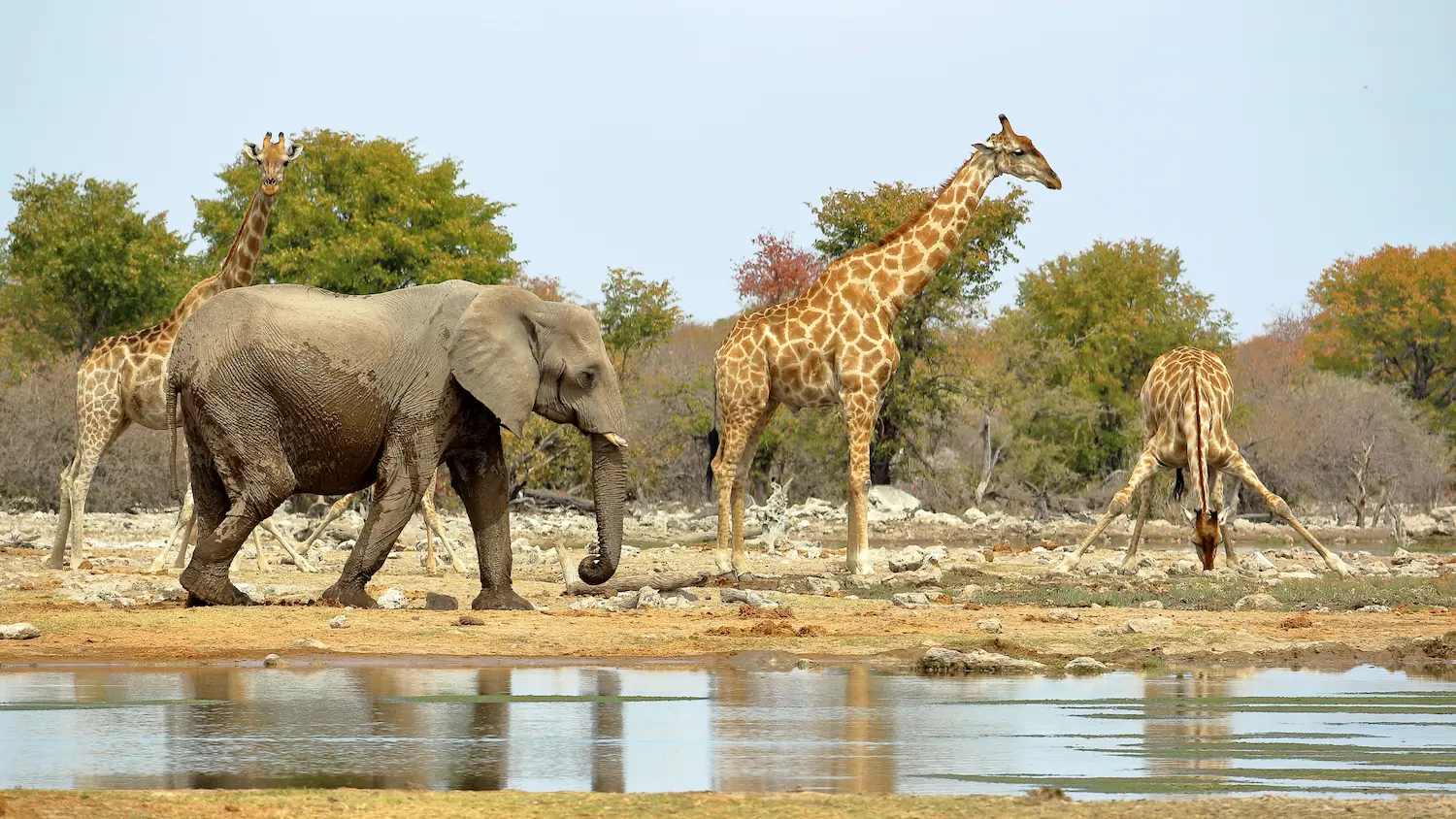
Comparison With Elephants: Population Trends and Conservation Status
Elephants are often used as a reference point in discussions of large African mammal conservation due to their size, ecological role, and global visibility. Comparing giraffes with elephants helps contextualize the scale and trajectory of giraffe declines.
Elephants Population Trends
In the mid-twentieth century, African elephant populations were estimated to exceed 1 million individuals. [12] By the late twentieth century, heavy poaching for ivory caused dramatic declines. However, following international trade restrictions, strengthened anti-poaching enforcement, and sustained global conservation investment, African elephant populations are currently estimated at approximately 415,000 individuals across the continent. [13]
By contrast, giraffe populations were estimated at approximately 150,000–155,000 individuals in the mid-1980s. [1] By 2015, global estimates had fallen to fewer than 100,000 individuals. [1] Unlike elephants, whose decline triggered early and large-scale international attention through the ivory crisis, giraffe declines occurred more gradually and received comparatively limited global recognition until their 2016 IUCN uplisting to Vulnerable status.
IUCN Red List Classification
African elephants are assessed at the species level as two distinct species:
- African Savanna Elephant (Loxodonta africana) – Endangered [14]
- African Forest Elephant (Loxodonta cyclotis) – Critically Endangered [14]
Giraffes, following taxonomic revision, are assessed as four species with differing threat levels:
- Northern giraffe – Critically Endangered [3]
- Reticulated giraffe – Endangered [4]
- Masai giraffe – Endangered [5]
- Southern giraffe – Least Concern [6]
This comparison demonstrates that while both taxa include species facing severe extinction risk, giraffe conservation challenges are more unevenly distributed across distinct evolutionary lineages, some of which have far smaller remaining populations than either elephant species.
Differences in Threat Dynamics
Both elephants and giraffes face habitat loss, fragmentation, and illegal killing. However, the intensity and global economic drivers differ.
Elephants have historically been targeted for ivory, generating substantial international enforcement responses, trade bans under CITES, and global funding mechanisms. [12] [14]
Giraffes are subject to localized poaching for bushmeat and body parts, as well as extensive habitat fragmentation. [1] [10] Because giraffes do not face a single globally recognized high-value commodity trade equivalent to ivory, declines have often occurred with less concentrated international response.
Additionally, giraffes occur at lower population densities than elephants across many ecosystems. As a long-lived species with low reproductive rates, adult mortality from sustained offtake can disproportionately affect population growth rates. [10]
Rate of Recognition and Conservation Investment
Elephants have been the focus of international conservation campaigns for several decades, often serving as flagship species for biodiversity protection. In contrast, giraffes were historically perceived as abundant and therefore received comparatively less policy attention until recent reassessments highlighted significant population declines.
The 2016 IUCN reclassification of giraffes to Vulnerable marked a turning point in global awareness. [1] Subsequent species-level assessments revealed that some giraffe taxa have smaller total populations than either African elephant species. [3] [5]
Summary of Comparative Status
| Metric | Giraffes (All taxa combined) | African Elephants (Both species combined) |
| Mid-20th Century Estimate | ~150,000 (1980s) [1] | >1,000,000 (historical estimate) [12] |
| Current Estimate | <100,000 [1] | ~415,000 [13] |
| Highest Threat Category | Critically Endangered (Northern giraffe) [3] | Critically Endangered (Forest elephant) [14] |
| Primary Historic Driver | Habitat loss, fragmentation, localized poaching | Ivory poaching |
| Global Awareness Timeline | Major recognition in 2016 | Major global response since 1989 ivory ban |
While elephants remain highly threatened, giraffe declines have occurred with comparatively lower public visibility and, in some regions, less concentrated international intervention. The recognition of multiple giraffe species has further revealed that certain populations are at particularly acute risk.
Giraffes Historical Classification and Global Population Decline
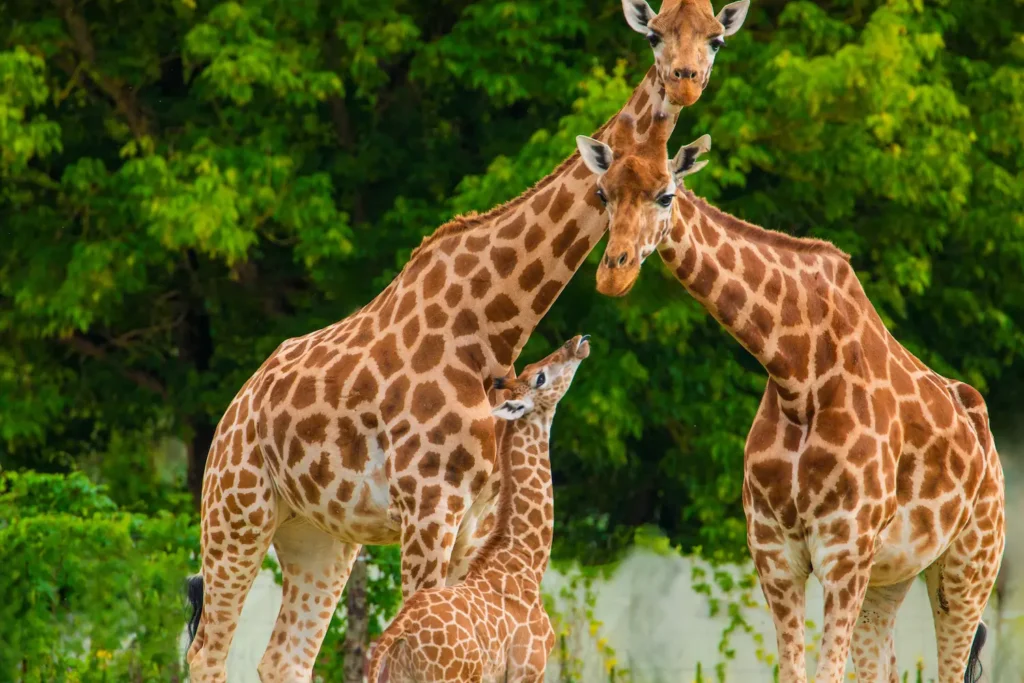
For most of the twentieth century, giraffes were classified as a single species, Giraffa camelopardalis, with several recognized subspecies distributed across sub-Saharan Africa. [1] Under this framework, conservation assessments evaluated giraffes at the species level rather than as separate evolutionary lineages.
Population estimates from the mid-1980s suggested that approximately 150,000 to 155,000 giraffes remained in the wild across Africa. [1] By 2015, updated assessments indicated that the total global population had declined to fewer than 100,000 individuals, representing an overall reduction of roughly 30–40% over three decades. [1] This decline was attributed to a combination of habitat loss, fragmentation, poaching, and civil unrest affecting several range states.
In 2016, based on these documented reductions, the International Union for Conservation of Nature (IUCN) classified giraffes as Vulnerable on the Red List of Threatened Species. This marked the first time giraffes were listed as threatened at the global species level under the single-species framework.
Subsequent genetic research challenged the traditional classification and proposed that giraffes comprise multiple distinct species rather than a single widespread species. This revision had significant implications for conservation status assessments, as some newly recognized species were found to have substantially smaller and more fragmented populations than previously understood.
Giraffes Species-Level Reclassification and Current Conservation Status
Advances in molecular genetics led to a reassessment of giraffe taxonomy in the twenty-first century. Multi-locus genetic analyses published in 2016 provided evidence supporting the recognition of four distinct giraffe species rather than a single widespread species. [4] This revision divided giraffes into the Northern giraffe (Giraffa camelopardalis sensu stricto), Reticulated giraffe (Giraffa reticulata), Masai giraffe (Giraffa tippelskirchi), and Southern giraffe (Giraffa giraffa).
Following this taxonomic revision, conservation assessments were conducted at the species level. These assessments revealed substantial differences in population size and threat status among the newly recognized species.
Northern Giraffe (Giraffa camelopardalis sensu stricto)
The Northern giraffe has experienced one of the most significant declines. It is currently classified as Critically Endangered on the IUCN Red List. [3] Population estimates indicate that fewer than 6,000 individuals remain in the wild, distributed across fragmented populations in Central and East Africa.
Reticulated Giraffe (Giraffa reticulata)
The Reticulated giraffe is classified as Endangered. [4] Population estimates suggest approximately 15,000 individuals remain, with declines primarily associated with habitat loss and poaching in East Africa.
Masai Giraffe (Giraffa tippelskirchi)
The Masai giraffe is also listed as Endangered. [5] Surveys indicate that populations declined by more than 50% over recent decades in parts of their range, particularly in Tanzania and Kenya.
Southern Giraffe (Giraffa giraffa)
The Southern giraffe is currently classified as Least Concern. [6] This species has shown relatively stable or increasing population trends in some regions, particularly in southern Africa, where conservation and management efforts have supported recovery.
The recognition of multiple species has highlighted the uneven distribution of conservation risk across giraffe populations. While the genus as a whole remains classified as Vulnerable under earlier assessments, certain species face substantially higher extinction risk when evaluated independently.
Giraffes Geographic Distribution and Habitat Fragmentation
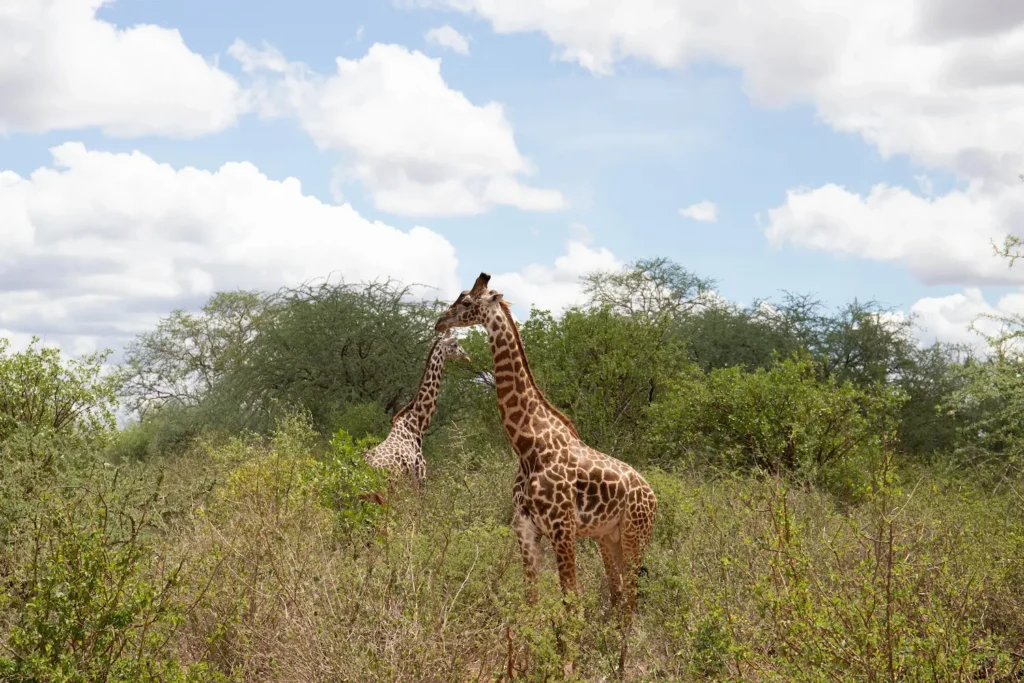
Giraffes are distributed discontinuously across sub-Saharan Africa, with populations occurring from the Sahel region through eastern and southern Africa. [7] Historic range contraction and fragmentation have produced geographically isolated subpopulations in multiple range states.
Habitat loss and fragmentation are widely cited drivers of this pattern. Documented pressures include expansion of human settlement, agricultural conversion, industrial plantations, timber and charcoal extraction, and infrastructure development, all of which reduce and subdivide suitable habitat. [8] These processes have been associated with local population isolation and persistence of some herds at the margins of preferred habitat.
Recent updates to geographic range mapping have quantified changes in range extent across taxa. Relative to the IUCN’s 2016 range mapping baseline, one assessment reported an overall decline in mapped range area across giraffe taxa combined, with larger reductions reported for some taxa (including Northern giraffe and Masai giraffe), while other taxa showed smaller net changes or map revisions reflecting improved data coverage. [9] Range changes have been reported to vary by country, with some national ranges expanding due to improved mapping or recovery in specific areas and others declining due to local extirpation or contraction.
Causes of Giraffes Population Decline
Multiple factors have been identified as contributing to giraffe population declines, with the relative importance of specific drivers varying by region and taxon. [1] Frequently cited pressures include habitat loss and fragmentation, illegal killing (including poaching for bushmeat and body parts), and the effects of insecurity and weak enforcement in some range states. [1] [10]
Habitat loss, degradation, and fragmentation
Land conversion for agriculture, settlement expansion, and infrastructure development has been associated with the reduction and subdivision of giraffe habitat across several range states. In East Africa, for example, habitat conversion and fragmentation have been cited as primary contributors to the decline in the historical range of the reticulated giraffe, with associated increases in human–wildlife conflict and reduced access to resources. [10]
Illegal killing and trade
Poaching for bushmeat and for giraffe parts (including hides, tails, and hair) has been cited as a continuing pressure in parts of the giraffe range, including areas where hunting is illegal. [11] Population viability assessments frequently note that adult survival has a disproportionately large effect on population growth rates in long-lived ungulates, meaning sustained adult offtake can contribute to long-term decline. [10]
Civil unrest and reduced enforcement capacity
In some regions, insecurity and civil unrest have been linked to increased illegal hunting and overexploitation of natural resources. Disruption of protected-area management and enforcement capacity has been cited as a mechanism by which instability can increase threats to giraffes and other large mammals. [10]
Climate-related stressors and resource variability
Changes in precipitation patterns, including drought conditions, have been identified as affecting forage availability and may interact with other threats by increasing competition for resources and influencing local human livelihoods. [10] Such conditions have been cited as potential indirect drivers of increased poaching risk and habitat pressure in parts of East Africa.
Giraffes Conservation Efforts
Giraffe conservation efforts are implemented through a combination of population monitoring, habitat management, anti-poaching enforcement, research, and, in some areas, translocation and reintroduction programs. [1] Coordination and technical guidance for giraffe conservation and assessment are supported through specialist networks within the International Union for Conservation of Nature (IUCN) Species Survival Commission (SSC).
The IUCN SSC Giraffe and Okapi Specialist Group (GOSG) was established in 2013 as a scientific advisory body focused on improving understanding of giraffe and okapi conservation needs, monitoring population status and trends, and supporting actions intended to ensure long-term persistence of giraffid taxa. [1] Activities associated with specialist groups and partner institutions include supporting standardized survey methods, compiling population and distribution data for status assessments, and facilitating collaboration among researchers, conservation practitioners, and government agencies.
On-the-ground conservation approaches vary across range states and may include protection of key habitats and movement corridors, anti-poaching patrols and community-based enforcement, and mitigation of human-wildlife conflict in areas where land use overlap is increasing. [2] In some regions, translocation has been used as a management tool to establish additional populations, improve demographic security, or support recovery in suitable habitats. [3]
Several non-governmental organizations support giraffe conservation through field programs, technical assistance, and partnerships with local authorities and communities. These include, among others, the Giraffe Conservation Foundation and WWF, as well as Save Giraffes Now, which reports supporting projects including translocation, anti-poaching support, and habitat-related interventions in multiple African range states. [2] [3]
Support for Giraffe Conservation
Giraffe conservation programs are typically funded through a combination of government budgets, multilateral support, and contributions from private donors and non-governmental organizations. Financial support is used to sustain field monitoring, habitat management, anti-poaching capacity, community-based conservation initiatives, and applied research.
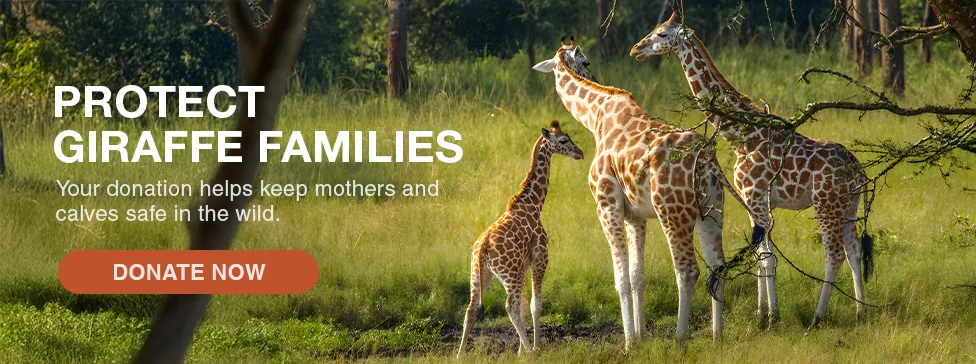
Individuals seeking to support giraffe conservation work may contribute to organizations engaged in these activities. One such organization is Save Giraffes Now, which supports projects focused on habitat protection, monitoring, and related conservation interventions.
References
[1] IUCN Red List assessment of Giraffa camelopardalis (latest global assessment).
[3] Fennessy et al. (2016). “Multi-locus analyses reveal four giraffe species instead of one.” Current Biology. doi:10.1016/j.cub.2016.07.036.
[1] Muller, Z.; Bercovitch, F.; Brand, R.; Brown, D.; Brown, M.; Bolger, D.; Carter, K.; Deacon, F.; Doherty, J.; Fennessy, J.; Fennessy, S.; Hussein, A.; Lee, D.; Marais, A.; Strauss, M.; Tutchings, A.; Wube, T. (2016). “Giraffa camelopardalis”. IUCN Red List of Threatened Species. 2016: e.T9194A51140239. doi:10.2305/IUCN.UK.2016-3.RLTS.T9194A51140239.en.
[2] Fennessy, J.; Bidon, T.; Reuss, F.; Kumar, V.; Elkan, P.; Nilsson, M.; Vamberger, M.; Fritz, U.; Janke, A. (2016). “Multi-locus analyses reveal four giraffe species instead of one”. Current Biology. 26(18): 2543–2549. doi:10.1016/j.cub.2016.07.036.
[2] Fennessy, J.; Bidon, T.; Reuss, F.; Kumar, V.; Elkan, P.; Nilsson, M.; Vamberger, M.; Fritz, U.; Janke, A. (2016). “Multi-locus analyses reveal four giraffe species instead of one”. Current Biology. 26(18): 2543–2549. doi:10.1016/j.cub.2016.07.036.
[3] Fennessy, J.; Marais, A.; Tutchings, A.; et al. (2018). “Giraffa camelopardalis (Northern giraffe)”. IUCN Red List of Threatened Species. 2018.
[4] Fennessy, J.; Brown, D.; Lee, D.; et al. (2018). “Giraffa reticulata”. IUCN Red List of Threatened Species. 2018.
[5] Bolger, D.; Ogutu, J.; Strauss, M.; Lee, D.; Muneza, A.; Fennessy, J.; Brown, D. (2019). “Masai Giraffe”. IUCN Red List of Threatened Species. 2019. doi:10.2305/IUCN.UK.2019-1.RLTS.T88421036A88421121.en.
[6] Deacon, F.; Strauss, M.; Carter, K.; et al. (2018). “Giraffa giraffa”. IUCN Red List of Threatened Species. 2018.
[7] Hassanin, A.; Ropiquet, A.; Gourmand, A.-L.; Chardonnet, B.; Rigoulet, J. (2007). “Extensive population genetic structure in the giraffe”. BMC Biology. 5: 57. doi:10.1186/1741-7007-5-57. PMCID: PMC2254591.
[8] IUCN & TRAFFIC. (2019). IUCN and TRAFFIC Analyses of the Proposals (CITES CoP18). Convention on International Trade in Endangered Species of Wild Fauna and Flora (CITES). (Habitat loss and fragmentation discussion for Giraffa camelopardalis).
[9] Updated geographic range maps for giraffe (report PDF). (2025). (Range-area change estimates relative to IUCN 2016 mapping baseline; country-level change summary).
[1] Muller, Z.; Bercovitch, F.; Brand, R.; Brown, D.; Brown, M.; Bolger, D.; Carter, K.; Deacon, F.; Doherty, J.; Fennessy, J.; Fennessy, S.; Hussein, A.; Lee, D.; Marais, A.; Strauss, M.; Tutchings, A.; Wube, T. (2016). “Giraffa camelopardalis”. IUCN Red List of Threatened Species. 2016: e.T9194A51140239. doi:10.2305/IUCN.UK.2016-3.RLTS.T9194A51140239.en.
[10] U.S. Fish and Wildlife Service. (2024). “Endangered and Threatened Wildlife and Plants; Proposed Endangered Species Status for Three Subspecies of Northern Giraffe and Proposed Threatened Species Status With a Section 4(d) Rule for Two Subspecies of Giraffe”. Federal Register. 89(225). (Threat discussion: habitat loss/fragmentation, poaching, climate-related drought, and civil unrest impacts on enforcement).
[11] Fobar, R. (2019). “Masai giraffes declared endangered”. National Geographic. (Threat discussion including land-use change and poaching pressures).
[12] Douglas-Hamilton, I. (1987). African elephants: population trends and their causes. Oryx.
[13] IUCN (2021). African Elephant Status Report. African Elephant Specialist Group.
[14] Gobush, K.S.; Edwards, C.T.T.; Balfour, D.; et al. (2021). Loxodonta africana and Loxodonta cyclotis. IUCN Red List of Threatened Species.
[1] IUCN SSC Giraffe and Okapi Specialist Group (GOSG). “About”.
[2] Giraffe & Okapi Specialist Group (GOSG) / Giraffe Conservation Foundation content summary of conservation aims and initiatives (including habitat protection and collaborative conservation).
[3] Save Giraffes Now. “Protecting Giraffe” (project categories including rescue/rewilding, welfare interventions, and anti-poaching support).