
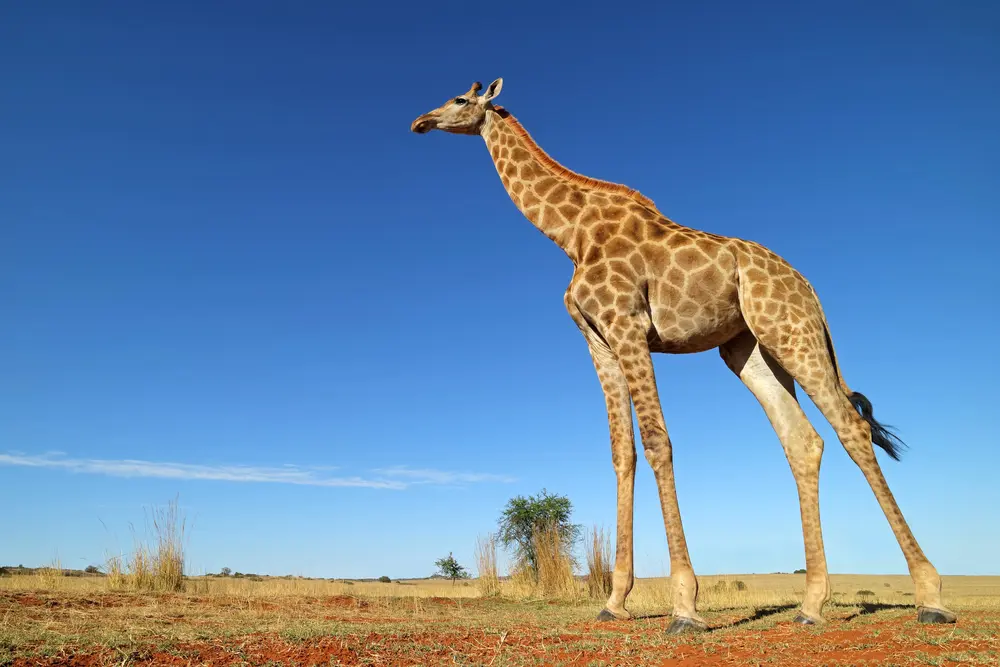
A giraffe’s pregnancy lasts about 15 months (450 to 465 days), making it one of the longest gestation periods among land mammals.
Female giraffes usually give birth to a single calf. Twins are extremely rare. The long pregnancy allows the calf to develop enough to survive almost immediately after birth.
Here’s why giraffe pregnancies last so long, what happens during birth, and why every healthy calf is important for the future of the species.
Key Takeaways
- Giraffes are pregnant for about 15 months (450 to 465 days).
- The long gestation allows calves to fully develop before birth.
- Female giraffes usually give birth to a single calf while standing.
- Newborn calves can stand within an hour and may run within their first day if needed.
- Because giraffes reproduce slowly, every successful birth plays an important role in conserving wild populations.
- Conservation efforts, including the work of Save Giraffes Now, are helping protect their future.

Why Is a Giraffe’s Pregnancy So Long?
Growing into the world’s tallest land animal takes time.
During the 15-month gestation period, a giraffe calf develops strong bones, muscles, organs, and a fully functioning cardiovascular system. This preparation is essential because newborn calves must become mobile very quickly to avoid predators.
Unlike many animals that spend days or weeks in a protected nest or den, giraffe calves are born out in the open. Within hours, they need to keep pace with their mothers across the African savanna.
How Do Giraffes Give Birth?
Giraffes give birth while standing.
As the calf is delivered, it drops about 5 to 6 feet (1.5 to 1.8 meters) to the ground. Although this may seem dramatic, the fall helps break the amniotic sac and stimulates the newborn to take its first breath.
Soon after birth, the mother begins cleaning her calf and encouraging it to stand.
What Happens After a Giraffe Calf Is Born?
The first few hours of a giraffe calf’s life are critical.
A typical timeline looks like this:
| Stage | Typical time |
| Birth | Standing delivery |
| First breath | Almost immediately |
| Standing | Within 30 to 60 minutes |
| Walking | Within about an hour |
| Nursing | Shortly after standing |
| Running if necessary | Within about 10 hours |
Standing quickly is essential because predators such as lions, hyenas, and leopards often target young calves.
Despite these challenges, attentive mothers stay close to protect their newborns during their earliest days.
How Big Is a Baby Giraffe?
Newborn giraffes are surprisingly large.
At birth, a calf typically:
- Stands about 6 feet (1.8 meters) tall.
- Weighs between 100 and 150 pounds (45 to 68 kilograms).
- Is tall enough to look many adult humans in the eye.
Even with their impressive size, calves continue growing rapidly throughout their early years.
How Many Babies Do Giraffes Have?
Giraffes almost always give birth to one calf at a time.
Twin births have been documented but are extremely uncommon.
Because females typically invest all their energy into raising a single calf, each birth represents an important contribution to the population.
How Often Do Giraffes Have Babies?
Female giraffes reach reproductive maturity at around 4 to 5 years of age.
After giving birth, they may become pregnant again, although the timing depends on factors such as food availability, habitat conditions, and whether their previous calf survives.
Many females produce a calf roughly every 20 to 30 months under favorable conditions.
Since giraffes reproduce relatively slowly, population recovery also takes time.
Why Every Giraffe Birth Matters
A 15-month pregnancy followed by the birth of a single calf means giraffes cannot quickly replace declining populations.
Today, giraffes face numerous threats, including habitat loss, habitat fragmentation, illegal hunting, and human-wildlife conflict. When breeding females or calves are lost, local populations can take years to recover.
Protecting mothers and calves is one of the most effective ways to support healthy giraffe populations.
Help Protect the Next Generation of Giraffes!
Every giraffe calf represents hope for the future of the species. But with giraffes reproducing slowly and facing ongoing threats across Africa, protecting mothers, calves, and their habitats has never been more important.
Save Giraffes Now is committed to securing a future where giraffes can thrive in the wild. Through science-based conservation, habitat protection, anti-poaching initiatives, and partnerships with local communities, we work to safeguard giraffes and the ecosystems they call home.
Your support helps turn conservation into action. Donate now and help give every giraffe calf a brighter future.
Frequently Asked Questions
What animal is pregnant the longest?
The African bush elephant has the longest pregnancy of any land mammal. Its gestation period lasts about 22 months, longer than a giraffe’s 15-month pregnancy. Among all animals, some deep-sea sharks can have even longer gestation periods.
How many babies can a giraffe have at once?
Giraffes almost always give birth to one calf at a time. Twin births are extremely rare but have been documented. Because female giraffes invest significant time and energy into raising a single calf, each birth is important for the survival of the species.
Why do giraffes kick their babies after birth?
Mother giraffes do not kick their calves to hurt them. Shortly after birth, they may gently nudge or lightly kick the newborn to encourage it to stand. This behavior helps the calf get on its feet as quickly as possible, which is essential for nursing and avoiding predators. Calves typically stand within 30 to 60 minutes after birth.