
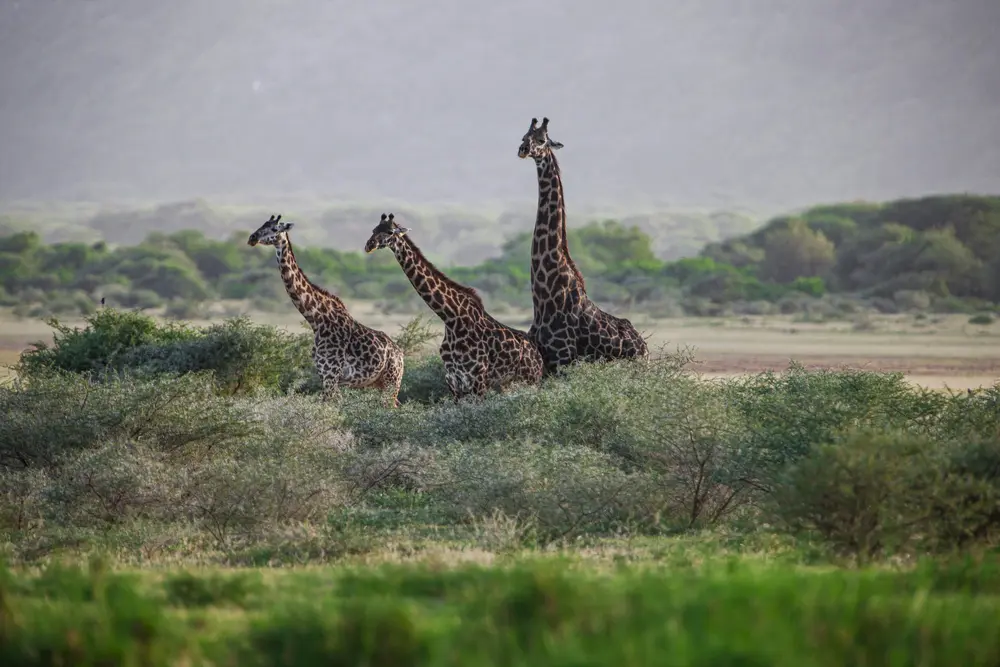
A video of giraffes standing in heavy rain with no shelter has been making the rounds on TikTok and X (formerly Twitter), and the reaction has been intense. People watched them, soaked in the open, and assumed they were cold, exposed, and struggling.
But that is not what is happening. Giraffes are built for life in open environments, and rain is not a threat to them. In this article, we’ll break down what the video actually shows, why giraffes do not take cover during storms, and what truly puts them at risk today.
Key Takeaways
- The viral storm video showed giraffes standing in the rain, which many people misunderstood as distress.
- Giraffes are built for open environments, and rain does not harm them.
- They do not take cover because shelter is limited, and staying upright keeps them safe.
- Their behavior during storms is normal and focused on staying alert.
- The real danger is not weather, but human-driven threats like habitat loss and poaching.
- Giraffes are facing a silent extinction, with populations declining over time.
- Conservation efforts are essential to protect giraffes from threats they cannot defend against.
What the Viral Giraffe Storm Video Shows
The video shows a group of giraffes standing in open land during a heavy downpour, with no visible shelter around them.
Giraffes endured a heavy storm at the Maasai Mara Game Reserve yesterday. pic.twitter.com/fMPNObTEBF
— The Kenyan Vigilante (@KenyanSays) February 8, 2026
The giraffes remain upright and mostly still, letting the rain fall as it comes. To a human observer, the scene appears uncomfortable, almost as if the giraffes are trapped with no means of escape.
That contrast is what made the video spread so quickly. People saw something familiar: rain and applied a human reaction to it. But what looks harsh to us is normal behavior for giraffes in the wild.
Do Giraffes Actually Suffer in Storms?
No. Rain is not a threat to giraffes.
Giraffes are built for open environments where weather changes are part of daily life. Their bodies regulate temperature well, and their skin and coat can handle rain without issue. Getting wet may look uncomfortable to us, but it does not harm them.
Standing still in the rain is also normal behavior. It helps them stay alert and conserve energy while keeping full awareness of their surroundings. There is no urgency to find cover because, for a giraffe, rain does not create the kind of risk it does for humans.
Giraffes Don’t Take Cover During Storms
Giraffes do not take cover because their environment offers no shelter that would make a difference.
They live in open savannas and grasslands where large, dense cover is limited. Even when trees are present, most are too small to shield an animal that can stand up to 18 feet tall. Trying to squeeze under partial cover would not keep them dry and could limit their ability to see approaching danger.
Staying upright in the open is safer. It provides them with full visibility and space to react if a predator appears. Lying down or moving into tighter spaces during a storm would reduce that advantage and make them more vulnerable.
What looks like exposure is actually a choice that keeps them safe.
The Real Threats Giraffes Face Today
Rain is not the problem. The real threats facing giraffes come from human activity, and they are driving what many now call a silent extinction.
Across Africa, giraffes are losing the open land they depend on. Farms, roads, and expanding communities are breaking up their habitat, making it harder for them to move, feed, and stay safe. What used to be wide, connected spaces are now fragmented, forcing giraffes into smaller and more vulnerable areas.
Poaching adds another layer of risk. In some regions, giraffes are hunted for their meat, skin, and tails. These are threats no natural defense can stop. A powerful kick cannot protect against a snare, and speed does not help when their environment keeps shrinking.
Join Us to Protect Giraffes
We focus our efforts on the threats that truly endanger the survival of giraffes.
Our organization, Save Giraffes Now, works to secure habitats, support conservation programs, and respond to urgent risks facing vulnerable populations. These efforts help create safer environments where giraffes can live, move freely, and reproduce.
One key approach is direct intervention. Programs such as rescuing Rothschild’s giraffe move endangered giraffes from high-risk areas to protected habitats where they have a better chance of survival. This kind of action has already helped stabilize some populations.
Conservation work also includes:
- Protecting and restoring natural habitats
- Reducing human-wildlife conflict
- Supporting anti-poaching efforts
- Partnering with local communities to promote long-term protection
Real impact comes from sustained action. Protecting giraffes today means addressing the threats they cannot defend themselves against. Donate now to help secure habitats, prevent poaching, and protect populations at risk.
Frequently Asked Questions
What happens to giraffes in storms?
Giraffes usually stay standing and remain calm during storms. They do not rush to find shelter because rain does not harm them. Instead, they stay alert and focused on their surroundings, which helps them respond quickly if a real threat appears.
Which animal is most likely to be hit by lightning?
Giraffes are considered one of the most vulnerable animals to lightning strikes because of their height. However, lightning strikes are rare, and they are not a common threat compared to issues like habitat loss.
What is a giraffe’s worst enemy?
The biggest threat to giraffes today is human activity. Habitat loss, poaching, and environmental changes have a far greater impact on their survival than natural predators like lions.